Ingredients
Method
Prepare the Herb Base
- In a medium bowl, combine the Greek yogurt, fresh lemon juice, and lemon zest. Whisk vigorously for about 30 seconds until the mixture becomes completely smooth and uniform. The lemon juice will thin the yogurt slightly, transforming its thick, spoonable consistency into a pourable, saucy texture. As you whisk, the lemon zest will begin releasing its aromatic oils into the base, adding a layer of citrus fragrance that juice alone cannot provide. The finished base should look glossy and pale, with no streaks of unmixed yogurt remaining.
Add Fresh Herbs and Aromatics
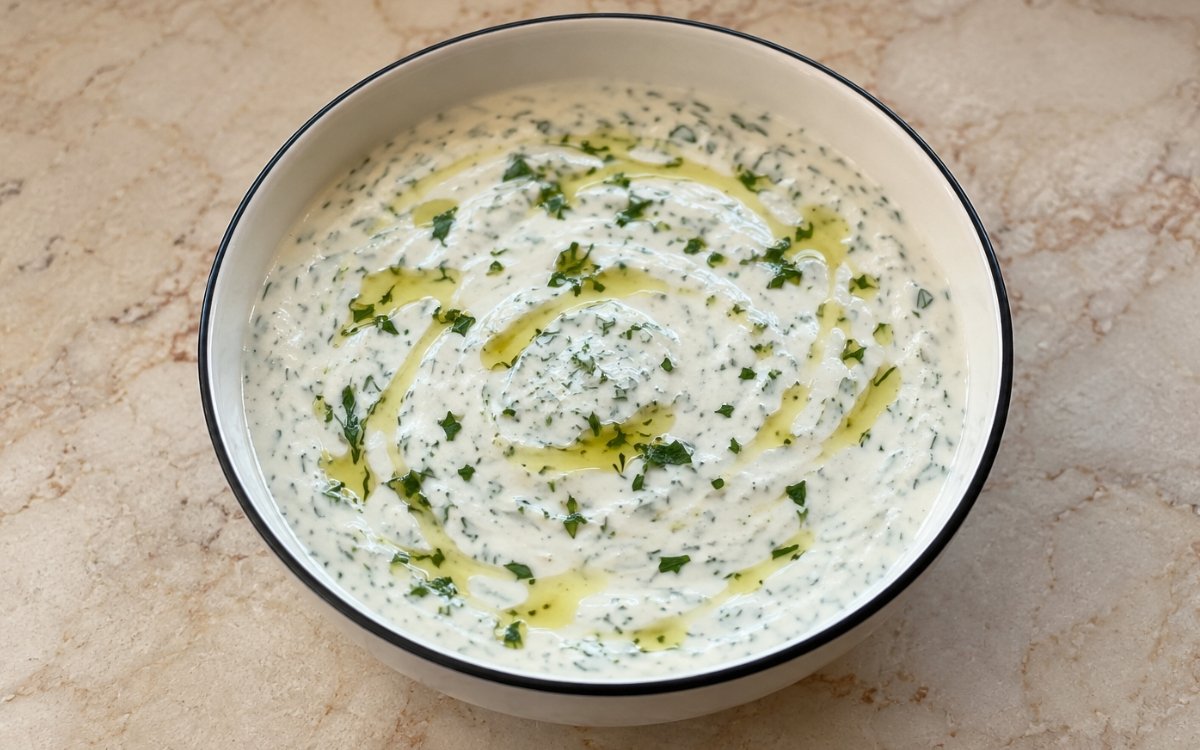
- Add the finely chopped dill, chopped parsley, chopped chives, and minced garlic to the yogurt base. Using a flexible spatula or large spoon, fold the herbs gently into the sauce rather than whisking aggressively. This folding motion distributes the herbs evenly without bruising them or causing them to release excess moisture into the sauce. The garlic should be minced as finely as possible — ideally to a paste-like consistency using the flat side of a knife with a pinch of salt — so it disperses smoothly through the sauce without creating harsh, concentrated bites. Once the herbs are incorporated, the sauce should appear bright green-flecked and aromatic.
Finish with Olive Oil and Season
- Drizzle the extra-virgin olive oil into the herb yogurt in a thin, steady stream while stirring continuously. The oil will emulsify partially into the sauce, adding a silky richness and smooth mouthfeel that rounds out the tangy yogurt base. Season generously with salt and freshly ground black pepper, tasting as you go. Because yogurt varies in saltiness between brands, add salt incrementally rather than all at once. The finished sauce should taste bright and tangy first, followed by the herbal freshness of dill and parsley, with the olive oil providing a smooth, rounded finish. Allow the sauce to rest for at least 5 minutes before serving — this short resting period allows the garlic and herbs to fully infuse into the yogurt base and the flavors to meld into a cohesive, balanced sauce.
Notes
The choice of yogurt significantly affects the final texture of this sauce. Full-fat Greek yogurt produces the richest, creamiest result with the most balanced flavor, while 2% produces a slightly lighter but still excellent sauce. Regular (non-strained) yogurt contains too much liquid and will produce a thin, watery sauce that lacks body. Always use strained Greek yogurt for the correct consistency.
Fresh herbs are essential here and cannot be substituted with dried versions. Dried dill, parsley, and chives lack the aromatic oils and bright flavor that define this sauce. If any single herb is unavailable, simply increase the amount of the others rather than using a dried substitute. The herbs should be chopped finely enough to distribute evenly but not so finely that they lose their visual presence — visible green flecks are part of the appeal.
Lemon zest provides a depth of citrus character that lemon juice alone cannot achieve. The zest contains concentrated aromatic oils from the lemon's outer skin that add floral, slightly bitter citrus complexity alongside the clean acidity of the juice. Always zest the lemon before juicing it, and use a fine Microplane grater to avoid including any of the bitter white pith beneath the skin.
Allowing the sauce to rest before serving is not optional — it is the step that transforms a good sauce into an excellent one. During the resting period, the garlic softens slightly in the acid environment of the lemon juice, the fresh herb oils infuse the yogurt base, and the olive oil settles into the sauce. Even five minutes of resting makes a perceptible difference in the depth and cohesiveness of the final flavor.