Ingredients
Method
Prepare the Pan and Preserve the Fond
- After removing the cooked protein, pour off most of the excess fat, leaving about one tablespoon in the pan along with the browned bits stuck to the bottom. These caramelized residues — known as fond — are essential for building depth and must not be discarded or washed away. They will dissolve during deglazing and form the flavor base of the sauce.
Melt the Butter and Soften the Shallots
- Add unsalted butter over medium heat and let it melt fully, swirling to coat the pan. Once foaming, add finely minced shallots and cook for about 2 minutes, stirring constantly until soft, translucent, and lightly golden. Shallots provide gentle sweetness and aromatic depth without the sharpness of onions.
Bloom the Garlic Briefly
- Add minced garlic and cook for about 30 seconds, stirring continuously just until fragrant. Avoid browning, which would introduce bitterness and overpower the sauce’s delicate balance.
Deglaze with White Wine
- Pour in dry white wine and immediately scrape the bottom of the pan with a wooden spoon or spatula to release all the fond. Let the wine simmer energetically for 1–2 minutes until reduced by roughly half, concentrating flavor and allowing the alcohol to cook off.
Incorporate Cream and Mustard
- Lower the heat to medium-low and add heavy cream and Dijon mustard together. Whisk continuously for about 30 seconds until smooth and fully combined, ensuring the mustard disperses evenly without lumps.
Simmer, Adjust, and Finish
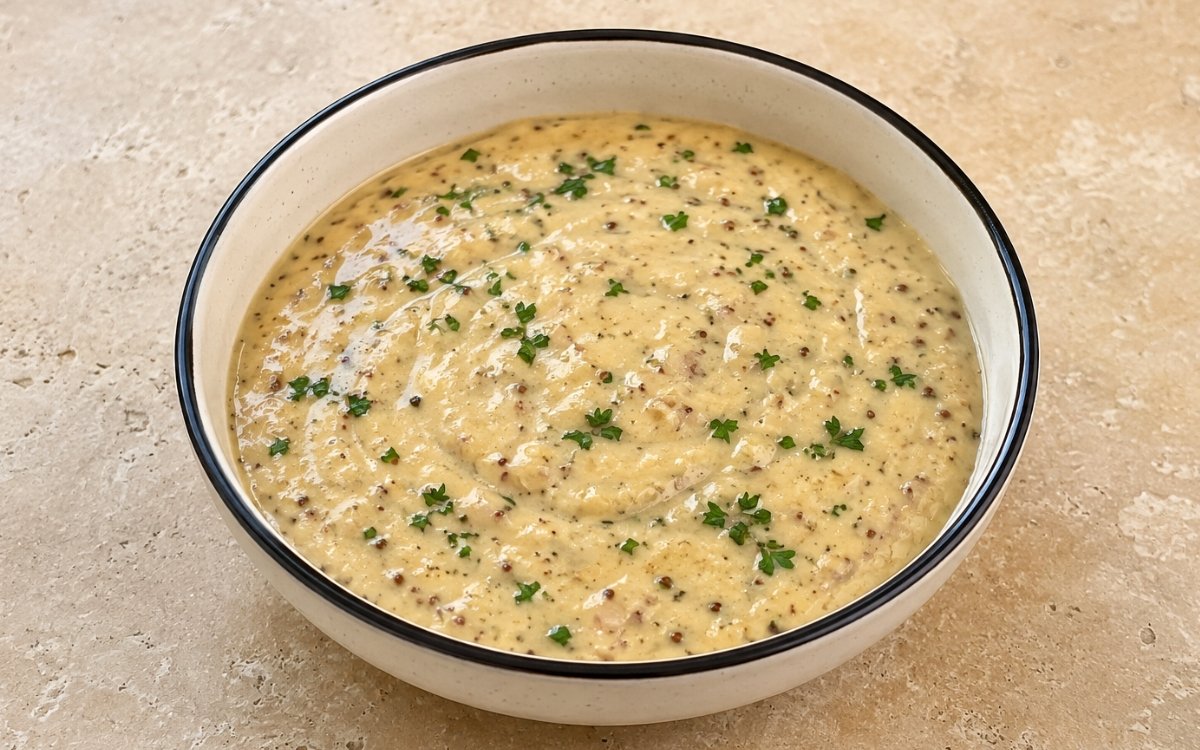
- Let the sauce simmer gently for 3–4 minutes, stirring occasionally, until thick enough to coat the back of a spoon. Remove from heat, season with salt and freshly ground black pepper, then stir in chopped parsley. Spoon the finished sauce immediately over the cooked protein.
Notes
The quality of the fond — the browned bits left in the pan after cooking the protein — directly determines the flavor depth of the finished pan sauce. A pan in which the protein was cooked over high heat until genuinely well-browned will produce a far more flavorful sauce than one where the protein was cooked at lower temperatures or removed before thorough browning. Always cook your protein until it develops a deep, even sear before removing it to make this sauce.
Shallots are specifically recommended over onions in this sauce because their more delicate, sweeter flavor integrates smoothly without any sharp raw bite that can linger in quick-cooked sauces. In a pan sauce that cooks for only a few minutes, fully softening the aromatics is essential — undercooked shallots or garlic will taste raw and sharp in the finished sauce rather than mellow and aromatic.
Dijon mustard plays a dual role here. It adds a characteristic tangy sharpness that makes the sauce lively and complex rather than flat, and it acts as a natural emulsifier that helps bind the cream to the wine reduction and pan drippings, creating a more stable, glossy sauce. Whole-grain mustard can be substituted for a rustic texture and slightly different visual appeal, though the flavor will be somewhat milder.
Heavy cream is essential for achieving the correct consistency and richness. Half-and-half or milk will not reduce to the same coating consistency and will produce a thinner, less stable sauce. If reducing fat is a priority, crème fraîche can be used as a partial substitute — it will thicken the sauce differently and add a slight tang, but it can curdle if cooked at too high a temperature, so extra care with heat management is required.