Ingredients
Method
Heat the Liquid
- In a large heavy-bottomed pot (4L), combine the 1000ml milk, 240ml water, and 6g salt. Bring to a gentle boil over medium-high heat, stirring occasionally and scraping the bottom so milk doesn't scorch, since milk's proteins and sugars are considerably more prone to catching and burning against hot metal than plain water is, and even a small amount of scorching introduces a bitter, off-putting flavor that would carry through the entire pot once the polenta is added. When you see steam and small bubbles rising steadily, you're ready.
Add Polenta Gradually
- Reduce heat to low. Pour in the 200g polenta in a slow, steady stream while whisking continuously — this prevents lumps, since dry cornmeal added too quickly or without constant agitation will clump together on contact with the hot liquid rather than dispersing evenly throughout. Keep whisking for 2–3 minutes until the mixture thickens and you feel genuine resistance against the whisk; that's the starch hydrating and beginning to develop the structure that will eventually become the finished polenta's characteristic body.
Simmer Until Creamy
- Reduce heat to very low. Cook 25–30 minutes, stirring every 5 minutes with a wooden spoon, scraping the bottom and corners so it doesn't stick, since polenta thickens considerably as it cooks and any part left undisturbed against the hot pot bottom is genuinely prone to scorching even at very low heat. Polenta is done when it's thick and creamy, pulls away from the sides, and tastes smooth with no gritty bite; if it's still gritty at 30 minutes, cook 5 more minutes and check again, since cornmeal coarseness can vary somewhat between brands and may need slightly more time to fully soften.
Finish with Butter and Cheese
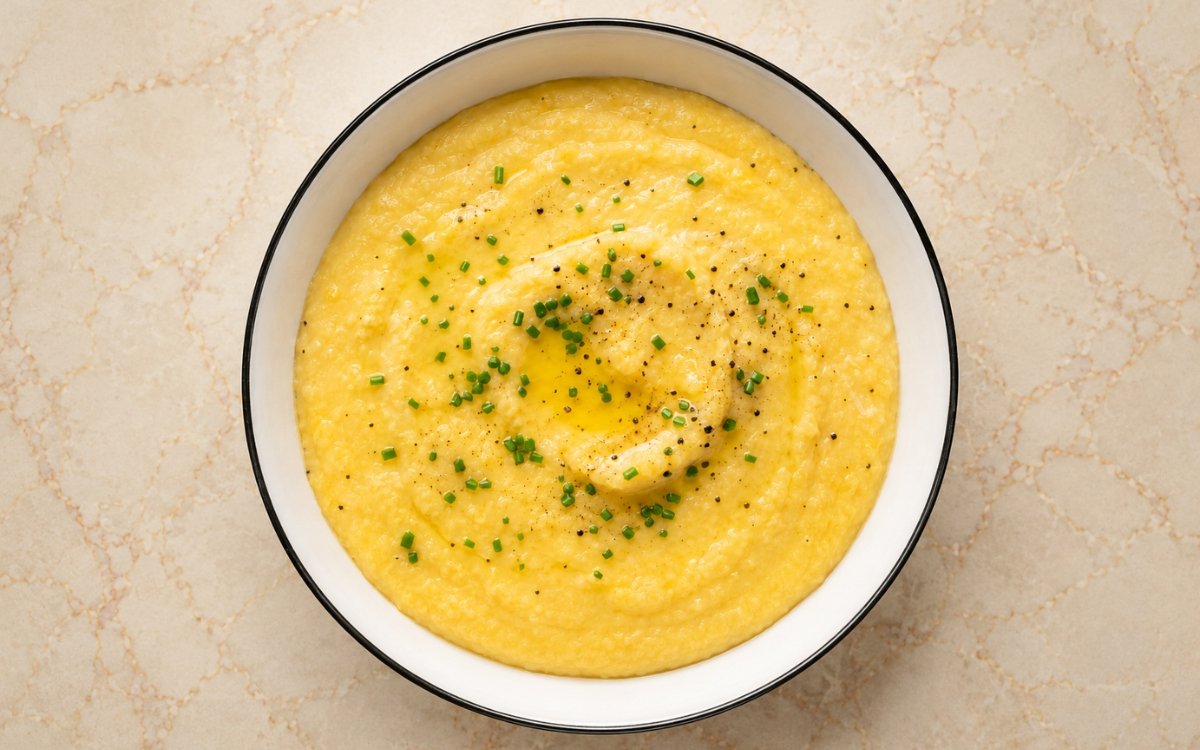
- Remove from heat and stir in the 60g butter and 80g Parmesan until fully melted and incorporated, working the mixture with the wooden spoon until it's completely smooth and uniform rather than showing streaks of unmelted butter. Season with the 2g black pepper. The texture should be creamy and pourable — if it tightens, loosen with a splash of warm milk and stir until smooth, since polenta continues to thicken somewhat even off the heat as it cools slightly. Garnish with the 15g chives if desired and serve immediately.
Notes
Milk's tendency to scorch against a hot pot bottom is a genuine concern throughout this recipe, not just during the initial heating stage. The proteins and natural sugars in milk catch and burn far more readily than plain water would under the same conditions, which is why regular stirring and scraping — both while bringing the liquid to a boil and throughout the long simmering stage that follows — matters more here than in a water-based dish.
The continuous whisking required when the polenta first goes into the liquid is a narrow but critical window. Cornmeal's individual granules clump together almost instantly if they aren't kept moving and separated as they hit the hot liquid, and once those lumps form, they're considerably harder to fully break down later in the cooking process than they would have been to prevent from forming in the first place.
The long, slow simmer is genuinely non-negotiable for achieving polenta's characteristic silky texture. Coarse cornmeal needs sustained time at gentle heat to fully soften and hydrate throughout each granule, and rushing this stage — even with otherwise correct technique everywhere else — leaves a gritty, undercooked texture that more butter or cheese cannot mask.