Ingredients
Method
Prepare the Pan and Oven
- Heat the oven to 175°C / 350°F. Grease a 9x13-inch / 23x33 cm metal baking pan and line the bottom with parchment if you want easier lifting, or grease well and lightly flour the pan if skipping the parchment. A metal pan gives the most even bake and the cleanest edges — glass can work too, but usually needs slightly longer baking and tends to produce darker edges.
Mix the Dry Ingredients
- Whisk together the flour, baking powder, baking soda, salt, cinnamon, ginger, nutmeg, and cloves in a medium bowl, making sure everything is thoroughly combined so the leavening and spices distribute evenly. Unevenly mixed baking soda or spices can create streaking, bitter pockets, or uneven rise once the cake bakes.
Build the Wet Base
- Whisk together the granulated sugar, brown sugar, and oil in a large bowl until combined and glossy, then add the eggs one at a time, whisking well after each addition until the mixture is smooth and slightly thickened. Whisk in the pumpkin purée and vanilla extract until fully smooth, then whisk in the milk or buttermilk. The wet mixture should end up smooth, cohesive, and vividly orange-brown with no streaks of egg or pumpkin remaining.
Combine the Batter
- Add the dry ingredients to the wet mixture in two additions, folding gently with a spatula or mixing on low speed just until no dry flour remains, scraping the bottom and sides of the bowl for even mixing but stopping as soon as the batter looks uniform. Don't overmix once the flour is added — overmixing develops gluten and can make the cake tighter and less tender. The finished batter should be medium-thick, smooth, and pourable.
Pan and Bake
- Pour the batter into the prepared pan and spread it evenly into the corners, then bake for 32 to 38 minutes, rotating once late in baking if your oven bakes unevenly. The cake is done when the center springs back lightly when touched, the surface looks set and matte rather than wet, a toothpick inserted in the center comes out clean or with a few moist crumbs, and the internal temperature reads about 96–99°C / 205–210°F. Don't overbake — pumpkin cakes can dry out quickly if pushed too far, especially around the edges, so pull the cake as soon as the center is set.
Cool Completely
- Set the pan on a rack and cool the cake completely before frosting, letting it rest in the pan for at least 1½ hours or until no residual warmth remains. A cake that's even slightly warm will melt the frosting on contact, causing it to loosen and drag instead of spreading cleanly.
Make the Cream Cheese Frosting
- Beat the softened cream cheese and softened butter together in a large bowl until fully smooth, creamy, and lump-free, then add the powdered sugar gradually, mixing on low at first and then medium until smooth. Add the vanilla and a small pinch of salt, beating just until creamy and spreadable. If the frosting seems too soft, chill it for 10 to 15 minutes before using; if it seems too stiff, let it sit at room temperature briefly. Keeping the butter and cream cheese at a similar softness before mixing matters — if one is noticeably colder than the other, the frosting can turn grainy or split.
Frost the Cake
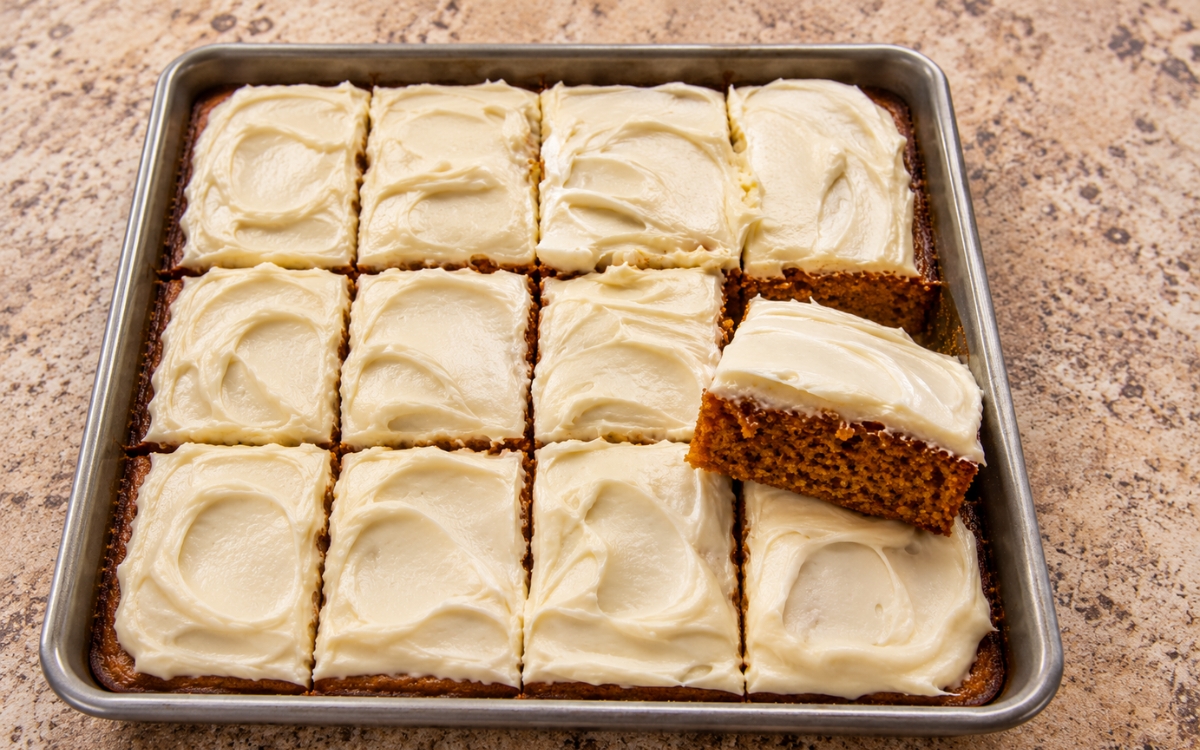
- Spread the frosting evenly over the completely cooled cake in a thick, edge-to-edge layer, using an offset spatula to create soft swoops and smooth ridges across the top for a classic sheet-cake finish. The goal is a thick, smooth cream cheese frosting with visible swirls covering the whole cake from edge to edge.
Portion
- Cut the cake into 12 equal rectangles for serving. For the cleanest slices, chill the frosted cake for 20 to 30 minutes first, use a long sharp knife, and wipe the blade clean between cuts — chilled frosting cuts more cleanly and helps preserve sharp edges and visible frosting thickness.
Notes
Neutral oil instead of butter is the choice responsible for how moist this cake stays over several days. Butter firms up as it cools, which can make a cake feel drier sooner, while oil stays liquid at room temperature and keeps the crumb soft and plush well past the day it's baked.
Whisking the dry ingredients thoroughly before combining them with the wet base deserves more attention than it usually gets. Baking soda and the warm spices here are both potent in small amounts, and uneven distribution can leave bitter pockets or patches of uneven rise scattered through an otherwise good cake.
Cooling the cake completely before frosting isn't a step worth rushing, even though it adds real time to the process. Cream cheese frosting melts on contact with residual warmth, and a cake that's even slightly warm will drag the frosting instead of letting it sit in a clean, thick layer.
Matching the softness of the butter and cream cheese before beating them together is a small detail that makes a real difference in the finished frosting. If one ingredient is noticeably colder than the other, the mixture can turn grainy or visibly split instead of coming together smooth.