Ingredients
Method
Brew the Black Tea
- Heat 1.5 liters water to 95 to 98°C. Add the black tea and the pinch of salt. Steep for 4 minutes, then strain immediately. Let the tea cool to room temperature. The tea should be strong but clean. If it steeps too long, the tannins become harsh once chilled. Black tea tolerates this near-boiling heat well, but continuing to steep past that specific 4-minute window still draws out increasingly harsh tannic compounds regardless of the tea's own heat tolerance — that timing is calibrated to extract genuine strength without crossing into that harsher territory.
Prepare the Cranberry Orange Base
- Place the 600g cranberries in a large bowl. Lightly crush them with a potato masher or pulse them very briefly in a food processor just until split and broken open. Do not puree. Add the honey, orange zest, and fresh orange juice. Stir well and mash again lightly. Let sit for 20 to 30 minutes. Cranberries are firm, so they need to be broken open. Whole untouched cranberries will not release enough flavor during a short cold infusion. That deliberate splitting-open, stopping well short of a full puree, is what gives the cranberries' own juice a genuine path to release during this short maceration without pushing the mixture toward the thicker, more processed texture a full puree would introduce.
Strain the Cranberry Base
- Pour the cranberry mixture through a fine-mesh sieve into a large pitcher or bowl. Press firmly enough to extract the juice, but do not force a thick pulp through. Discard the spent cranberry skins and solids. Pressing firmly here, rather than only gently, is appropriate specifically because this mixture has already been split open and macerated — that combination of physical opening and time has already done the real flavour-releasing work, so a firmer press simply extracts what's already loosened rather than forcing anything new or unwanted through.
Combine the Pitcher Base
- Combine the strained cranberry-orange juice with the cooled black tea. Add 1.8 liters cold filtered water and stir well. Taste and adjust: more cold water if too strong; more honey if too tart; a little lemon juice if it tastes flat rather than bright. You are aiming for about 4 liters total. This tasting checkpoint matters directly given how much both cranberry tartness and honey's own sweetness can vary — building in that adjustment stage accounts for that natural variability rather than assuming a fixed recipe always lands at the same balance.
Second Infusion
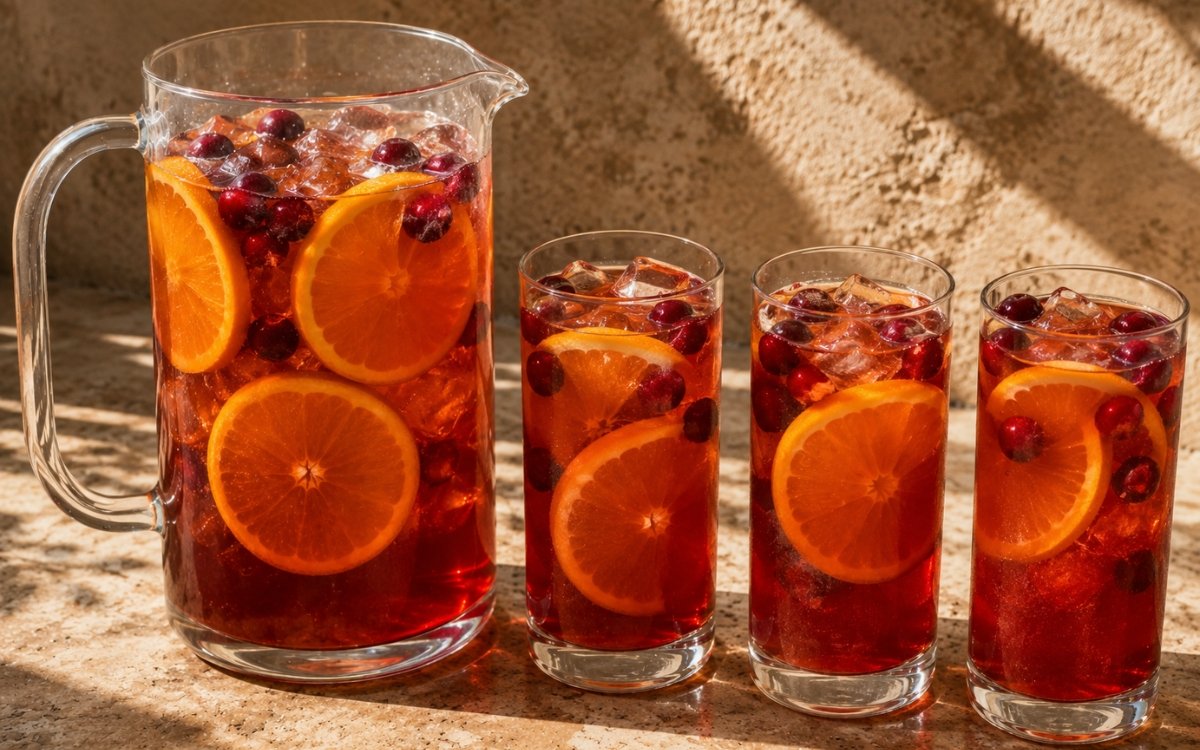
- Add the orange wheels or half-wheels to the pitcher. Take the remaining 250g whole cranberries and bluntly press them with your fingers, the back of a spoon, or a flat knife just until some of them split. Add them to the pitcher. Refrigerate for 1 to 2 hours. The second infusion should make the drink look alive and fresh, with floating fruit, not turn it bitter or overloaded with peel. This second, separately handled batch of only lightly split whole cranberries contributes a fresh, distinct wave of flavour and genuine visual appeal beyond what the first, more thoroughly processed base already extracted.
Serve
- Add ice to the pitcher shortly before serving, or fill individual glasses with ice. Pour the cranberry orange iced tea over the ice, making sure each glass gets a few cranberries and an orange slice. Adding the ice only at this final stage, rather than earlier, protects the drink from being diluted before the second infusion has had its full window to actually develop.
Notes
Lightly crushing the cranberries, splitting them open just enough without pureeing, deserves recognition as the technique most responsible for this drink's genuinely fresh, uncooked character. That specific texture is what gives a short cold maceration real access to the fruit's own juice, without pushing the mixture toward the thicker, more processed quality this recipe's own notes explicitly warn against — the whole point is staying bright and tart rather than turning into something resembling a cooked cranberry sauce.
Pressing firmly during the cranberry base's straining, in contrast to the gentler pressing this collection typically applies to more delicate ingredients, reflects genuine understanding of what's actually happening at that stage. By the time straining begins, the cranberries have already been physically split and given real maceration time — a firmer press at this point simply captures juice that's already been loosened, rather than risking any unwanted extraction the way a firmer press against something like fresh herbs might.
The two-stage cranberry approach — one batch fully crushed and strained into the concentrated base, a second batch only lightly split and added whole later — deserves attention as a deliberate structural choice giving this drink real layered depth. The first batch builds genuine flavour; the second contributes fresh, visually striking whole fruit that continues developing gently during the final chilling period.
The recipe's own explicit distinction between not boiling the cranberries and instead relying on cold maceration deserves to be understood as this drink's actual organizing principle. Every technique choice here — the light crush, the cold infusion, the brief second infusion window — exists specifically to protect that fresh, tart identity from drifting toward the thicker, cooked, more familiar holiday cranberry flavour this recipe is deliberately built to avoid.