Ingredients
Method
Prepare the Coffee Base
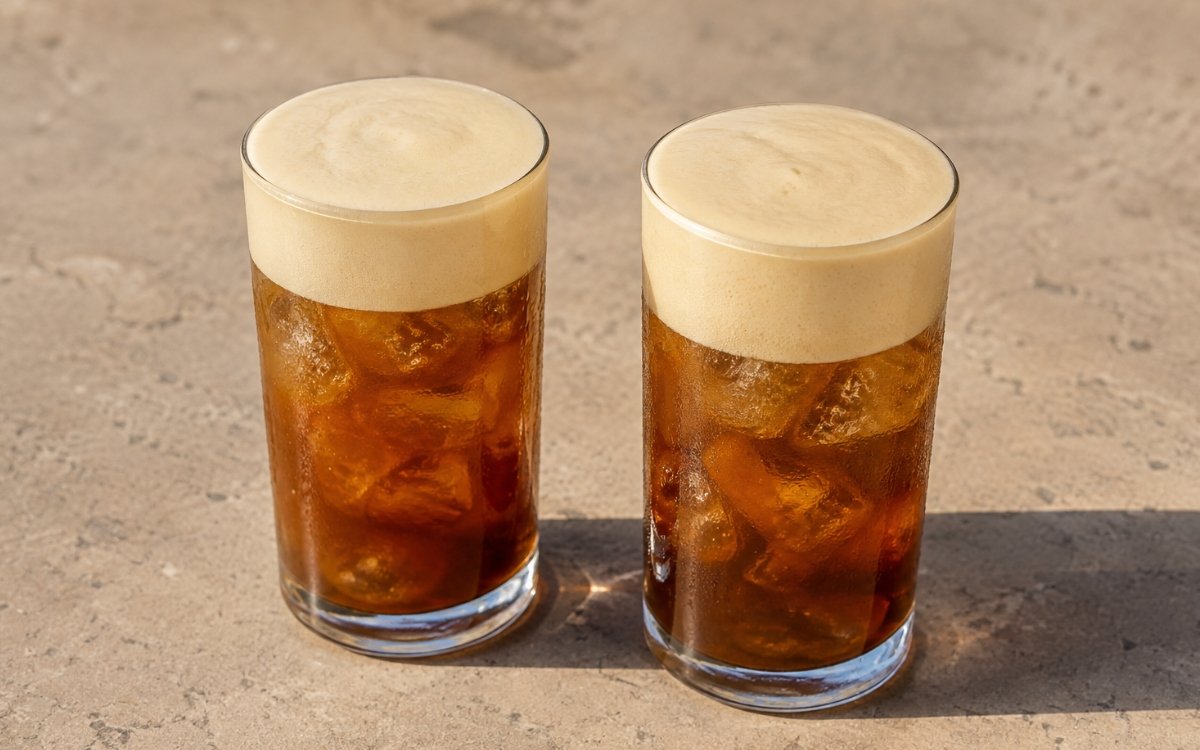
- Make sure the cold brew or iced Americano is fully chilled before building the drinks. Fill 2 glasses generously with ice. Divide the cold coffee between the glasses, about 180ml per glass. The base should look very dark, almost near-black through the glass. If the coffee is weak or already diluted, the final visual contrast disappears and the drink tastes flat. The coffee must be fully cold before the foam goes on. If the base is too warm, the foam collapses faster and melts into the drink instead of sitting cleanly on top. A properly dark, undiluted coffee base is what makes the drink's defining visual contrast possible in the first place — starting from a weak or already-watered-down coffee leaves nothing for the bright white foam to visually contrast against.
Make the Cold Foam
- Add the very cold milk, simple syrup if using, and vanilla if using to a milk frother, handheld frothing cup, or French press. Froth until thick, dense, and expanded, about 30–60 seconds depending on the method. The foam should be smooth and spoonable, not stiff like whipped cream and not loose like bubbles on top of milk. The foam should hold its shape for a few seconds when spooned and look bright white and dense. If it is full of large bubbles, it needs a little more controlled frothing. If it turns too thin, the milk was too warm or too high in fat. Low-fat milk is the more classical move here. Whole milk tastes richer but produces a softer, less stable cold foam. Milk's fat content works directly against foam stability at cold temperatures — fat coats and weakens the protein structures that trap air during frothing, which is exactly why low-fat milk, with less of that interference, produces a denser, more structurally sound cold foam than a richer, higher-fat milk would.
Top the Iced Coffee
- Spoon or pour the cold foam gently over each glass of iced coffee, dividing it evenly. Let the foam sit clearly on top instead of stirring it in. The boundary between the white foam and the dark coffee should stay very visible. That clean contrast is one of the defining features of a proper cold foam iced coffee. Spooning the foam on gently, rather than pouring it with any real force, is what lets it settle and float as a genuinely distinct layer — an aggressive pour would drive the foam down into the coffee rather than letting it rest cleanly on the surface.
Serve
- Serve immediately without garnish. The drink should be presented as a dark iced coffee base with a thick, glowing white foam cap above it. Cold foam is inherently temporary — its stability, however good, still degrades steadily from the moment it's made, so serving without any delay is what preserves both the visual contrast and the foam's own light, cloud-like texture.
Notes
Milk fat's specific interaction with foam stability at cold temperatures deserves real understanding, since it's the mechanism behind this recipe's insistence on low-fat milk. When milk is frothed, air becomes trapped within a structure built largely from its proteins; fat molecules tend to coat and weaken those same protein structures, making the resulting foam less stable overall. Low-fat milk, carrying less of that interfering fat, produces a foam that holds its structure considerably longer and more densely than whole milk would under identical frothing conditions.
The requirement for a fully chilled coffee base before foam is ever added addresses a genuine, practical vulnerability in this drink's presentation. Cold foam sitting on top of a base that's even slightly warm begins losing its structure faster than it would on properly cold coffee — the temperature differential works against the foam's stability from the moment it's poured, which is why confirming the base is fully cold beforehand matters more than it might seem.
The distinction drawn in this recipe between properly frothed cold foam and both whipped cream and standard steamed milk foam is worth taking seriously as three genuinely different textures, not interchangeable toppings. Cold foam sits in a specific middle ground — smooth and spoonable, but not stiff like whipped cream, and denser than the light, airy bubbles a warm steamed foam produces. Achieving that specific texture depends on the combination of cold, low-fat milk and controlled, not excessive, frothing time.
The instruction against overloading with sweetener reflects the drink's intended balance between its two distinct layers. The foam is meant to taste lightly creamy and softly sweet, existing as a textural and visual contrast to the coffee rather than competing with it in flavour. Oversweetening the foam risks tipping the whole drink toward tasting more like a dessert topping over coffee rather than the clean, bold coffee-and-cream contrast this style is built around.