Ingredients
Method
Rinse Rice Thoroughly
- Rinse the 300g jasmine rice under cold water until completely clear (about 2 minutes), agitating the grains gently with your fingers as the water runs through so every part of the batch gets rinsed evenly rather than just the surface layer. Drain well in a fine-mesh strainer, giving it a good shake to remove excess water before setting it aside. Coconut rice can turn heavy and sticky if you keep the surface starch, so don't shortcut the rinse — this step matters even more here than in a plain water-based rice recipe, since coconut milk's own thick, fatty consistency compounds with any leftover starch to produce a noticeably gummier result than the same amount of starch would cause in a lighter liquid.
Combine Liquids and Seasonings
- In a medium saucepan (2L), whisk together the 400ml coconut milk, 200ml water, 6g salt, and 15g sugar until the sugar dissolves completely and the mixture looks uniform rather than streaky. Take a moment to really whisk this thoroughly, since coconut milk can separate slightly in the can and needs proper mixing to become smooth and consistent again. If using the 1g lime zest, add it now for aroma, stirring it briefly into the liquid so its oils have a chance to begin infusing even before the rice goes in.
Cook Rice
- Add the rinsed rice and stir once to level it evenly across the bottom of the pan. Bring to a boil over high heat, watching closely since coconut milk-based liquids can rise and threaten to boil over more readily than plain water. The moment it reaches a boil, immediately reduce the heat to low, cover tightly with a well-fitting lid, and simmer for 15 minutes without lifting the lid at any point. Keep the heat genuinely low throughout this stage — coconut milk can scorch and stick to the bottom of the pot if the liquid is allowed to boil hard even under a closed lid, and that scorching would introduce a burnt, bitter note that no amount of garnish afterward could fully mask.
Rest Rice
- Remove the pot from heat and let it rest, still covered, for 5 minutes. This resting period allows the trapped steam to finish cooking the rice gently and lets the grains firm up slightly as they settle, which gives you genuinely fluffy, distinct grains rather than loose, overly wet rice that hasn't had a chance to fully set.
Fluff and Garnish
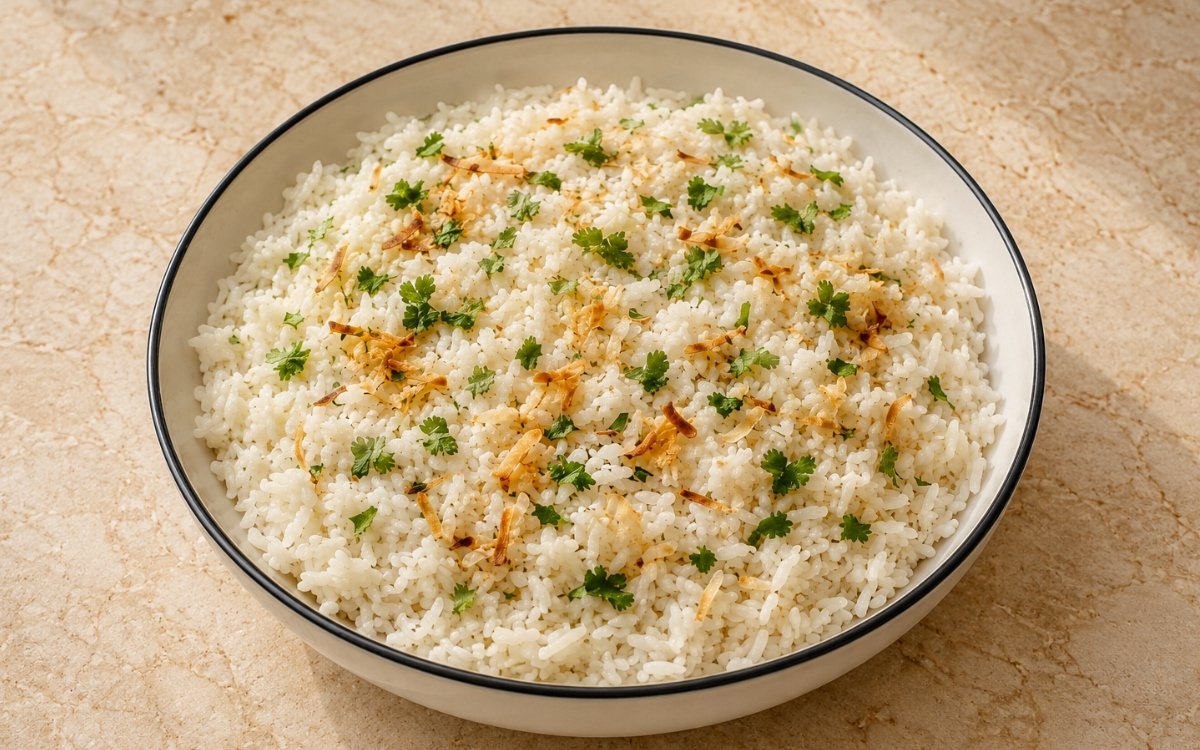
- Fluff the rice gently with a fork, working from the edges of the pot inward, and transfer it to a serving bowl. Top with the 15g toasted coconut and 15g chopped cilantro. Serve warm; if holding before serving, keep the bowl covered so the surface doesn't dry out and form a crust while it waits.
Notes
The thorough rinse matters proportionally more for coconut rice than for a plain water-based preparation, since coconut milk's own naturally thick, fatty character amplifies the gumminess that leftover surface starch would otherwise cause. A rinse that might be adequate for a simpler rice recipe can leave coconut rice noticeably heavier and stickier than intended if rushed.
Whisking the coconut milk, water, salt, and sugar together fully before adding the rice ensures an evenly seasoned cooking liquid throughout the pot. Coconut milk can separate somewhat within the can, with fattier solids settling differently than the more liquid portion, and skipping a thorough whisk risks some parts of the finished rice tasting noticeably richer or sweeter than others.
Maintaining genuinely low heat throughout the covered simmer is specifically more important here than with plain water rice. Coconut milk's fat and natural sugar content make it considerably more prone to scorching against the bottom of the pot under sustained higher heat, even with the lid on, and any scorching introduces a bitter, burnt note that would be difficult to fully disguise in the finished dish.