Ingredients
Method
Brew the Espresso
- Brew 120ml espresso total, equal to 4 standard 30ml shots. Let it stand for 30–60 seconds only if it is extremely hot, but do not let it sit long enough to flatten. The espresso should be fresh, dark, and aromatic. Coconut milk is delicate, so stale or harsh espresso stands out very quickly. Coconut's gentle, subtle flavour has little capacity to mask or soften a flawed shot the way a bolder syrup might — genuinely fresh, clean espresso is what lets the coconut register as a soft supporting note rather than competing with a stale or bitter coffee base.
Prepare the Coconut Cream Top
- In a small bowl, whisk the chilled coconut cream with 20–30ml chilled coconut milk until smooth and lightly loosened. It should be pourable or spoonable, but still slightly thicker and whiter than the drink itself. The coconut cream should not be stiff like whipped cream and should not be so loose that it disappears instantly into the drink. You want a soft top layer, not a heavy cap. Use chilled coconut cream. Warm coconut cream turns greasy and loses the clean top-layer effect. Coconut cream's fat content is genuinely sensitive to temperature in a way that matters directly here — kept cold, that fat stays emulsified and holds a smooth, thick texture; warmed even slightly, it can separate and turn oily, losing both its texture and its ability to sit cleanly as a distinct layer.
Build the Base If
- using sweetener, divide the simple syrup between 2 glasses, 10ml per glass. Fill each glass generously with ice. Pour 140ml chilled coconut milk into each glass. The glasses should already look very pale and almost white. This drink is lighter in colour than an oat or standard milk latte, and that pale base matters. Barista-style coconut milk's naturally pale, smooth character is what sets the drink's whole visual identity from this very early stage — building on that pale base is what allows the finished, stirred drink to stay genuinely light in colour rather than tanning toward a more standard iced latte shade.
Add the Espresso
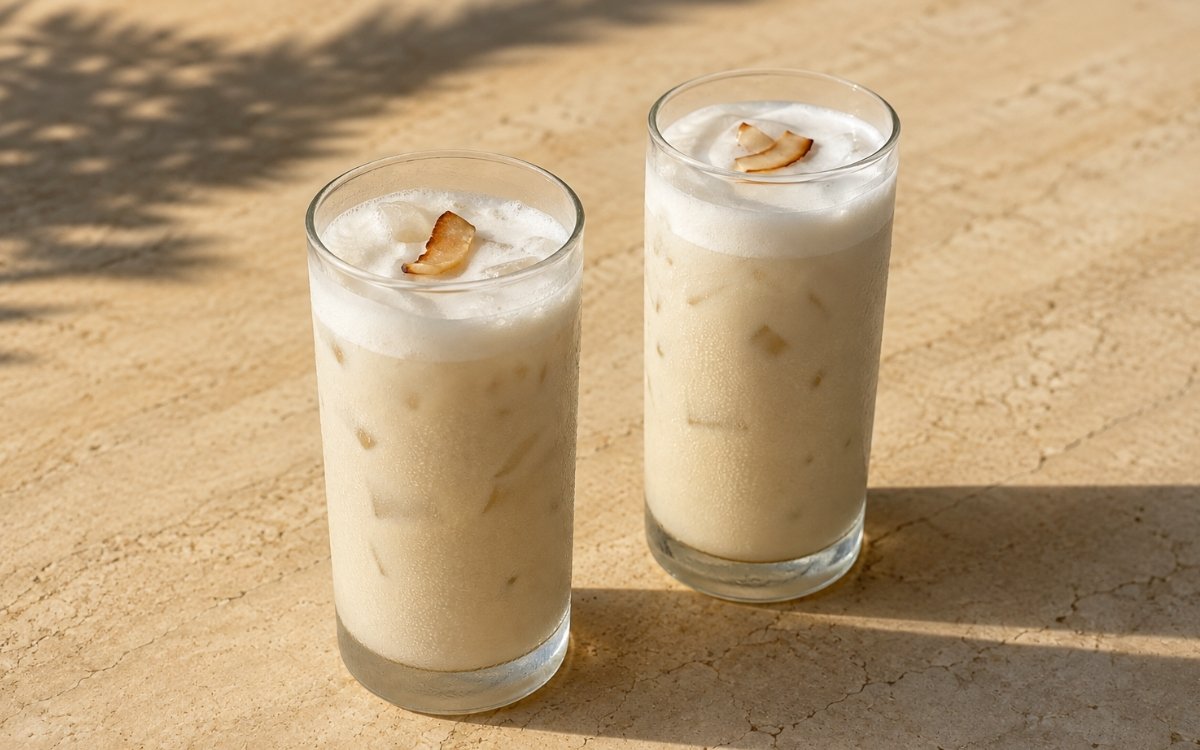
- Pour 60ml espresso into each glass over the coconut milk and ice. Let it swirl naturally for a moment, then stir briefly. Once stirred, the drink should become a very pale coconut-cream beige, not dark brown and not tan like a regular iced latte. Coconut milk should still visually dominate. This specific colour target functions as a genuinely useful check on the drink's balance — if the finished colour tans too far toward a standard latte shade, the espresso-to-coconut-milk ratio has tipped away from the pale, coconut-forward character this drink is meant to have.
Finish the Drink
- Spoon or gently pour the loosened coconut cream over the top of each drink. Scatter 1–2 thin toasted coconut flakes over each glass. Serve immediately. The top should show a slightly whiter coconut cream layer sitting lightly above the drink. It should look like a natural soft separation, not a thick whipped topping. Adding the coconut cream only at this final stage, after the espresso and coconut milk base are already combined, is what preserves it as a distinct, visible top layer rather than blending entirely into the drink beneath it.
Notes
The temperature sensitivity of coconut cream is worth understanding as a genuine technical constraint rather than a minor preference. Its fat content behaves very differently depending on temperature — kept properly chilled, it holds a smooth, cohesive, slightly thick texture that sits well as a top layer. Warmed even modestly, that same fat can begin separating and turning visibly greasy, losing both the texture and the clean visual separation this drink's finish depends on. Keeping the coconut cream cold right up until the moment it's used is worth real attention.
Choosing barista-style coconut milk over canned full-fat coconut milk as the drink's main liquid base reflects a genuine formulation difference worth understanding. Canned coconut milk is considerably richer and more aggressively coconut-forward, which would push this drink toward tasting more like a tropical dessert than a proper café-style latte. Barista-formulated coconut milk is specifically designed with a smoother, more restrained profile that integrates cleanly as a milk substitute rather than dominating the drink's flavour.
The loosened coconut cream's specific target consistency — thicker than the drink but stopping well short of whipped cream's stiffness — deserves careful attention rather than being approximated loosely. Too stiff, and it sits as a heavy, dense cap that doesn't naturally settle or spread; too loose, and it disappears into the drink immediately rather than holding as a visible, distinct layer. The narrow middle ground specified here is what produces the soft, natural-looking separation this drink's presentation is built around.
Keeping the garnish restrained — just a couple of thin toasted coconut flakes rather than a heavier scatter — reflects the same clean, minimal aesthetic that governs the whole drink's design. Coconut here is meant to register as a soft, supporting flavour and a light visual accent, not as an overwhelming tropical statement; both the flavour balance and the garnish amount are calibrated toward that same restraint.