Ingredients
Method
Prepare the Pasta Water
- Bring a large pot of water to boil for the pasta. Once boiling, add 15g salt per liter of water, ensuring the water is well-seasoned.
Render the Guanciale and Build the Base
- In a large, cold skillet, add the 200g guanciale strips and 15g olive oil. Place over medium-low heat and cook slowly for 8-10 minutes, stirring occasionally, until the guanciale renders its fat and becomes golden and crispy at the edges but still tender. Add the crushed chili pepper and toast for 30 seconds until fragrant. Pour in 150ml white wine, increase heat to medium-high, and let it bubble vigorously for 2-3 minutes until reduced by half, scraping up any browned bits from the pan.
Simmer the Tomato Sauce
- Add the 600g hand-crushed tomatoes with their juices to the skillet. Reduce heat to medium-low and simmer for 12-15 minutes, stirring occasionally, until the sauce thickens and the oil separates slightly at the edges. The sauce should coat the back of a spoon. Season lightly with salt (remember, the guanciale and Pecorino are salty) and black pepper.
Cook and Combine the Pasta
- While the sauce simmers, cook the 400g spaghetti in the boiling water until 2 minutes short of package directions for al dente (typically 6-7 minutes). Using tongs, transfer the pasta directly from the pot to the sauce, bringing about 60ml pasta water with it. Toss vigorously over medium heat for 1-2 minutes, allowing the pasta to finish cooking in the sauce. If the sauce seems too thick, add pasta water 30ml at a time.
Create the Pecorino Emulsion
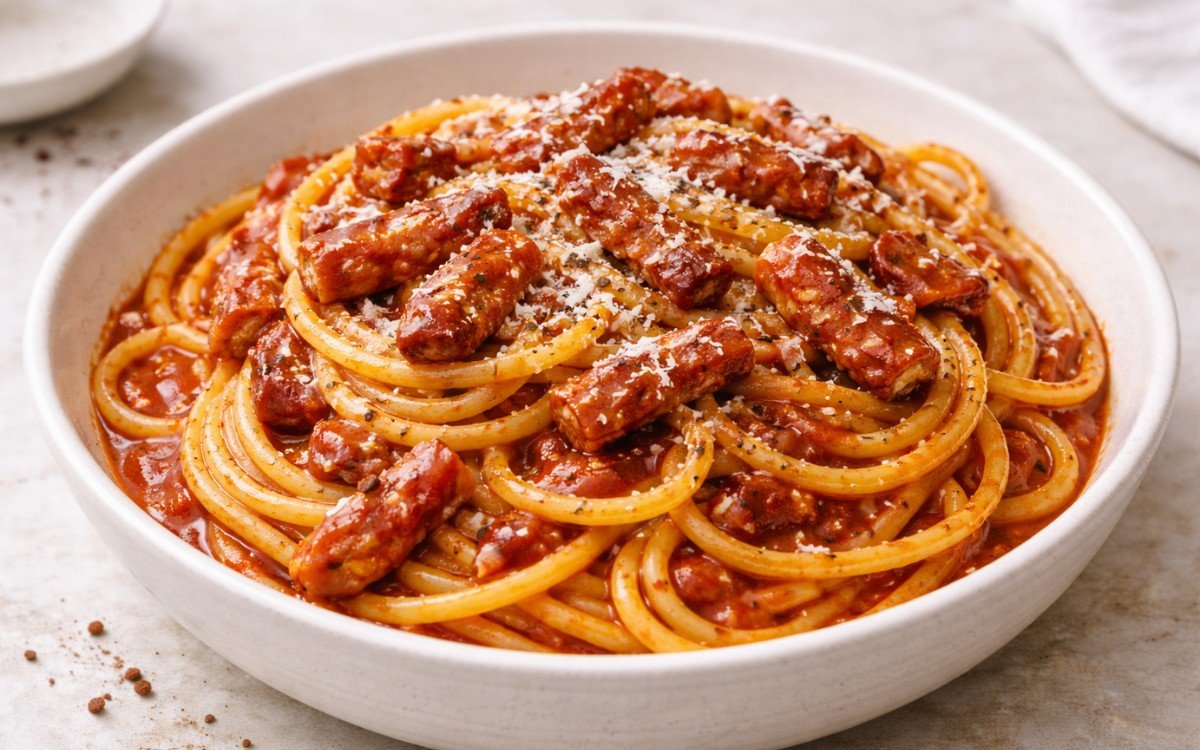
- Remove from heat and let rest for 30 seconds. Add 80g of the grated Pecorino Romano and toss energetically, creating a creamy emulsion. The residual heat will melt the cheese without making it grainy. Divide among four warm bowls, finishing each portion with a sprinkle of the remaining Pecorino and a crack of black pepper. Serve immediately.
Notes
Guanciale is essential for authentic Amatriciana—its sweet, delicate fat and complex cure create the dish's signature richness. Pancetta is an acceptable substitute if guanciale is unavailable, but avoid bacon as its smokiness overpowers the tomato.
Hand-crushing the tomatoes rather than using pre-crushed varieties gives you better texture control and keeps some tomato pieces intact for visual appeal and textural interest.
The key to a silky, emulsified sauce is the pasta water. Its starch content helps bind the fat, tomato, and cheese into a cohesive coating that clings beautifully to each strand of pasta.