Ingredients
Method
Temper the Steaks
- Remove the steaks from the refrigerator 45 minutes before cooking and leave them uncovered on a tray. This step evens out the internal temperature gradient, allowing the steak to cook more evenly instead of burning on the outside while staying cold in the center. Pat the steaks thoroughly dry on all sides with paper towels — this is critical, because any surface moisture must evaporate before browning can begin, which would otherwise prevent a proper crust from forming.
Season Generously
- Season the steaks aggressively with flaky salt and coarsely ground black pepper on all sides, including the edges and fat cap. The seasoning should be clearly visible and evenly distributed. Press it lightly into the surface so it adheres properly. Thick cuts require more seasoning than most people think — under-seasoning is one of the easiest ways to ruin an expensive steak.
Preheat the Pan
- Place a heavy cast iron skillet over high heat and allow it to heat for at least 4 minutes until it is intensely hot and just beginning to smoke. This is not a suggestion — it is a requirement. High surface temperature is what drives the Maillard reaction, the chemical process that creates the complex browned crust and deep savory flavor associated with a properly cooked steak.
Sear the First Side
- Add the avocado oil to the hot pan and immediately place the steaks down, laying them away from you to avoid splatter. Do not move them. Let the steak sit undisturbed for 4 minutes while the crust develops. During this time, moisture evaporates and the surface reaches the temperature required for browning, creating hundreds of new flavor compounds that define the steak's taste.
Flip and Baste
- Flip the steaks and immediately add butter, smashed garlic, and rosemary to the pan. As the butter melts and begins to foam, tilt the pan slightly and continuously spoon the hot butter over the steaks. Maintain a steady rhythm of basting for about 3 minutes, allowing the fat to carry aromatic compounds into the crust while gently finishing the surface cooking. Adjust heat if the butter begins to burn — it should foam, not darken aggressively.
Render the Fat Cap
- Using tongs, stand the steaks on their fat edge and sear for 30–45 seconds. This step renders the external fat cap, transforming it from chewy to crisp and deeply flavorful. Ribeye's identity comes from fat — leaving this part under-rendered is a technical mistake, not a stylistic choice.
Check Internal Temperature
- Insert a meat thermometer into the thickest part of the steak and remove it from the pan when it reaches 52°C (125°F). The steak will continue cooking after removal due to residual heat, rising into the ideal medium-rare range of approximately 54–57°C. Pulling it early is not optional — it is how you avoid overcooking.
Rest the Steak
- Transfer the steaks to a cutting board and let them rest for 8 minutes. During cooking, muscle fibers tighten and push liquid toward the center; resting allows those juices to redistribute throughout the meat instead of spilling out when cut. Do not skip or rush this step — it directly determines juiciness.
Slice and Serve
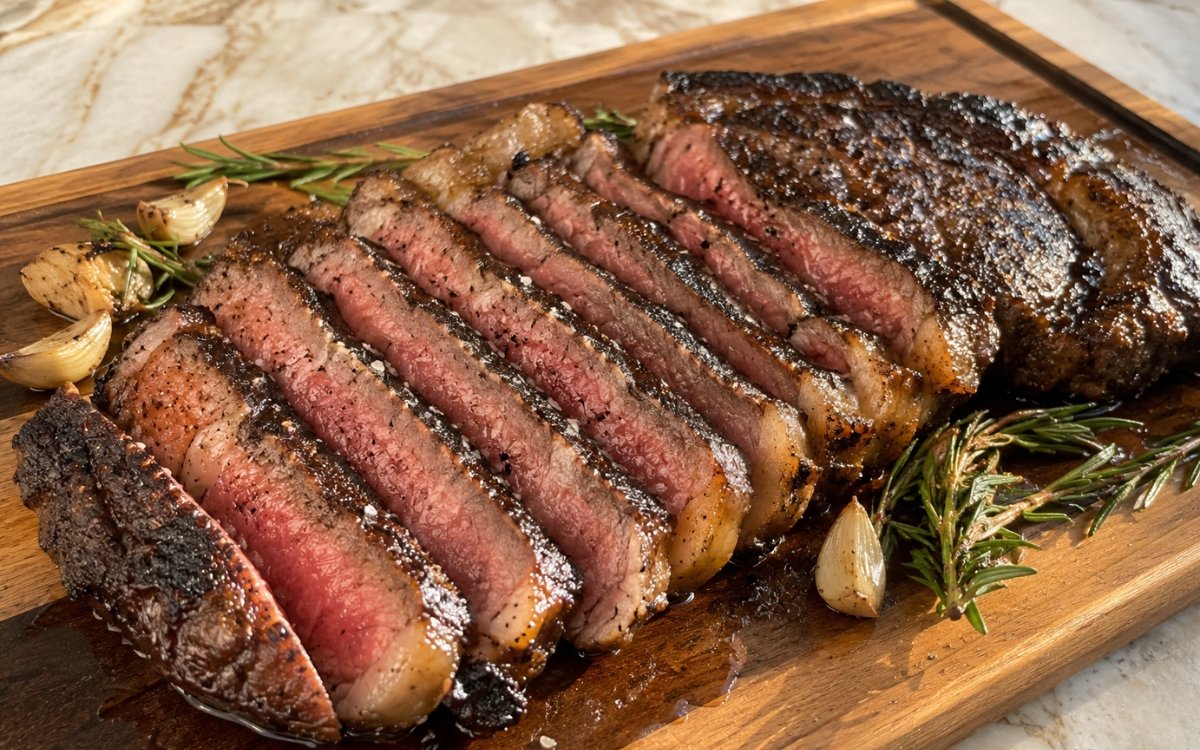
- Slice the steak against the grain into thick slices and spoon over any resting juices from the board. These juices are concentrated flavor and should not be wasted. Finish with a light pinch of flaky salt if needed and serve immediately.
Notes
Tempering for a full 45 minutes, longer than the tempering windows used for leaner cuts elsewhere in this collection, reflects ribeye's greater thickness and its higher fat content, both of which slow the rate at which the interior equalizes with room temperature. Rushing this step risks the same overcooked-exterior, underdone-center problem tempering is specifically meant to solve.
Aggressive seasoning matters proportionally more for a cut this substantial. A steak this thick has more surface area and more interior volume to season, and a light dusting that might suit a thin cutlet simply disappears against ribeye's scale — visible, generous coverage on every surface, including the edges and fat cap, is what the cut actually requires.
Rendering the fat cap by standing the steak upright is specifically non-negotiable for ribeye given how much of the cut's character comes directly from that fat. Skipping this step leaves a meaningful portion of the steak's defining richness chewy and underdeveloped rather than crisp and flavorful.