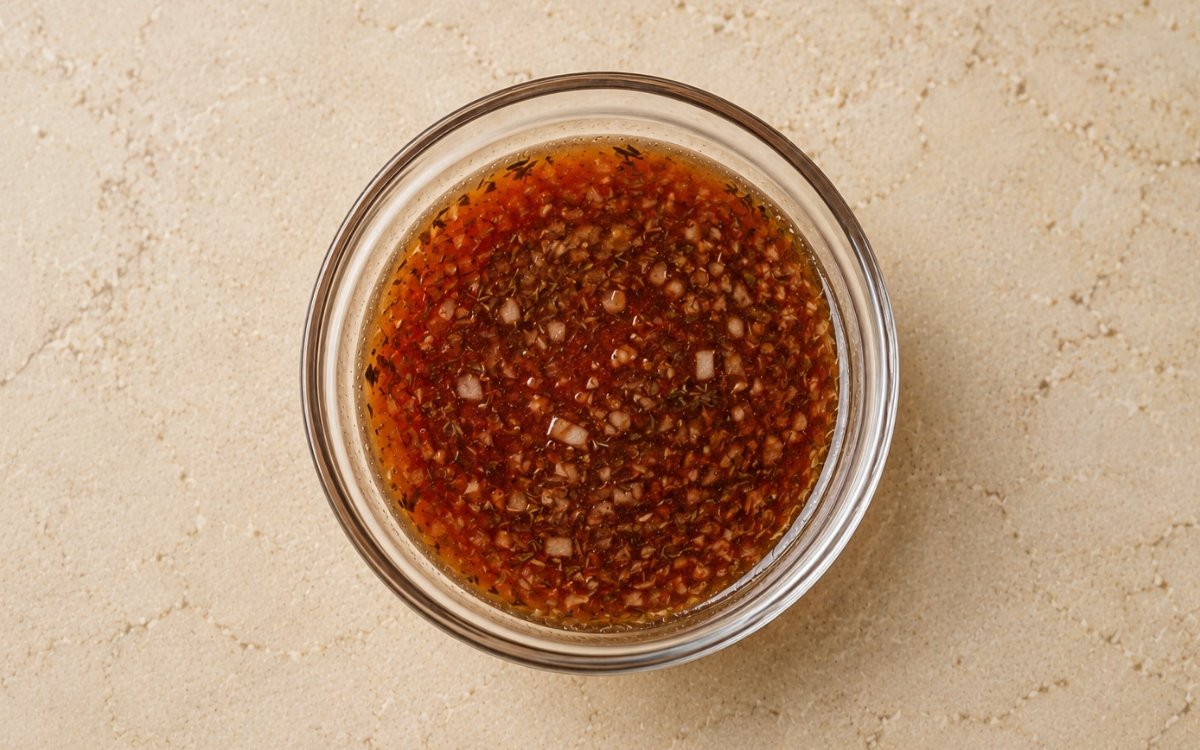
Ingredients
Method
Macerate the Shallot
- Place the 20g very finely minced shallot in a small bowl with the 45ml red wine vinegar and a pinch taken from the 3g of salt. Stir once, then leave it to rest for 5–10 minutes, using the time to grate the garlic, strip the thyme leaves and chop the parsley. The shallot should lose its raw, sharp smell and turn slightly softened and glossy in the vinegar. A longer rest within that window gives a milder, rounder shallot note. That rest is what softens the raw bite, draws out the shallot’s sweetness and gives the vinegar its lightly pickled character.
Add the Flavor Components
- Stir in the 15g Dijon mustard, the 5g honey, the 5g grated garlic, the 5g fresh thyme leaves (or 2g dried) and the 5g chopped parsley. Mix thoroughly for about 30 seconds until the base looks uniform, with the mustard and honey fully dissolved into the vinegar and no streaks or clumps remaining. If the honey is stiff, press it against the side of the bowl with the whisk until it loosens. Dijon works as both flavour builder and emulsifier, while the honey smooths the acidity. That thorough mixing before any oil goes in is what gives the mustard an even surface to bind the oil to.
Build the Emulsion
- If using a bowl, begin whisking the base steadily in one direction, then drizzle in the 90ml extra-virgin olive oil in a thin, slow stream, whisking constantly and pausing if the oil starts to pool on the surface. Alternatively, add the base and the oil to a clean jar, seal it tightly and shake vigorously for 20–30 seconds. The dressing should turn slightly creamy and opaque, with no visible slick of separated oil on top. If it still looks thin or streaky, whisk or shake for another 10 seconds. That gradual addition, or the hard shaking, is what breaks the oil into tiny droplets that the Dijon can hold in suspension.
Season and Taste for Balance
- Add the rest of the 3g salt gradually, then a few grinds of freshly ground black pepper. Dip a leaf or a spoon into the dressing and taste, aiming for bright acidity, gentle sweetness, herbal depth and smooth richness working together without any one element dominating. If it tastes too sharp, whisk in a tiny drop more honey or oil; if it tastes flat, add a small pinch more salt. Adjust in small steps and taste again each time. That final tasting is what turns a good formula into a dressing balanced for the exact vinegar and oil in your kitchen.
Serve
- Re-whisk or shake the dressing briefly just before using, because it loosens slightly as it sits. Drizzle it over salad greens, roasted vegetables or any dish that suits a bright, assertive French-style dressing, tossing lightly so the herbs and shallot flecks spread evenly. Start with a modest amount and add more to taste, since the 2:1 ratio is deliberately sharper than a classic dressing. That quick re-emulsifying is what ensures every serving gets oil, vinegar and flavourings together rather than the vinegar alone.
Notes
Red wine vinegar quality deserves genuine recognition as the ingredient most directly responsible for whether this dressing tastes complex or merely sharp. A cheaply made vinegar from bulk wine has a harsh, thin acidity, while one made from proper wine has rounded, wine-like depth — look for labels that name the grape, such as Cabernet Sauvignon, or mention barrel ageing.
Shallot deserves the same attention this allium receives in other classic French dressings, because it brings the sweetness of onion with a subtle garlic-like complexity. That makes it more refined and less aggressive than raw onion or extra garlic, which is why a single small shallot, macerated first, is specified here.
The 2:1 oil-to-vinegar ratio deserves genuine respect as the detail most directly responsible for this dressing’s brighter, more assertive character. The classical French ratio is 3 parts oil to 1 part vinegar, which is softer and richer — this recipe keeps 2:1 deliberately, and the proportion can be adjusted to personal preference.
Gradual oil addition deserves attention as a genuine, checkable readiness cue rather than a loose approximation. Pouring the oil in a slow stream while whisking, or shaking hard in a sealed jar, should leave the dressing slightly creamy and opaque — if it stays thin and streaky, the oil has not been broken into small enough droplets.