Ingredients
Method
Prepare the Oven and Tray
- Preheat the oven to 130°C fan / 150°C conventional / 300°F. Line a baking tray with parchment paper. Draw a 23cm / 9-inch circle on the parchment as a guide, then turn the parchment upside down so the ink or pencil does not touch the meringue. Pavlova needs a low oven and gentle, even baking. Avoid strong top heat. That deliberately low oven temperature is what allows the meringue to dry out slowly and evenly, rather than setting a hard, browned exterior too quickly while the interior remains uncooked.
Whip the Egg Whites
- Place the room-temperature egg whites and pinch of salt in a very clean, grease-free bowl. Whip on medium speed until foamy, then continue whipping until the whites reach soft peaks. Begin adding the sugar gradually, 1 tablespoon at a time, while whipping continuously. Do not rush this step. Once all the sugar is in, keep whipping until the meringue is very thick, glossy, smooth, and holding firm stiff peaks. Rub a little meringue between your fingers. It should feel almost smooth, not grainy. If the sugar is added too quickly, or the meringue is under-whipped, the pavlova may weep, spread too much, or collapse badly. That gradual, patient sugar addition gives every granule genuine time to dissolve fully into the whipped whites — sugar added too fast simply wouldn't have that same time to dissolve, leaving the meringue grainy and structurally weaker.
Finish the Meringue
- Sprinkle over the cornstarch, then add the vinegar and vanilla. Fold gently with a spatula just until incorporated. Cornstarch and vinegar help create the classic pavlova texture — crisp outside, marshmallow-soft inside. That combination works together chemically to stabilize the meringue's own protein structure just enough to protect the interior from drying out fully, while the exterior still sets crisp.
Shape the Pavlova
- Pile the meringue onto the prepared circle. Shape it into a tall round about 23cm / 9 inches across. Use a spatula to create a slightly taller outer edge, and a shallow dip in the center to hold the cream later. Keep the top rustic rather than perfectly smooth. Target look: thick sides, slight height, and a natural "nest" shape. That deliberately built dip and taller outer edge give the finished shell real, functional structure — a shape genuinely designed to hold the generous mound of cream still to come rather than simply being decorative.
Bake
- Place in the oven and immediately reduce the temperature to 120°C fan / 140°C conventional / 285°F. Bake for 1 hour 20 minutes to 1 hour 30 minutes, until the outside is dry to the touch, the shell looks crisp and pale cream-white, and there may be a few light cracks. Do not aim for strong browning. Then turn the oven off, leave the door closed or slightly ajar, and let the pavlova cool inside for at least 2 hours, preferably longer. Slow cooling prevents major collapse and cracking. Some cracking is normal and desirable. That gradual, oven-contained cooling protects the meringue from the sudden temperature shock a rapid cool-down would cause — a shock genuinely severe enough to crack and collapse the shell far more dramatically than the light, desirable cracking this slow method allows.
Prepare the Fruit
- If the strawberries are large, halve or quarter them. Leave the raspberries and blueberries whole. Cut the passion fruit in half and scoop out the pulp. Keep the fruit fresh and minimally handled so it stays vivid and glossy. If desired, toss only the strawberries lightly with 1–2 tsp lemon juice. Do not sugar the berries too early or they will release too much liquid and make the pavlova soggy. That deliberate restraint from sugaring the fruit protects the finished pavlova from a real, specific risk — any real release of berry juice would soak directly into the meringue's own delicate, marshmallow-soft interior.
Whip the Cream
- Just before assembling, whip the cold heavy cream, powdered sugar, and vanilla to soft-medium peaks. The cream should be billowy and spoonable, not overly stiff. Over-whipped cream looks heavy and won't give that soft, cloud-like pavlova finish. That deliberate stopping point, soft-medium rather than stiff, protects the cream's own light, billowy texture — whipped further, it would turn dense and heavy, working against the airy, cloud-like presentation this dessert depends on.
Assemble
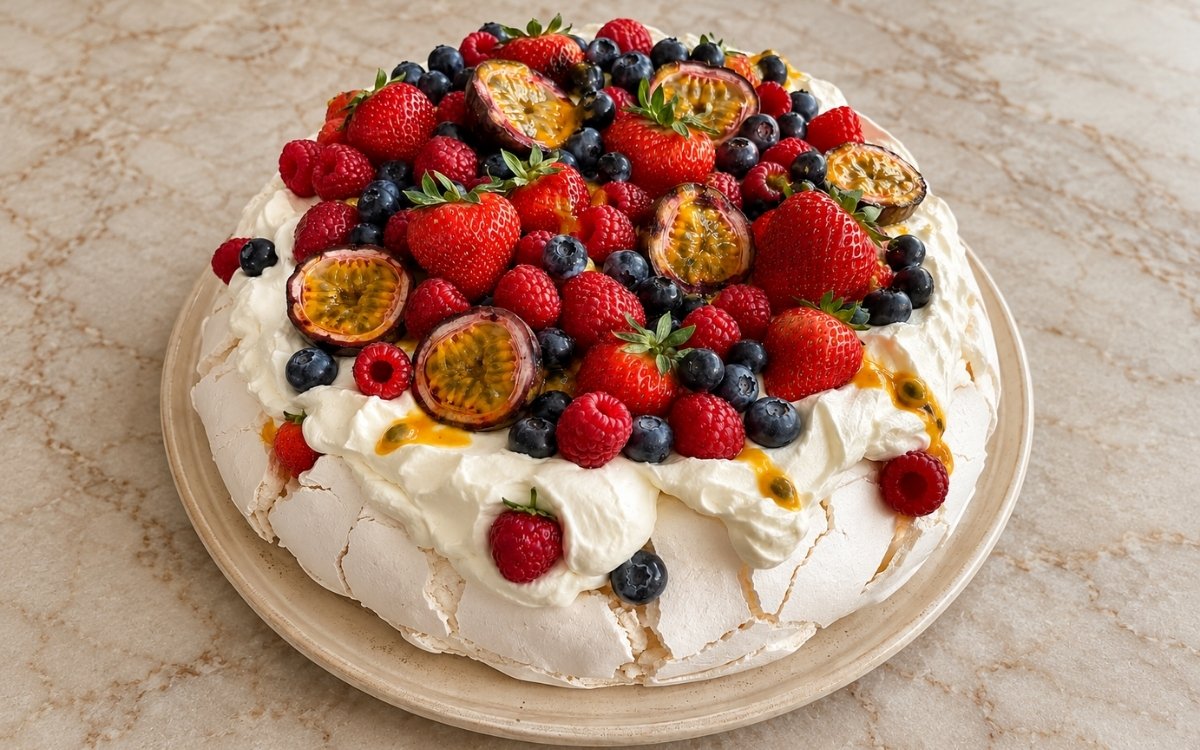
- Transfer the cooled pavlova carefully to a serving plate or cake stand. Pile the whipped cream generously into the center, letting it mound high and slightly spill toward the edges. Top abundantly with strawberries, raspberries, blueberries, and passion fruit pulp spooned over and between the berries. A few berries can sit near the edge or tumble slightly down the cracked sides, matching the hero-image style. Serve immediately after assembly, or within 1–2 hours. Serving within this genuinely narrow window is what protects the pavlova's own contrast between crisp shell and soft interior — the cream and fruit's own moisture will begin softening the meringue noticeably the longer it sits assembled.
Notes
Adding the sugar gradually while whipping the egg whites continuously deserves genuine recognition as the technique most directly responsible for whether this pavlova achieves real, stable structure. The recipe's own explicit warning that sugar "added too quickly" or an "under-whipped" meringue risks weeping, spreading, or collapsing badly reflects a real, common failure point — that patient, gradual addition gives every granule genuine time to dissolve fully into the whites.
Baking at a genuinely low oven temperature and cooling the pavlova slowly inside the turned-off oven deserves the same attention this technique receives throughout classical pavlova-making generally. The recipe's own explicit note that "slow cooling prevents major collapse and cracking" reflects real understanding of how directly a sudden temperature shift would compromise the meringue's own fragile, just-baked structure.
Keeping the fresh fruit entirely unsugared until right before serving deserves genuine respect as a real, deliberate technique protecting the finished dessert. The recipe's own explicit warning that sugaring too early "will release too much liquid and make the pavlova soggy" reflects a real, direct risk this restraint is specifically built to avoid.
Whipping the cream only to soft-medium peaks, rather than stiff ones, deserves attention as the detail responsible for the pavlova's whole intended visual and textural character. The recipe's own explicit note that over-whipped cream "looks heavy" reflects real, considered attention to how this one component's own texture affects the finished dessert's overall lightness.