Ingredients
Method
Prepare the Espresso
- Brew the espresso fresh so it is hot, aromatic, and concentrated. If using sweetener, stir the simple syrup into the hot espresso now so it dissolves evenly. The espresso should be freshly pulled, dark, and fragrant, with no stale or burnt smell. If it sits too long before pouring, the flavour flattens and the visual swirl becomes less striking. Stirring the simple syrup into the hot espresso rather than the finished cold drink is what lets it dissolve fully and evenly — sugar syrup added directly to a cold, milk-and-ice glass would take considerably longer to distribute and could leave an uneven, overly sweet pool at the bottom.
Fill the Glasses
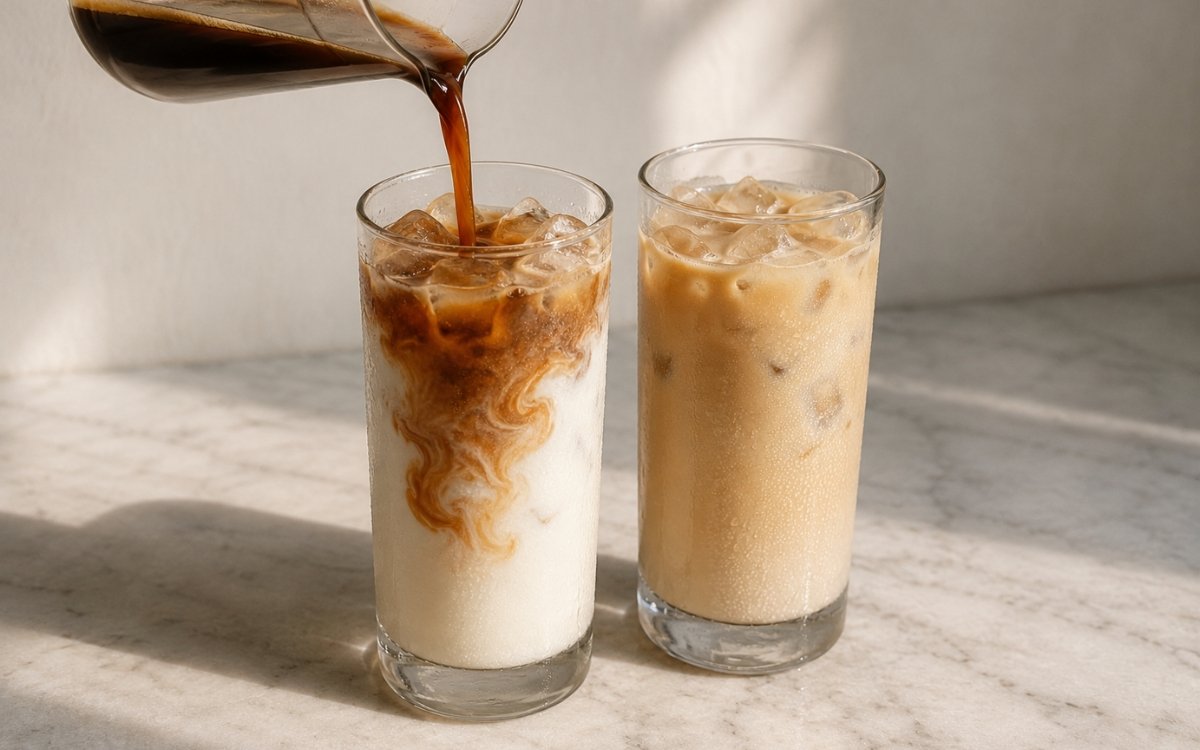
- Divide the ice between 2 tall glasses. Pour 180ml cold milk into each glass over the ice. Leave a little room at the top for the espresso. The glasses should look mostly milk-filled, with the ice clearly visible and enough headroom left so the espresso can sit and swirl through the drink rather than overflow. Building the milk and ice base first, before the espresso is anywhere near the glass, is what sets up the entire visual effect that follows — this order is the foundation everything else in the recipe depends on.
Pour in the Espresso
- Slowly pour half of the hot espresso into each glass directly over the milk and ice. Pour gently so the espresso hits the milk surface and falls in visible dark ribbons, creating the classic cloud-like dispersion through the pale milk. You should see distinct dark espresso streaks and soft swirling clouds moving through the glass. That visual moment is the signature look of a classic iced latte. The milk must already be cold and the glasses already filled with ice before the espresso is poured. If the espresso goes in first and the milk follows, you lose the classic layered swirl effect. Pouring slowly in a thin stream, rather than all at once, gives the hot espresso just enough time to fall through the cold milk in distinct ribbons before the two liquids fully mix — a fast pour collapses that separation almost immediately, losing the visual moment this drink is built around.
Stir and Serve
- Serve immediately as-is for the visual effect, then stir before drinking so the espresso fully combines with the milk. Once stirred, the drink should become a very pale caramel-beige colour — milk-dominant, smooth, and evenly blended. Presenting the drink unstirred for a moment before mixing is a deliberate part of the experience — that brief window is when the layered swirl is at its most visually striking, before stirring folds everything into the drink's final, uniform colour.
Notes
The build order in this recipe — ice first, then cold milk, then hot espresso poured over the top — is worth understanding as the single detail responsible for the drink's entire visual identity. Reversing that order, even slightly, changes the result considerably. Espresso poured into an empty glass with milk added afterward mixes far more uniformly and loses the layered, swirling effect that defines a classic iced latte's presentation before it's stirred.
Keeping the milk genuinely cold, not merely at room temperature, matters more than it might seem given how briefly it's actually in contact with the hot espresso before serving. Warm milk both fails to properly chill the finished drink and reduces the temperature contrast that makes the espresso's ribbons visible as it falls through — cold milk is what keeps that swirl crisp and distinct rather than blurred.
The pace of the espresso pour is a genuine technique detail rather than a stylistic preference. A slow, thin stream gives the hot espresso time to fall through the cold milk in visible ribbons before the two liquids fully combine, which is exactly what produces the cloud-like dispersion this drink is known for. Pouring quickly or dumping the espresso in collapses that separation almost immediately, and the resulting drink never develops the same visual moment.
Generous ice serves a genuinely functional purpose beyond simply chilling the glass. Hot espresso poured over too little ice dilutes and warms the drink faster than the ice can compensate, softening both the temperature and the flavour balance. A properly generous amount of ice keeps the drink cold and structured through the whole time it's poured, presented, and finally stirred.