Ingredients
Method
Create the Garlic Base
- Place the minced or grated garlic in a medium bowl and add the fresh lemon juice directly on top. Use a spoon to combine them briefly and then allow this mixture to rest for 2–3 minutes undisturbed. This short maceration period is important: the acid in the lemon juice begins to break down the sulfur compounds responsible for raw garlic's harsh, sharp bite, mellowing it into something more rounded and complex without cooking. This step is what separates a refined, balanced aioli from one that tastes aggressively raw. For an even smoother result, grate the garlic on a fine Microplane rather than mincing it with a knife — grated garlic dissolves more completely into the sauce and distributes its flavor more evenly.
Build the Aioli
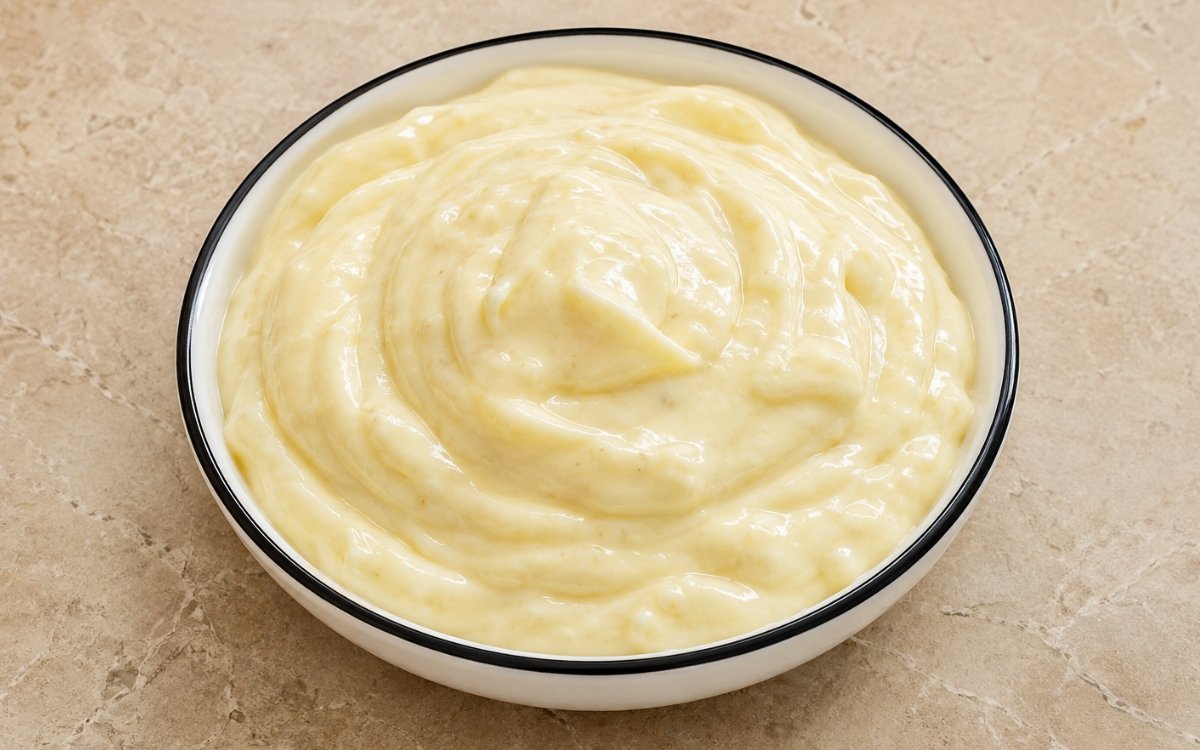
- Add the mayonnaise and Dijon mustard to the garlic-lemon mixture. Using a whisk or a flexible silicone spatula, stir the ingredients together with slow, deliberate strokes until the mixture is completely smooth and uniform in color. The mayonnaise provides the emulsified fat base that gives aioli its characteristic thick, creamy body. Dijon mustard serves two purposes here: it adds a layer of savory, slightly sharp depth that mirrors the complexity of traditional aioli made from scratch, and it acts as an additional emulsifier that helps stabilize the finished sauce when the olive oil is added. The mixture should appear pale ivory, glossy, and completely lump-free at this stage.
Finish with Olive Oil and Season
- Slowly drizzle the extra-virgin olive oil into the mayo-garlic mixture in a thin, steady stream while whisking continuously. This gradual incorporation is important — adding the oil too quickly can cause the aioli to break or appear greasy rather than silky. As the oil is whisked in, the sauce will deepen slightly in color and develop a more luxurious, glossy texture. Season with salt and freshly ground black pepper to taste, starting conservatively since the mayonnaise already contains salt. For the best flavor, transfer the finished aioli to a small container, cover, and refrigerate for at least 15–30 minutes before serving. This resting period allows the garlic to fully infuse the entire sauce and the flavors to meld into a cohesive, rounded result.
Notes
The quality of the mayonnaise matters significantly in this recipe. Because the sauce contains so few ingredients, each one is highly perceptible. Use a high-quality, full-fat mayonnaise — one made with whole eggs rather than egg whites — for the richest, most balanced flavor. Reduced-fat mayonnaise contains stabilizers and added water that produce a thinner, less flavorful aioli.
The amount of garlic in this recipe is intentionally generous, reflecting authentic aioli's reputation as a boldly garlicky condiment. If you prefer a milder garlic flavor, reduce the quantity to 8–10g, or substitute roasted garlic. To make roasted garlic, wrap a full garlic head in foil and roast at 200°C for 35–40 minutes until the cloves are completely soft and golden. Squeeze out the roasted cloves and mash them into a paste before adding to the mayonnaise — this produces a sweeter, deeper garlic flavor with none of the raw sharpness.
Olive oil quality is also important. The olive oil in this recipe is not cooked, so its raw flavor comes through directly in the finished sauce. Use a mild, fruity extra-virgin olive oil rather than an aggressively bitter or peppery one, which could overpower the garlic and lemon.
The resting period in the refrigerator is perhaps the most important step many people skip. The garlic flavor actually intensifies over time as it continues to infuse the sauce — aioli made a few hours ahead or even the day before will taste noticeably more rounded and complex than aioli served immediately. Be aware of this when deciding on garlic quantity if you plan to make the sauce in advance.