Ingredients
Method
Salt and Drain the Cabbage
- Place the finely shredded cabbage in a large colander set over a bowl or in the sink. Toss with the fine sea salt, working it through with your hands so it's evenly distributed. Let sit for 30–45 minutes. The cabbage should release a noticeable amount of liquid into the bowl or sink below. After salting, squeeze the cabbage firmly in batches, using a clean kitchen towel or your hands, to remove as much excess liquid as possible. This step is not optional if you want a coleslaw that stays creamy rather than watery. Salting draws water out of the cabbage's cell structure through osmosis before it ever meets the dressing — skipped, that same water releases slowly over the following hours instead, thinning the dressing and pooling at the bottom of the bowl.
Make the Dressing
- In a bowl, whisk together the mayonnaise, sour cream, apple cider vinegar, sugar, Dijon mustard, celery seed, salt, and black pepper until fully smooth. Taste and adjust. The dressing should taste creamy, tangy, lightly sweet, and well-seasoned on its own — it will mellow slightly once combined with the cabbage. If it tastes flat, add a touch more vinegar or salt. Combining mayonnaise with a smaller amount of sour cream gives the dressing a slightly tangier, less heavy character than mayonnaise alone would produce, while still keeping it genuinely thick and clinging.
Combine and Rest
- Add the drained, squeezed cabbage and grated carrot to a large bowl. Pour over the dressing and toss thoroughly until every strand of cabbage is evenly coated. Cover and refrigerate for at least 1 hour, ideally 2–4 hours, before serving. Give it one more good toss just before serving, since some liquid may settle at the bottom of the bowl. This resting period is what actually lets the dressing work into the cabbage rather than simply sitting on its surface — a coleslaw tasted immediately after mixing reads as noticeably less developed and less unified in flavour than the same batch after a proper chill.
Serve
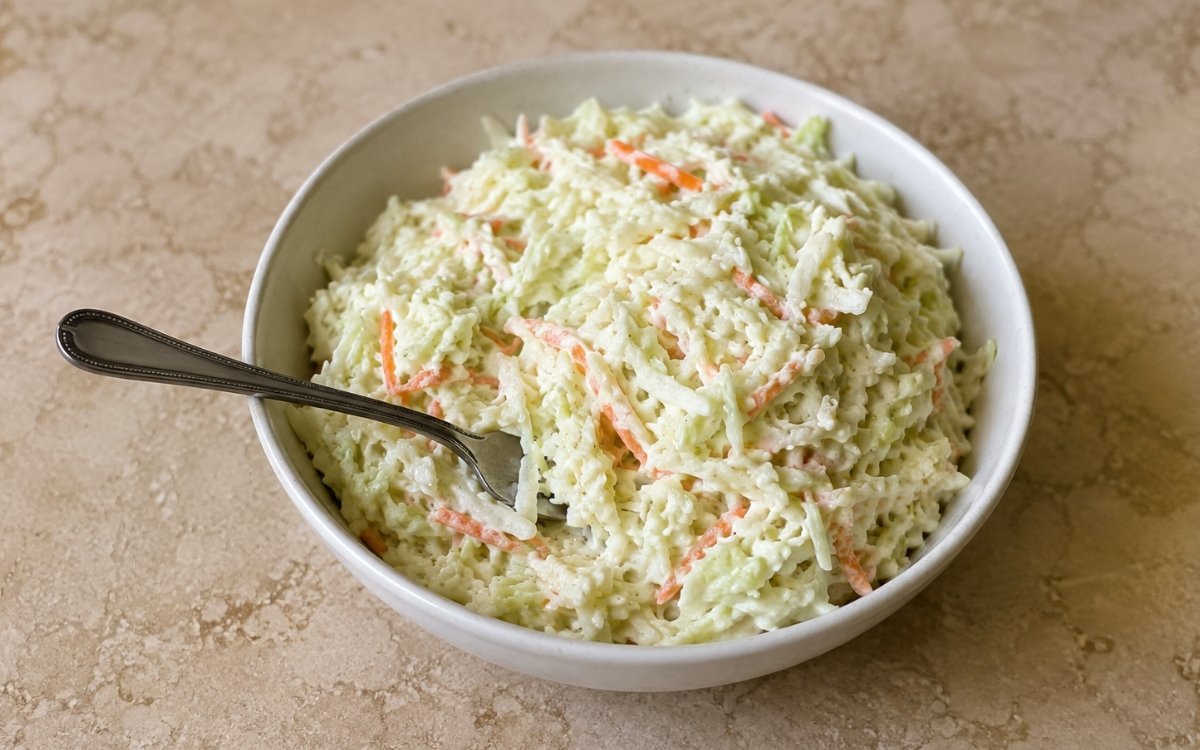
- Serve cold, straight from the refrigerator, alongside a hot sandwich or as a stand-alone side. The coleslaw should look glossy and creamy, with the cabbage still holding real crunch rather than turning limp. Serving it properly cold is part of what makes this coleslaw work as a counterpoint to a hot sandwich — the temperature contrast is as much a part of the pairing as the flavour contrast.
Notes
The initial salting and draining stage is worth understanding as the single technique most responsible for whether this coleslaw holds up over time. Cabbage carries a genuinely significant amount of water within its cell structure, and that water doesn't simply disappear once the vegetable is shredded — it continues to release slowly for hours afterward unless drawn out deliberately first. Salting and then squeezing the cabbage removes that water in advance, on the recipe's own terms, rather than letting it seep out gradually into the finished dressing and dilute it.
The resting period after the slaw is fully dressed serves a genuinely different purpose from the salting stage, though both matter for the finished texture. Where salting removes excess water, this later rest is about penetration — giving the dressing's vinegar, mustard, and seasoning actual time to work into the cabbage rather than just sitting as a coating around it. A coleslaw eaten the moment it's tossed tastes noticeably more disjointed, with the cabbage and dressing reading as separate elements rather than a unified whole.
Combining mayonnaise with a smaller proportion of sour cream, rather than relying on mayonnaise alone, is a small formulation choice that affects the dressing's overall character. Sour cream contributes its own tang and a slightly lighter, less heavy mouthfeel than an all-mayonnaise dressing would have, while the mayonnaise still provides the body and clinging quality the coleslaw needs to properly coat every strand of cabbage.
This coleslaw is deliberately built to hold its texture well over a few hours, which matters given how it's most often served — alongside a hot sandwich, potentially prepared somewhat ahead of the meal itself. The salting stage in particular is what allows this coleslaw to sit dressed in the refrigerator for several hours without turning watery, a genuine practical advantage over a version that skips that step.