Ingredients
Method
Preheat the Oven and Skillet
- Place a 25cm / 10-inch cast iron skillet in the oven and preheat the oven to 220°C / 425°F. The skillet needs to heat fully before the batter goes in. This is what gives the cornbread its classic browned bottom and lightly crisp outer edge rather than a pale, soft crust. Heating the skillet inside the oven while it also comes up to temperature ensures both reach full heat together — a skillet added only briefly at the end wouldn't have nearly enough stored heat to properly sear the batter's edges on contact.
Mix the Dry Ingredients
- In a large bowl, combine the cornmeal, flour, sugar, baking powder, baking soda, and salt. Whisk until evenly distributed. Make sure the baking powder and baking soda are evenly dispersed so the cornbread rises uniformly and does not bake with dense patches. Uneven distribution of the leaveners is a real, common cause of patchy rise — a pocket with too little baking powder stays denser while a pocket with too much can taste faintly bitter or soapy, which is exactly why thorough whisking at this stage matters more than it might seem.
Mix the Wet Ingredients
- In a separate bowl or jug, whisk together the eggs, buttermilk, and melted butter until fully combined. The melted butter should be warm, not hot. If it is too hot, it can partially cook the eggs when mixed in. Keeping the butter at a genuinely warm rather than hot temperature protects the eggs from scrambling on contact — even a brief moment of direct heat against raw egg can set small curds that never fully smooth back into the batter.
Make the Batter
- Pour the wet mixture into the dry ingredients. Fold together just until no dry flour or cornmeal remains. Do not overmix. The finished batter should look thick but pourable, with a few small lumps still acceptable. Overmixing develops the flour too much and produces a tougher, tighter crumb instead of a tender cornbread texture. Stopping at "just combined" rather than continuing to a perfectly smooth batter is a deliberate restraint — every extra stroke of mixing develops more gluten in the flour, and cornbread's specific tender, slightly crumbly texture depends on that gluten staying minimally developed.
Load the Hot Skillet
- Carefully remove the hot skillet from the oven. Add the neutral oil or bacon fat and swirl to coat the bottom and sides. Immediately pour in the batter. It should sizzle lightly on contact. Spread only if necessary. That first sizzle is a useful cue that the skillet is hot enough. If the batter goes in silently, the crust will be weaker and paler. This audible sizzle is a genuinely reliable, low-tech doneness check for the skillet's temperature — it confirms the fat and pan surface are hot enough to immediately begin searing the batter's exterior rather than letting it sit and slowly warm from a lukewarm start.
Bake
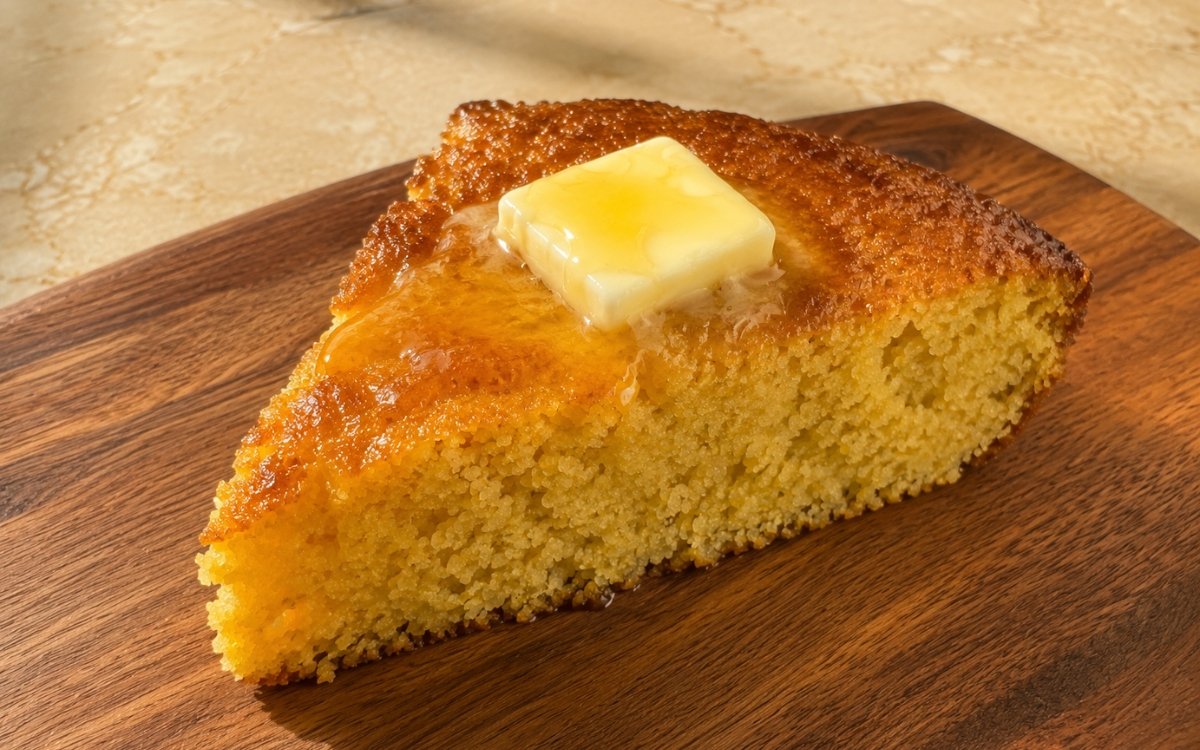
- Return the skillet to the oven and bake for 22–28 minutes, until the top is deeply golden and the center is just set. The cornbread is done when the top is golden-brown and slightly craggy, the edges are lightly pulled from the skillet, and a skewer inserted into the center comes out clean or with a few moist crumbs, but no wet batter. Do not overbake. The center should remain moist and tender, not dry and crumbly in a chalky way. Edges visibly pulling away from the skillet's sides is a genuinely useful visual cue alongside the skewer test — it signals the batter has finished setting and contracting slightly as it firms, which tends to happen right around the same window the centre finishes cooking through.
Rest and Serve
- Let the cornbread rest in the skillet for 10 minutes before slicing. This short rest matters. Straight from the oven, the crumb is still fragile and steamy. Resting helps it set so it slices cleanly into 8 wedges without breaking apart. Serve warm with butter on top and a light drizzle of honey if desired. Cornbread's crumb continues firming for a period after it leaves the oven, and slicing too early cuts through a structure that hasn't finished setting — the 10-minute rest is what allows clean, intact wedges rather than crumbling, uneven pieces.
Notes
The preheated cast iron skillet is worth understanding as the single technique most responsible for cornbread's defining texture contrast. A cold or merely warm skillet produces cornbread with a soft, pale exterior all the way around, essentially indistinguishable from a cornbread baked in any ordinary pan. A genuinely hot skillet, by contrast, sears the batter's exterior the instant it makes contact, building the deeply browned bottom and crisp edge that skillet cornbread is specifically known for.
Restraint during mixing is worth taking seriously despite how counterintuitive it can feel — most instincts push toward mixing a batter until it looks perfectly smooth. Cornbread's tender, slightly crumbly interior depends on the opposite approach: folding only until the dry ingredients disappear, accepting a few small lumps, and stopping well short of a fully smooth batter. Every additional stroke beyond that point develops more gluten, which tightens the crumb in a direction away from cornbread's intended texture.
The audible sizzle when batter meets the hot, fat-coated skillet is a small but genuinely useful real-time confirmation that the preheating step actually worked. It's easy to assume a skillet preheated in a 220°C oven is hot enough without any further check, but that sizzle — or its absence — gives immediate, direct feedback about whether the pan has enough stored heat to properly sear the batter on contact.
The resting period after baking, though it might feel like an unnecessary delay when the cornbread smells done and looks finished, protects the final presentation more than its brevity suggests. Cornbread's crumb structure is still actively firming in the minutes right after it leaves the oven, and cutting into it too early — while it's still essentially setting — produces messy, crumbling wedges instead of clean slices.