Ingredients
Method
Preheat the Waffle Iron
- Heat a Belgian waffle iron until fully hot. If your waffle iron has temperature settings, use medium-high to high heat. The waffle iron needs to be properly preheated before the first waffle. If it is only warm, the batter will spread and steam instead of setting into crisp golden pockets. That genuine, full heat is what allows the batter's surface to set quickly on contact, building real structure into the pockets before the batter has any chance to spread thin and steam instead.
Mix the Dry Ingredients
- In a large bowl, whisk together the flour, sugar, baking powder, baking soda, and salt. Make sure the leavening is evenly distributed so the waffles rise evenly. That thorough whisking ensures the baking powder and soda are dispersed consistently throughout the flour, rather than clumped in pockets that would cause some parts of the batter to rise more than others.
Mix the Wet Ingredients
- In a separate bowl, whisk together the egg yolks, buttermilk, melted butter, and vanilla. The butter should be melted but not hot, or it can scramble the yolks slightly. Keeping the melted butter genuinely warm rather than hot protects the yolks from that risk — butter still carrying real heat would begin cooking the egg proteins on contact rather than simply combining with them.
Combine the Batter
- Pour the wet ingredients into the dry ingredients and stir gently until just combined. The batter should be thick and slightly lumpy, not perfectly smooth. Do not overmix. A few lumps are fine. Overmixed waffle batter turns bready and heavy instead of light inside. Stopping the mixing the moment the ingredients come together, rather than continuing for a smoother-looking batter, is what protects the finished waffles from toughening — flour's gluten develops more the longer it's worked, and this batter has genuinely little need for that extra structure.
Whip and Fold the Egg Whites
- In a clean bowl, whisk the egg whites until soft peaks form. Fold the whipped egg whites gently into the batter in two additions, using a spatula. Stop as soon as no large white streaks remain. The batter should look airy and thick. Do not crush the egg whites by stirring aggressively, or you lose the lift that makes the waffles fluffy. Folding in stages, rather than adding all the whipped whites at once, lets the dense batter loosen gradually — that gradual approach protects far more of the trapped air than a single, more aggressive combining motion would.
Rest the Batter Briefly
- Let the batter rest for 10 minutes while the waffle iron finishes heating. This gives the flour time to hydrate and helps the waffles cook more evenly. That brief rest lets the flour fully absorb the surrounding liquid before cooking begins, which is directly what helps the finished waffles cook through more evenly rather than leaving pockets that are still slightly underhydrated.
Cook the Waffles
- Lightly grease the waffle iron. Add enough batter to fill the waffle grid without overflowing. Cook according to your waffle iron, usually 4 to 6 minutes, until deeply golden, crisp at the edges, and cooked through. Transfer each cooked waffle to a wire rack. Do not stack hot waffles on a plate. They will steam each other and lose the crisp edges. Use a rack, or keep them in a low oven at 90–100°C on a rack while cooking the rest. Stacking hot waffles traps their own released steam against each other, and that trapped moisture is exactly what softens their otherwise crisp edges — a rack lets that steam escape freely instead.
Prepare the Berries
- While the waffles cook, prepare the strawberries and blueberries. Keep the berries fresh and unsweetened if you want the clean classic breakfast look. If the strawberries are not very sweet, toss them with 1 tsp sugar and let them sit for a few minutes. That brief sugared rest draws a little of the strawberries' own juice out through osmosis, rounding out any sharpness without needing to cook the fruit at all.
Serve
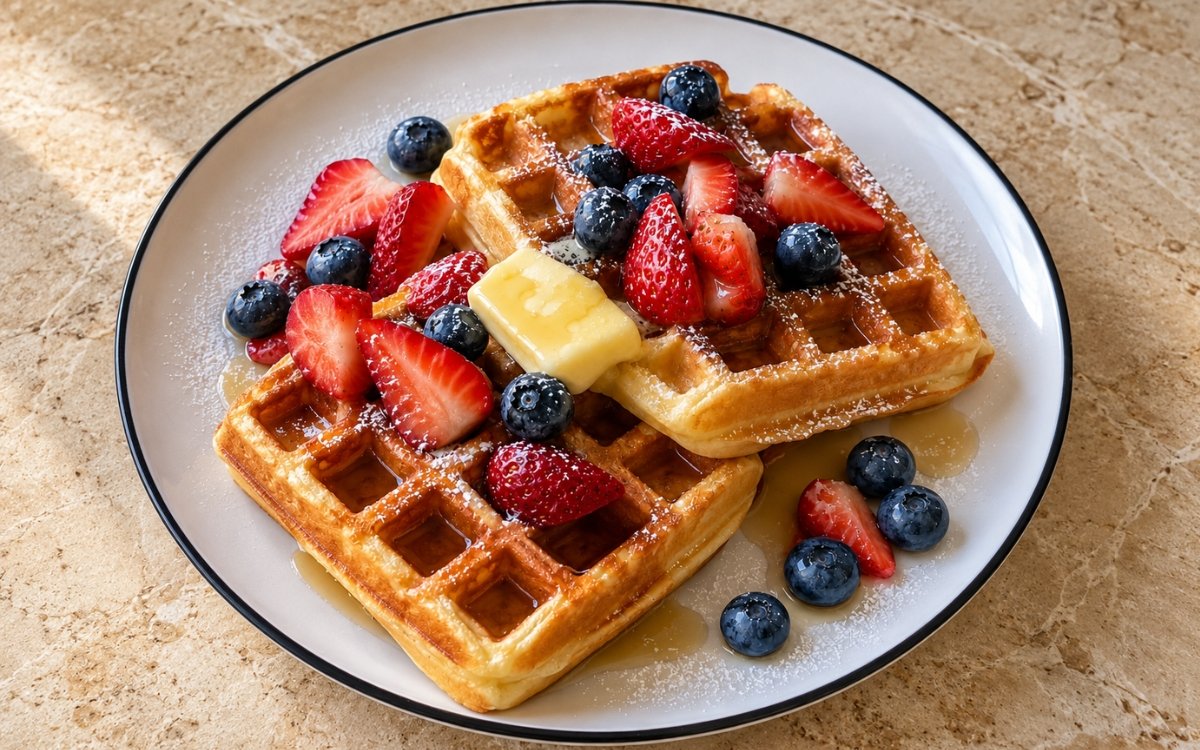
- Place 2 waffles per serving on plates. Top with strawberries and blueberries. Add a small piece of butter while the waffles are hot so it starts to melt. Dust lightly with powdered sugar and drizzle with maple syrup so the syrup settles into the waffle pockets. Serve immediately. Drizzling the syrup while the waffles are still genuinely hot lets it flow naturally into the deep pockets built by the waffle iron, pooling exactly where it's meant to rather than sitting on the surface of a cooled waffle.
Notes
Whipping the egg whites separately, then folding them gently into the batter, deserves genuine recognition as the technique responsible for this waffle's whole characteristic fluffiness. This batter is naturally thick and dense on its own, and without that separately whipped, trapped air folded in mechanically, these waffles would come out considerably heavier and denser than the light, airy interior this recipe is specifically built to achieve.
Stopping the batter's mixing the moment the wet and dry ingredients come together, accepting a thick, visibly lumpy result, deserves the same attention this principle receives throughout this collection's other batter-based recipes. Flour's gluten network strengthens the more it's worked, and a batter this rich genuinely doesn't need — or benefit from — that additional structure, which is exactly why stopping early protects tenderness.
Keeping the waffle iron genuinely fully preheated before the first waffle ever goes in deserves attention as the detail most responsible for whether these waffles develop real, crisp golden pockets or turn out pale and steamed. Batter poured onto a merely warm surface spreads and steams before it has any chance to set into the deep, structured pockets a Belgian waffle iron is specifically designed to produce.
Keeping every finished waffle on a wire rack rather than stacking them, as the recipe's own notes emphasise, deserves genuine respect as a small but consequential detail. Stacked waffles trap their own released steam against one another, and that trapped moisture directly softens their otherwise crisp edges — a rack lets that steam escape freely, protecting the waffle's texture right up until serving.