Ingredients
Method
Zest Before Juicing
- Always zest citrus first — once cut, the peel becomes too soft to work cleanly. Use a Microplane and remove only the colorful outer layer, avoiding bitter white pith. Set the zest aside.
Juice and Balance the Citrus
- Juice the lemon, orange, and lime, straining out seeds and excess pulp. Each fruit serves a role: lemon brings sharp acidity, orange adds sweetness and body, and lime contributes a light tropical brightness.
Build the Dressing Base
- In a small bowl or jar, combine the citrus juices, reserved zest, Dijon mustard, honey, grated garlic, and optional grated ginger. Whisk until smooth and fully dissolved. At this stage the mixture will taste strongly acidic — this is expected.
Add Salt and Prepare to Emulsify
- Stir in the salt before adding oil. Begin whisking steadily if working in a bowl, or prepare to seal and shake if using a jar.
Emulsify with Olive Oil
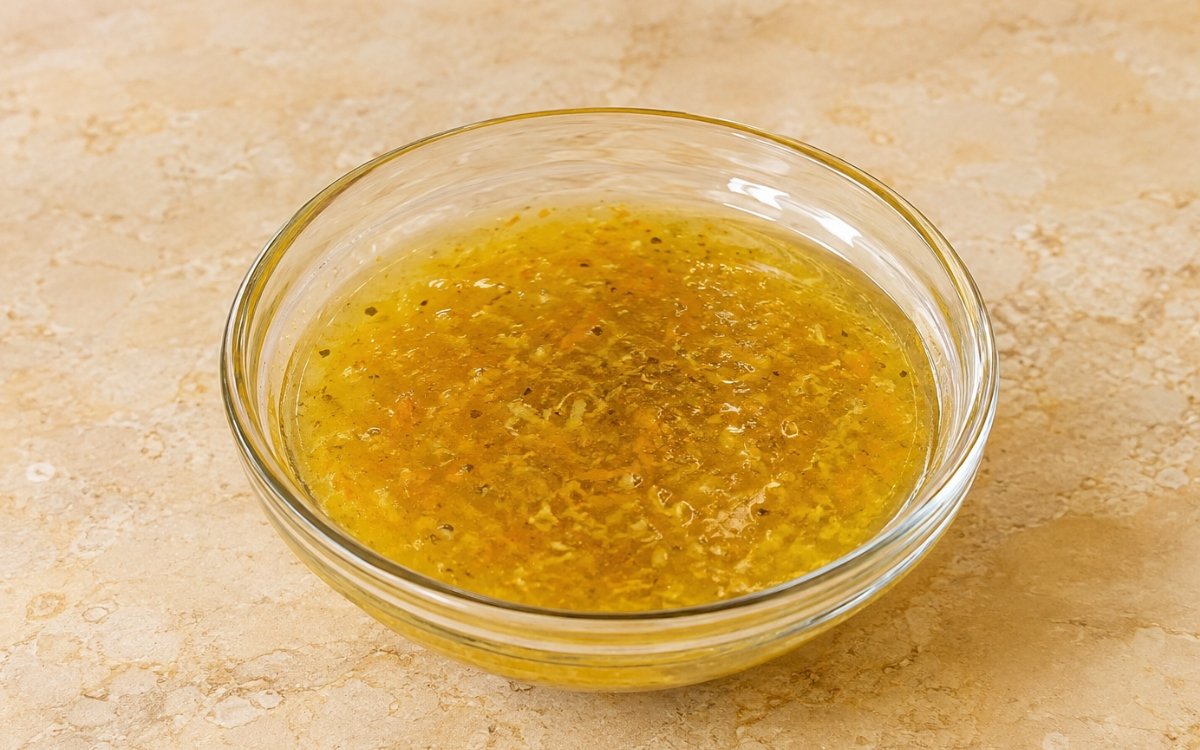
- Drizzle the olive oil in slowly while whisking, or shake vigorously for about 30 seconds. The dressing should become lightly emulsified and take on a warm golden-orange color.
Taste and Fine-Tune
- Adjust the balance as needed — more lemon for brightness, honey for softness, or orange juice for roundness. Finish with freshly ground black pepper, which enhances citrus aromas.
Notes
The three-citrus approach reflects a broader culinary principle: using multiple sources of the same flavor category creates more complexity than a single source because each contributes different ratios of aromatic compounds, acids, and sugars. A lemon-only dressing is sharp and clean. An orange-only dressing is sweet and mild. A lime-only dressing is tropical and slightly bitter. Combining all three produces a citrus character with depth, range, and interest that none provides alone.
The ratio of the three juices is deliberately weighted toward lemon, which provides the strongest acid backbone, with orange and lime in supporting roles. Reversing the ratios — using more orange than lemon — produces a sweeter, milder dressing with less assertive acidity. Adjust to personal preference and intended application.
This dressing has excellent crossover versatility: it works equally well as a Mediterranean dressing (with a bold, grassy olive oil) and as an Asian-influenced dressing (with lighter oil and added ginger). The base character accommodates many different flavor contexts.