Ingredients
Method
Rinse the Rice Thoroughly
- Place the jasmine rice in a fine-mesh strainer and hold it under cold running water for 2–3 minutes, using your fingers to gently agitate the grains throughout. Watch the water flowing through the strainer — it will begin as cloudy, milky white and gradually clear to almost completely transparent. The rinsing is complete only when the water runs clear. The milky cloudiness is surface starch — a residue of the milling process that coats the outside of each grain. If this starch remains on the grain surface when the rice is cooked, it gelatinises into a sticky glue between the grains, causing them to clump together in dense, sticky masses rather than cooking as individual, separate, fluffy grains. Rinsing removes this surface starch without affecting the starch stored inside the grain itself — the internal starch is what gives jasmine rice its characteristic soft, slightly tender texture when cooked, and rinsing does not touch it. Jasmine rice is naturally aromatic from its own grain compounds; rinsing does not remove this aroma. Drain the rinsed rice thoroughly in the strainer, shaking it several times to remove as much clinging water as possible. Water trapped in the strainer carries over into the pot and can throw off the water-to-rice ratio — even a small excess of water produces rice that is slightly wet and sticky rather than dry and separate.
Combine and Bring to the Boil
- Transfer the drained rice to a medium saucepan of approximately 2L capacity with a tight-fitting lid. Add the 525ml of cold water, the salt, and the vegetable oil. The oil is an often-omitted ingredient in rice cooking that performs a specific and valuable function — it coats the grain surfaces during cooking, helping to keep the grains separate and preventing the surface starch that survived the rinsing from causing sticking. It also adds a very subtle richness to the finished rice without contributing any detectable oil flavour at this small quantity. Stir briefly to combine the salt and oil with the water, then place over high heat. Bring to a full rolling boil — do not reduce the heat prematurely. The initial boil serves a purpose: it brings the entire water volume to a uniform temperature simultaneously before the heat is reduced, ensuring even hydration of the rice from the first moment of low-heat cooking.
Reduce, Cover, and Simmer Without Interference
- The moment the water reaches a full rolling boil, reduce the heat to the absolute lowest setting your burner can produce, cover the pot tightly with the lid, and do not touch it again for 15 minutes. This sealed, low-heat simmer is the most important phase of the recipe and the one most frequently disrupted by home cooks lifting the lid to check progress. The tight lid is not merely convenient — it is structurally essential to the cooking process. Steam accumulates inside the sealed pot and creates a pressurised, humid environment where the rice grains are cooked simultaneously by both the boiling water below them and the hot steam above. This dual-direction hydration is what cooks the top layer of rice as thoroughly as the bottom layer, producing evenly cooked grains throughout the pot. Every time the lid is lifted, a burst of steam escapes and is lost permanently — the pot's water inventory decreases, the steam pressure drops, the temperature falls, and the upper rice grains lose their cooking medium. A single lid lift mid-cook reliably produces rice with a dry, undercooked top layer and a wet, overcooked bottom layer. The only correct action during these 15 minutes is to ensure the heat is genuinely low — if you can hear aggressive boiling through the lid, reduce the heat further. The sound should be a faint, quiet simmer, barely audible.
Rest Off Heat
- After 15 minutes, remove the pot from the heat entirely without lifting the lid. Allow it to stand undisturbed and covered for a further 5 minutes. This rest period is the completion of the cooking process, not an optional pause before serving. During the 15-minute cook, the water at the bottom of the pot is used up in cooking the lower grains, while the upper portion of the rice is cooked primarily by steam. Immediately after cooking, the moisture distribution through the pot is slightly uneven — the very bottom grains have been in direct contact with the hottest, most liquid-rich environment, while the top grains have cooked in a drier, steamer atmosphere. The 5-minute covered rest allows this moisture to redistribute through the pot by diffusion — the drier top absorbs moisture migrating upward from the wetter bottom, and the bottom's excess moisture evaporates slightly and is redistributed as steam. The result after the rest is a pot where every grain, from top to bottom, has reached the same moisture level and the same tender, cooked texture.
Fluff and Add the Finishing
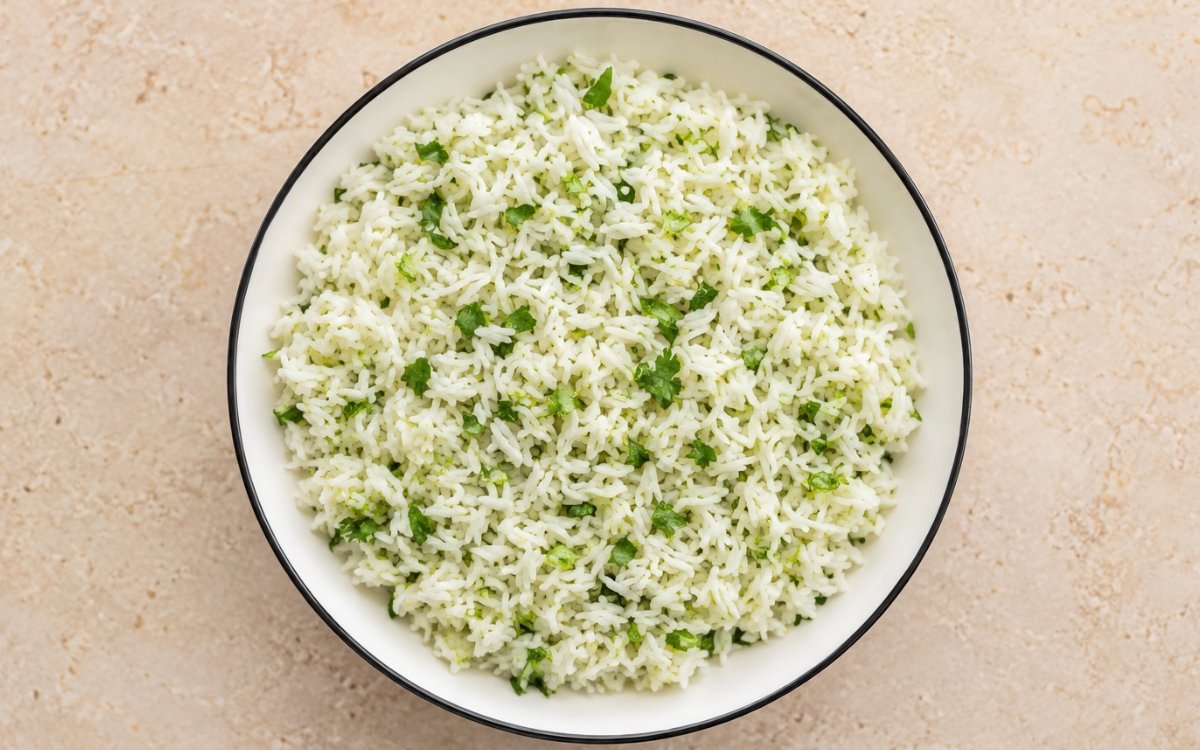
- After the rest, lift the lid for the first time and immediately fluff the rice using a fork — not a spoon, not a spatula. This tool choice is not pedantic. A fork's tines slide between the individual grains and separate them cleanly without the compressive, rolling pressure that a spoon or spatula applies. That compression is what collapses the light, airy structure of properly cooked jasmine rice into sticky, dense clumps. Use the fork with a light, raking, lifting motion — work from the edges of the pot toward the centre, lifting and separating rather than stirring or folding. Once the rice is fluffed and the grains are visibly separate, add the lime juice, lime zest, chopped cilantro, and butter. The lime juice and zest go in after cooking — never during. Acid added to rice during the cooking process does two things: it slightly tightens the grain structure, making the grains firmer and more compact; and it breaks down the volatile aromatic compounds in fresh lime juice that are responsible for the bright, clean citrus fragrance, leaving a flat, muted lime flavour rather than the vivid, fresh character that defines this rice. Added after cooking and off-heat, the lime juice stays completely fresh and its aromatic compounds are preserved intact. Fold the finishing ingredients through the rice gently until the butter has melted and everything is evenly distributed. Serve immediately — the lime aroma is at its most vibrant in the first few minutes after the finishing is added.
Notes
Jasmine rice is a long-grain aromatic variety originating in Thailand, where it is grown in specific soil and climate conditions that produce its characteristic scent — a floral, slightly popcorn-like aroma that comes from naturally occurring 2-acetyl-1-pyrroline, the same compound responsible for the aroma of fresh bread crust and basmati rice. This aroma is fragile and volatile — it diminishes with age, which is why fresh crop jasmine rice smells noticeably more fragrant than older rice. Store jasmine rice in an airtight container away from light and heat to preserve its aromatic character.
The 525ml to 300g water-to-rice ratio is slightly higher than the commonly cited 1.5:1 ratio for jasmine rice. The additional water compensates for the moisture lost during the covered simmer in a home kitchen environment — restaurant kitchens maintain more controlled humidity and their larger rice batches lose proportionally less steam. At home, 1.75:1 is the more reliable ratio for consistent results.
Fresh lime juice is specified because bottled lime juice is pasteurised and often contains preservatives that produce a flat, slightly bitter flavour compared to the bright, clean acidity of freshly squeezed juice. In a preparation where lime is the primary flavour event of the finishing, this difference is significant and immediately noticeable. Always use fresh limes.