Ingredients
Method
Build the Marinade Base
- Combine minced chipotle peppers, adobo sauce, olive oil, lime juice, garlic, cumin, oregano, salt, and black pepper in a bowl and mix into a thick, uniform paste. The marinade should be dense and cling to a spoon — not watery. This consistency ensures it adheres to the chicken and stays in place during cooking instead of dripping off.
Score and Load Flavor
- Using a sharp knife, make deep cuts into the chicken legs, slicing down to the bone at regular intervals. This is not cosmetic — it creates channels for the marinade to penetrate beyond the surface. Rub the marinade aggressively over the chicken, pressing it into every cut and working it under the skin where possible. The goal is full coverage, not a light coating.
Marinate for Penetration
- Cover and refrigerate for at least 2 hours, ideally longer. During this time, salt and acid begin penetrating the outer layers while the fat-soluble compounds in the chipotle and spices settle into the meat. This step builds depth — without it, the flavor remains superficial.
Bring to Temperature
- Remove the chicken from the refrigerator 30 minutes before grilling. This reduces the temperature gap between the exterior and interior, allowing the chicken to cook more evenly and preventing the outside from burning before the inside is done.
Set Up a Two-Zone Grill
- Preheat the grill to medium-high heat (around 200°C / 400°F) and create two zones — one direct heat area and one cooler indirect zone. This setup gives you control. Direct heat builds char, while indirect heat finishes cooking without burning the marinade.
Start Skin-Side Up
- Place the chicken on the grill skin-side up over indirect heat and close the lid. Cook undisturbed for about 15 minutes. Starting away from direct heat allows the fat under the skin to begin rendering slowly while the marinade sets instead of burning immediately.
Flip and Develop Char
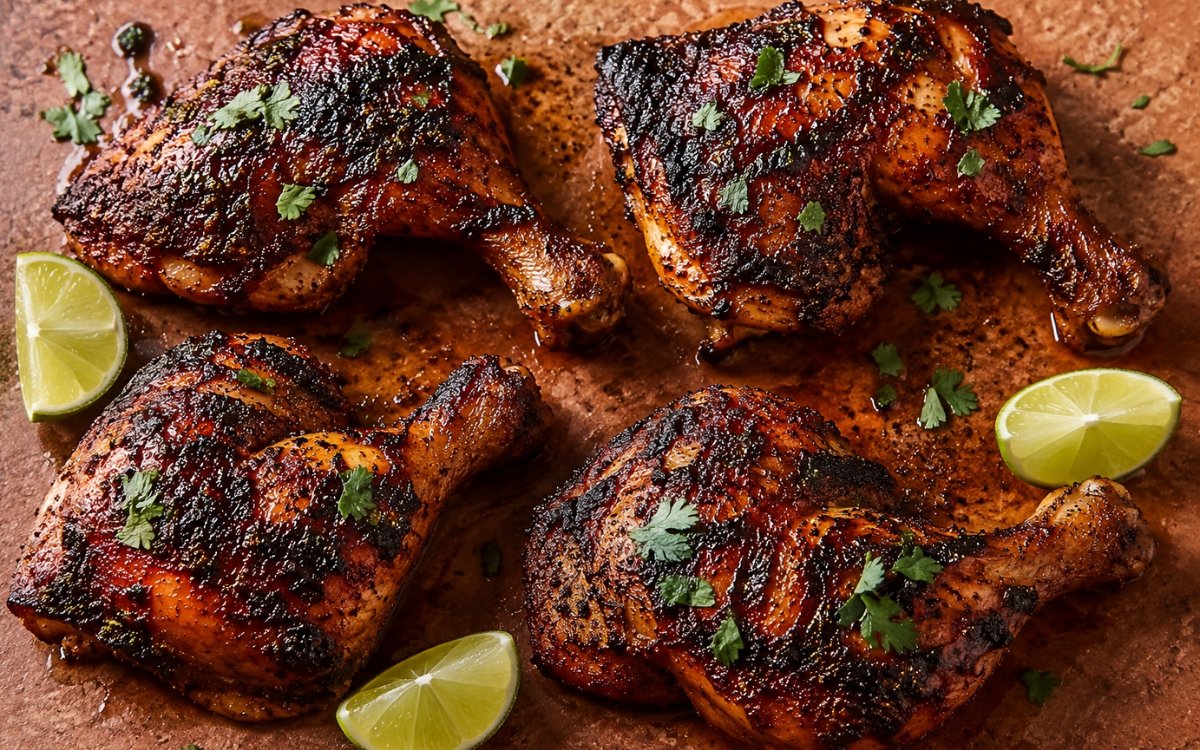
- Move the chicken to direct heat and flip skin-side down. Grill for another 15–20 minutes, turning occasionally to control flare-ups and ensure even charring. The skin should blister, crisp, and darken in spots, but not burn completely. If flames spike from dripping fat, move the chicken back to the cooler zone.
Monitor Internal Temperature
- Cook until the thickest part of the chicken reaches 74°C (165°F). Dark meat is forgiving, but proper temperature ensures safety and optimal texture. The meat should feel tender, not tight, and juices should run clear.
Rest and Finish
- Transfer the chicken to a plate and rest for 5 minutes. This allows the juices to redistribute and the structure to stabilize. Finish with fresh cilantro and a squeeze of lime just before serving to cut through the richness and spice.
Notes
The marinade's thick, paste-like consistency is a deliberate structural decision rather than an incidental result of the ingredient list. A watery marinade slides off the chicken during both refrigeration and grilling, contributing far less flavor than a dense paste that clings to every scored cut and stays in place under direct heat.
Scoring down to the bone matters specifically for leg quarters, since their size and bone structure mean surface marinating alone would leave the deepest parts of the meat essentially unseasoned. The channels created by deep cuts are what let the chipotle, garlic, and spice blend actually reach that depth.
The two-zone grill setup is the technique that makes this whole dish possible without burning. Chipotle and adobo carry both sugar and fat, both of which scorch quickly under sustained direct heat — starting over indirect heat lets the fat render and the marinade set before the chicken ever meets direct flame, and moving back to the cooler zone if flare-ups spike protects the dish through the entire cook.