Ingredients
Method
Beat the Eggs
- Crack the 8 large eggs into a bowl and add ½ tsp fine salt, ¼ tsp white pepper, 1 tbsp Shaoxing wine or water, and 1 tsp sesame oil or neutral oil. Beat with chopsticks or a fork for 20–30 seconds, just until the yolks and whites are combined and the mixture is a uniform pale yellow with only a few small bubbles on the surface. Stop before it turns frothy or foamy. Set the bowl beside the stove so the eggs are ready the moment the pan is hot. That light beating, with a little liquid in the mix, is what keeps the eggs genuinely tender and custardy instead of airy and dry.
Prep the Slurry and Aromatics
- Stir the 1 tsp cornstarch into the 1 tbsp water in a small bowl until smooth and set it near the stove. Cut each tomato into 6–8 wedges so the pieces are thick enough to hold their shape in the pan. Thinly slice the 3 scallions, keeping the whites and the greens in separate piles, and finely mince the 3 cloves of garlic. Measure out the sugar, soy sauce, ketchup, and water or stock so everything can go in quickly, and stir the slurry again right before it is used, since cornstarch settles fast. That advance preparation is what lets the cooking that follows move at full speed without anything waiting in a hot pan.
Scramble the Eggs Part-Way
- Heat a wok or large skillet over medium-high heat for about 1 minute, then add 1 tbsp of the neutral oil and swirl to coat the base. When the oil is hot and shimmering, pour in the beaten eggs and let them set for about 10 seconds. Push and fold gently with a spatula into large, soft curds, cooking for roughly 40–60 seconds, until the eggs are about 70–80% cooked and still slightly wet in places. Slide them onto a plate straight away. That deliberate under-cooking is what lets the eggs finish gently in the sauce so they stay genuinely soft, plump, and glossy.
Build the Tomato Base
- Return the pan to medium-high heat and add the remaining 1 tbsp neutral oil, with a little more if the pan looks dry. Add the scallion whites and garlic and stir-fry for 15–20 seconds, just until fragrant. Add the tomato wedges, the remaining ½ tsp salt, 1½ tsp sugar, 1 tbsp light soy sauce, and the 2 tbsp ketchup if using, then stir-fry for 2–4 minutes until the tomatoes begin releasing juice. Pour in 80–120ml of water or light stock, using less if the tomatoes are very watery, and cook for another 2–3 minutes until the wedges soften and the liquid turns saucy while the pieces still hold their shape. That restraint is what keeps the dish genuinely chunky and fresh rather than collapsed into a puree.
Lightly Thicken
- Give the slurry a quick stir and drizzle it into the pan while stirring the tomatoes. Cook for 20–30 seconds, until the sauce turns glossy, lightly thickens, and clings to the tomato wedges. The sauce should coat a spoon lightly rather than turn heavy or gelatinous. If it looks too thick, loosen it with a splash of water, and if it looks too thin, let it bubble for another 15–20 seconds. That small amount of starch is what binds the juices to the tomatoes without clouding or stiffening the sauce.
Return the Eggs and Serve
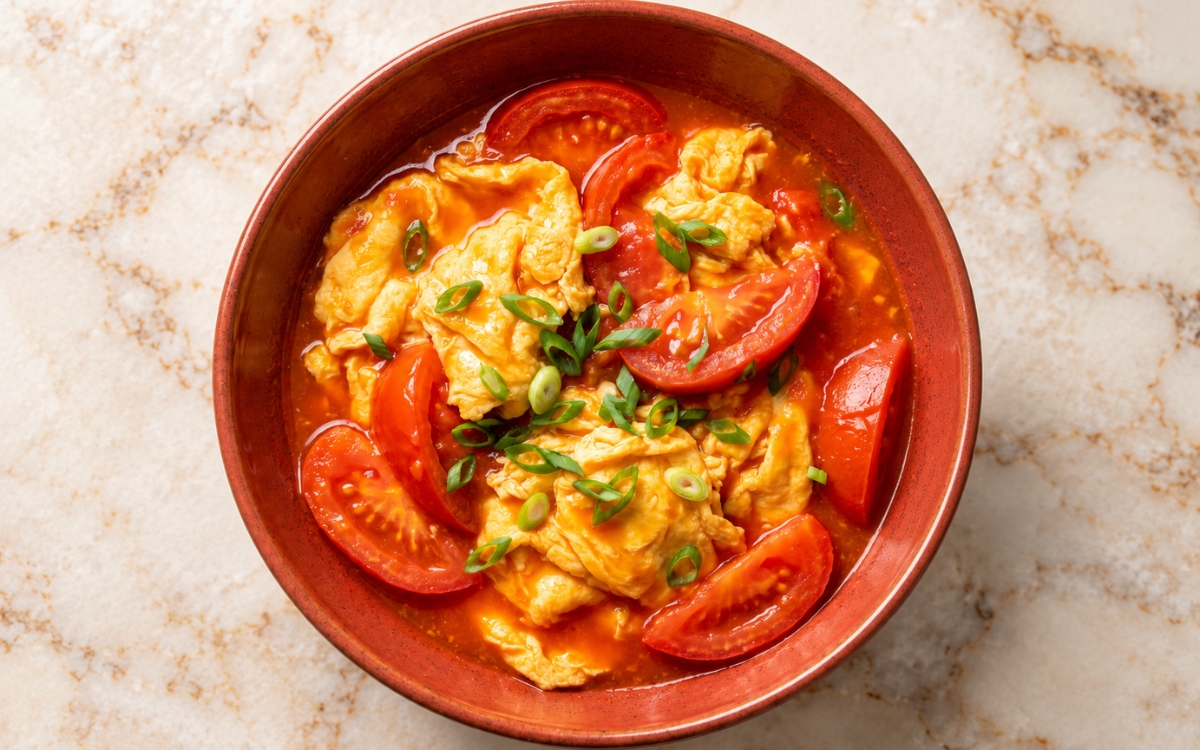
- Slide the eggs back into the pan along with any juices that collected on the plate. Fold gently with a spatula for 20–40 seconds, just until the eggs are fully cooked through, no longer wet, and coated in the red sauce. Taste and adjust with a pinch more salt or sugar if needed, then turn off the heat and scatter the sliced scallion greens over the top. Serve immediately in a warm bowl, ideally with steamed white rice alongside. That gentle, brief fold is what keeps the curds large and plush rather than broken into small, messy pieces.
Notes
Stopping the eggs at 70–80% cooked deserves genuine recognition as the technique most directly responsible for whether the finished dish has soft, custardy curds or tough, dry ones. Eggs keep setting in the residual heat and again when they return to the hot sauce, so curds that are fully set in the first pan turn rubbery and shrink by the time they reach the bowl.
Keeping the tomato wedges visibly intact deserves the same attention this technique receives throughout this collection’s other quick stir-fry dishes, where a short, hot cook preserves texture. Tomatoes slump and release juice within a few minutes of stir-frying, but cooked much longer they collapse into a puree, and the dish loses its chunky, fresh character and turns thin and muddy.
The small amount of sugar deserves genuine respect as the detail most directly responsible for rounding out the natural acidity of the tomatoes. Without it the sauce tastes sharp and thin even when properly salted, while 1½ tsp is enough to tip it into a savoury, lightly sweet balance, and the optional ketchup deepens the colour in the same direction.
Choosing ripe, juicy tomatoes and adjusting the added liquid to match deserves attention as a genuine, checkable cue rather than a loose approximation. Very watery tomatoes already supply plenty of liquid and need less water or stock, whereas firmer fruit use the full 120ml, and the sauce is ready when it clings lightly to the wedges instead of pooling in the pan.