Ingredients
Method
Make the Hot-Water Dough
- Combine the 360g all-purpose flour and 1 tsp fine salt in a mixing bowl. Pour in the 210ml hot water, at about 80–90°C rather than at a violent boil, and stir with chopsticks or a fork until shaggy clumps form. Once it is cool enough to handle, knead for 4–6 minutes into a soft, mostly smooth dough. If it feels dry and will not come together, add the room-temperature water 1 tsp at a time, using no more than 20–30ml in total. The dough should be soft, pliable and slightly tacky, never stiff. Coat it lightly with the 1 tbsp neutral oil, cover the bowl and rest it for 30 minutes. That hot water partially gelatinises the starch, which is what gives a genuinely softer dough that rolls thin without fighting back.
Prepare the Scallion Filling
- While the dough rests, stir the 6 tbsp neutral oil or melted lard with the 1 tsp fine salt and ½ tsp white pepper in a small bowl. Stir in the 1 tbsp all-purpose flour to make a loose, spreadable paste, then set it aside. Finely slice the 8–10 scallions, patting them completely dry with paper towels first if they were washed, and keep them separate from the paste until rolling. The sliced scallions should look dry and loose, not clumped together or glistening with water. That small amount of flour in the oil is what keeps the layers slightly separated as they roll and cook, so they open into distinct, flaky sheets.
Mix the Dipping Sauce
- Still during the rest, stir the 4 tbsp light soy sauce, 2 tbsp Chinese black vinegar or rice vinegar, 1 tsp sesame oil and ½ tsp sugar together in a small dish for about 1 minute, until the sugar has completely dissolved and no grains remain at the bottom. Add the optional 1 tsp finely sliced scallion or a small pinch of toasted sesame seeds if using. Taste it: the sauce should be balanced salty and tangy, not harshly vinegary, with black vinegar giving the deeper, maltier classic flavour and rice vinegar a lighter, sharper one. Thinly slice the 1 scallion for the garnish and keep it covered. That early mixing is what gives the sugar time to dissolve fully and the flavours time to round out before the pancakes come off the heat.
Divide the Dough
- Turn the rested dough onto a surface dusted with only a small amount of flour and knead it 2–3 times, just to bring it back together. Divide it into 4 equal pieces, about 145g each, weighing them if possible so the pancakes finish at the same size. Shape each into a smooth ball and keep the pieces covered with a cloth or an upturned bowl while you work, because exposed dough forms a dry skin that tears during rolling. The dough should now feel genuinely relaxed and stretch easily without snapping back. That even division is what lets the four pancakes roll out to the same size and cook evenly in the same time.
Roll, Fill and Coil
- Work with one piece at a time. Roll it into a thin rectangle or oval about 2–3mm thick, roughly 30 × 18cm. Spread a quarter of the oil paste thinly over the surface, leaving a clean 1cm border along one long edge, then scatter a quarter of the sliced scallions evenly on top without piling them up. Starting from the opposite long edge, roll the dough up tightly into a long rope, pinching the clean edge to seal it at the end. Coil the rope into a snail shape, tuck the end underneath and flatten it gently with your palm. Repeat with the remaining pieces, then cover the coils and rest them for 10–15 minutes. That thin sheet and tight roll are what build the many separate layers inside each spiral.
Roll Out the Pancakes
- Take the first rested coil and roll it gently from the centre outward into a round about 18–20cm across, turning and flipping it as you go. It is fine if a few scallions show through the surface, but press lightly so the spiral layers stay intact rather than being squashed together. If the dough resists and springs back, cover it and let it rest another 5 minutes before continuing. Brush off any excess dusting flour, which would scorch in the pan. Repeat with the remaining coils, keeping the finished rounds lightly covered so they do not dry out. That gentle pressure is what flattens the coil while keeping its layers genuinely separate.
Pan-Fry the Pancakes
- Heat a 24–26cm skillet over medium to medium-high heat and add about 1½ tbsp of the frying oil, enough to coat the base lightly. When the oil shimmers, lay in one pancake. Fry for 2–4 minutes, pressing lightly with a spatula for even contact, until the underside is golden with blistered brown spots. Flip and fry the second side for 2–4 minutes more, until crisp, deeply golden and cooked through, adding a little more oil around the edges if the pan looks dry. If it browns in under 2 minutes, lower the heat; if it is still pale after 4, raise it. Transfer to a rack and, while still hot, clap it gently between your hands or press and loosen it with two spatulas to open the flaky layers. Repeat with the remaining pancakes, using the 6–8 tbsp oil across all four. That steady heat is what crisps the surface before the dough can soak up oil and turn greasy.
Slice and Serve
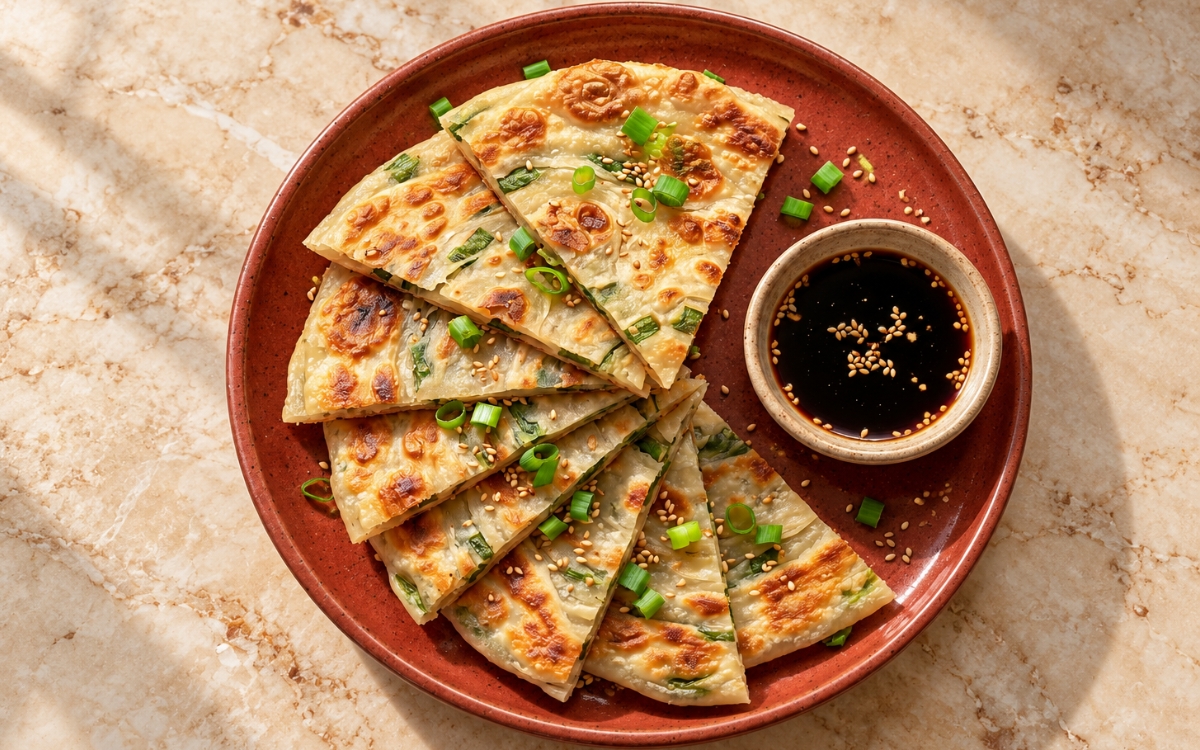
- Cut each pancake into 6–8 wedges with a sharp knife or kitchen scissors, slicing firmly in one motion so the layers are not compressed. Stack or overlap the wedges slightly on a warm plate. Scatter over the sliced scallion and the 1–2 tsp toasted sesame seeds. Serve immediately with the soy-vinegar dipping sauce on the side, while the exterior is still crisp and the inner layers are tender and steaming. That quick serving matters because steam trapped between stacked wedges softens the crisp crust within minutes.
Notes
Laminating with oil paste and coiling into a spiral deserves genuine recognition as the technique most directly responsible for whether the pancakes turn flaky or bready. Every turn of the snail stacks a film of fat between thin sheets of dough — the recipe's own note that the flour in the oil "helps keep the layers slightly separated during rolling and cooking" explains why they open in the pan instead of fusing into one dense round.
Resting the dough twice deserves the same attention this technique receives throughout this collection's other rolled doughs, because relaxed gluten is what lets the sheets go thin. The recipe's own warning that resting is essential "so the gluten relaxes; otherwise the dough will shrink back when rolled" applies to both the 30-minute rest after kneading and the 10–15 minute rest after coiling, which keeps the spiral from springing back during the final roll.
Using hot water at 80–90°C deserves genuine respect as the detail most directly responsible for the pancake's tender, chewy interior. Hot water partially gelatinises the flour's starch and tames the gluten, so the dough stays soft and slightly tacky — a dough mixed too dry or with cold water rolls stiffly, tears during lamination and fries up tough rather than tender and flaky.
The colour of the blisters deserves attention as a genuine, checkable readiness cue rather than a loose approximation. Golden-brown patches after 2–4 minutes per side mean the heat is right — the recipe's own warning about heat, "too low and the pancakes absorb oil and turn greasy; too high and they brown before the inside layers cook through," tells you exactly which way to adjust the burner.