Ingredients
Method
Roast and Peel the Poblanos
- Roast the poblano peppers directly over a gas flame, under a broiler, or in a very hot dry skillet, turning often, until the skins are blistered and blackened on most sides. Transfer to a bowl and cover, or place in a sealed container, and let steam for 10–15 minutes. Once cool enough to handle, peel away most of the loose charred skin. Leave the peppers whole and intact. Cut a lengthwise slit in each pepper and carefully remove the seeds, keeping the stem attached if possible. Do not rinse the peppers under water unless absolutely necessary. Water washes away flavour and makes the peppers slippery and watery. Covering the hot peppers to steam traps their own residual heat against the blistered skin, which is what loosens it enough to peel cleanly — skipping this rest and trying to peel straight off the flame tears the flesh far more easily.
Soak the Walnuts
- Place the walnuts in a bowl and cover with hot water for 20–30 minutes. Drain well. If you want an especially bright white nogada, rub off as much of the thin brown skin as possible. This step matters. Dark walnut skins muddy the sauce colour and make it slightly bitter. Soaking softens the skins enough that they rub off far more easily than trying to peel dry walnuts — the extra 20–30 minutes here is a direct investment in exactly how bright and clean the finished sauce's colour will be.
Cook the Picadillo Base
- Heat the neutral oil in a large skillet over medium heat. Add the onion and cook for 4–5 minutes until softened. Add the garlic and cook for 30 seconds. Add the ground pork and ground beef. Cook, breaking it up well, until browned and no longer pink, about 8–10 minutes. If there is a lot of grease, spoon off the excess. The meat should brown, not steam. Proper browning gives the filling depth and keeps it from tasting flat under the rich white sauce. Genuine browning at this stage matters more here than in many other ground-meat preparations, precisely because the nogada sauce that eventually covers the filling is rich and mild — a picadillo that only steamed rather than browned has little savoury depth of its own to stand up against that richness.
Build the Picadillo
- Add the tomatoes, apple, pear, raisins, dried apricots, almonds, tomato paste, cinnamon, cumin, cloves or allspice, salt, black pepper, and oregano. Stir well and cook for 8–10 minutes until the fruit softens and the mixture becomes cohesive. Add a small splash of water or stock only if the filling looks dry. Stir in the vinegar at the end and cook for 1 more minute. The finished picadillo should be moist and glossy but not wet. If it is loose or watery, keep cooking until the excess moisture evaporates. Wet filling will leak out of the peppers and thin the nogada. The small amount of vinegar added right at the end brightens the whole mixture with a touch of acidity that keeps the sweetness from the fruit in check, preventing the picadillo from tipping too far toward tasting like a dessert filling.
Make the Nogada Sauce
- Blend the soaked walnuts, milk, crema, cream cheese or goat cheese, sugar, cinnamon, and salt until very smooth. The sauce should be creamy, pale white, and thick enough to spoon generously over the peppers while still flowing softly down the sides. Add a little extra milk or crema only if needed. Do not make it too thin. Nogada should drape over the chile, not run across the whole plate like milk. A high-powered, thorough blend here is what breaks the walnuts down into a genuinely smooth, creamy sauce rather than one with a grainy, nutty texture — the cream cheese or goat cheese folded in alongside the crema is what gives the finished sauce enough body to hold its shape once spooned over the pepper.
Fill the Poblanos
- Taste the picadillo and adjust salt if needed. Carefully stuff each poblano with about one-quarter of the filling, pressing it in gently but not overpacking. Overstuffed peppers split too easily and lose their shape on the plate. A pepper that closes naturally around its filling, without needing to be forced, is the visual cue that the amount is correct — overstuffing puts pressure on the slit from the inside that only increases once the filling is warmed through.
Warm the Peppers
- Place the filled poblanos in a baking dish or large skillet. Cover loosely and warm over low heat or in a 180°C / 350°F oven for 10–12 minutes, just until heated through. Do not bake them uncovered for too long. The peppers should stay tender and green, not collapse or dry out. This is a gentle reheating stage rather than a true cook, since both the pepper and the filling are already fully prepared — the covered, low-heat approach exists specifically to warm everything through without drying out or over-softening the pepper's structure.
Sauce and Garnish
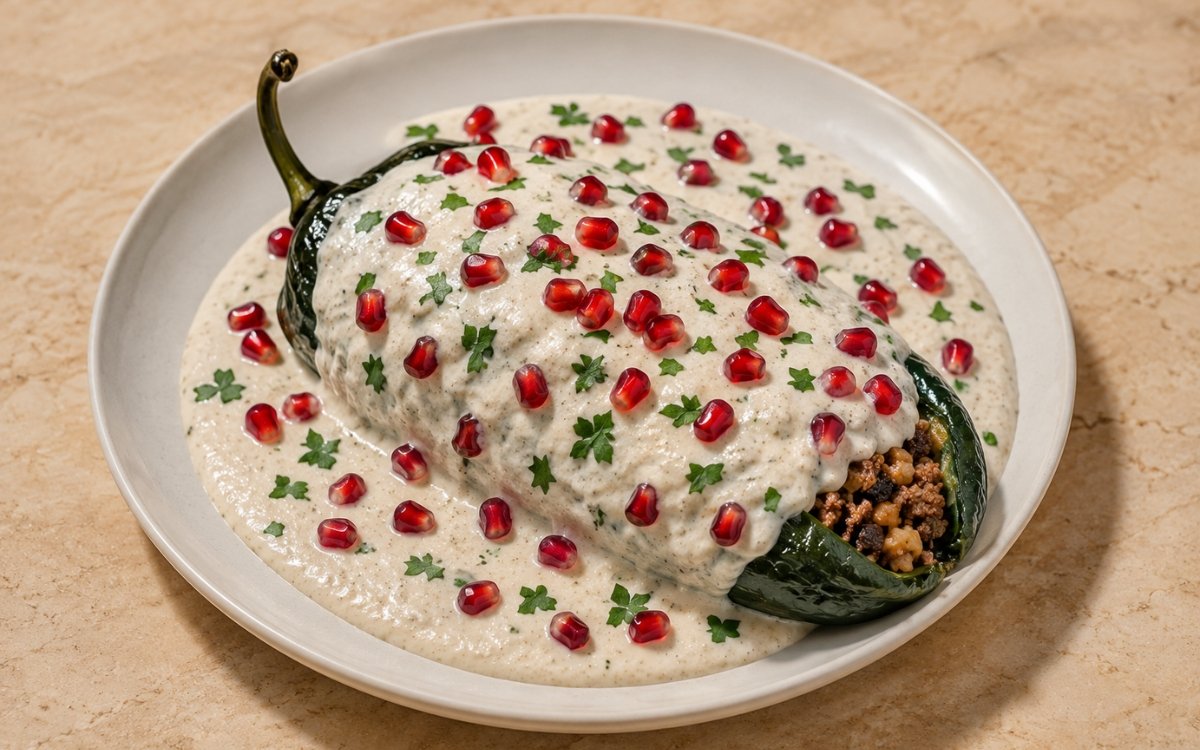
- Place one warm stuffed poblano on each plate. Spoon the nogada generously over the top so most of the pepper is covered, while still leaving some green visible around the edges. Scatter pomegranate seeds over the white sauce, then finish with fresh parsley leaves. Leaving a border of green pepper visible around the edges of the white sauce, rather than covering the whole thing, is a deliberate plating choice that keeps all three of the dish's signature colours in view at once.
Serve
- Serve immediately while the pepper and filling are warm and the nogada is cool or room temperature. The contrast is part of the dish. This temperature contrast between the warm, savoury-sweet pepper and the cool, creamy sauce is a defining characteristic of chiles en nogada rather than an accident of timing — heating the sauce itself would flatten one of the dish's more distinctive sensory details.
Notes
The nogada sauce's colour is worth treating as seriously as its flavour, since chiles en nogada's entire visual identity depends on the sauce staying genuinely white rather than drifting toward beige. Walnuts carry a thin, papery brown skin that's easy to leave in place when short on time, but that skin is specifically what muddies the sauce's colour and introduces a faint bitterness. Soaking the walnuts first softens those skins enough to rub off far more easily than attempting the same task on dry nuts, making the extra time a direct trade for a visibly whiter final sauce.
The picadillo's balance between savoury and sweet is one of the more easily misjudged elements of this dish, and it's worth tasting for as you build the filling rather than trusting the ingredient list alone. The combination of dried fruit, cinnamon, and warm spice can tip a filling toward tasting more like a dessert than a savoury dish if the meat isn't properly browned or if the vinegar at the end is skipped — both of those steps exist specifically to anchor the picadillo in savoury territory, with the fruit's sweetness meant to register in the background rather than dominate.
Grease left in the finished picadillo does more damage than it might seem to at first glance. Beyond making the filling itself heavy, excess fat interacts poorly with the rich, dairy-based nogada sauce poured over the top — the combination reads as greasy and overly heavy on the plate rather than balanced, which is why draining excess fat during the meat-browning stage is worth doing carefully rather than skipping.
The temperature contrast between the warm stuffed pepper and the cool nogada sauce is a genuinely intentional part of how this dish is meant to be experienced, not an oversight in the recipe's timing. Warming the sauce along with the pepper, which might seem like the more natural choice, would flatten that contrast and lose part of what makes chiles en nogada distinctive among stuffed pepper preparations.