Ingredients
Method
Toast the Dried Chilies
- Heat a dry cast iron or heavy skillet over medium-low heat. Working one at a time, press each dried guajillo and ancho chili flat against the surface with a spatula and toast for 20–30 seconds per side. The correctly toasted chili becomes slightly more pliable, smells specifically fragrant and roasted, and may show a very light darkening at the edges. The line between correctly toasted and burnt is narrow and consequential — burnt chilies produce a bitter, acrid salsa that cannot be corrected by any subsequent adjustment. Watch constantly and remove immediately when fragrant. If adding the árbol chili for heat, toast it for only 10–15 seconds per side — árbol is thin-fleshed and burns faster than the larger dried chilies. Transfer all toasted chilies to a heatproof bowl. Cover completely with very hot — near-boiling — water and weigh down with a small plate or bowl if the chilies float. Allow to soak for 10 minutes until fully rehydrated, soft, and pliable throughout. Drain and discard the soaking water — it contains the majority of the chilies' bitter compounds and tannic residue that would make the finished salsa aggressive rather than complex. The instruction to discard the soaking liquid is not standard across all Mexican cooking, but for a salsa where balance and depth are the goal rather than maximum intensity, the discarded water produces a noticeably smoother, more rounded result.
Char the Vegetables
- While the chilies soak, char the tomatoes, onion half, and unpeeled garlic cloves in a dry cast iron pan over high heat — or under the broiler on a baking sheet. Turn the vegetables occasionally, allowing each surface to develop dark, slightly blackened patches. The tomatoes should show burst skin and collapse slightly; the onion half should show char marks on the cut face and soften; the garlic should be soft to the touch and show darkening of the paper skin. Transfer to a plate. When cool enough to handle, squeeze the roasted garlic from its skin if roasted with skin on, or simply peel if charred with the skin removed beforehand. The charred vegetables provide a specifically smoky, caramelised depth to the salsa that distinguishes a properly developed salsa roja from a blended sauce.
Bloom the Tomato Paste and Toast the Spices
- In a medium saucepan over medium heat, add the 1 tbsp of neutral oil or lard. Add the 1 tbsp of tomato paste and cook, stirring constantly, for 1–2 minutes until the paste darkens slightly and smells sweeter and more concentrated — the Maillard reaction removing the raw, acidic edge and converting it to a rounded, savoury depth. Add the ½ tsp of cumin and 1 tsp of Mexican oregano directly into the hot tomato paste and fat. Stir continuously for 20–30 seconds — the spices bloom in the fat alongside the caramelised paste, releasing their essential oils in a way that does not occur when they are simply added to liquid. Mexican oregano is specifically different from Mediterranean oregano — it has a more citrusy, slightly more pungent character with less bitterness, and it is the correct herb for a Mexican red sauce. Mediterranean oregano is a functional substitute at ¾ the quantity but produces a slightly different result.
Blend the Salsa Roja
- Transfer the drained, rehydrated chilies and the charred tomatoes, onion, and garlic to a blender. Add the tomato paste and spice mixture from the saucepan. Pour in 350ml of the chicken stock or water. Blend at high speed for a full 60–90 seconds until completely smooth — no visible chili skin pieces or vegetable chunks remaining. A fully smooth salsa is specifically important for chilaquiles because any incompletely blended chili skin produces a stringy, unpleasant texture when the chips are folded in. The salsa should be pourable but notably thicker than water — if it appears very thick, add additional stock to the 400ml maximum and blend again. Pour the blended salsa through a fine-mesh sieve back into the saucepan if a perfectly smooth result is the goal — sieving removes any remaining skin fragments the blender did not fully break down.
Simmer and Season the Salsa
- Return the blended salsa to the saucepan over medium heat. Simmer uncovered for 8–10 minutes, stirring occasionally, until the salsa has darkened slightly in colour, become glossy, and reduced to a slightly thicker consistency that coats the back of a spoon clearly. Simmering cooks out any remaining raw flavour from the blended chili and concentrates the salsa's depth — an unsimmered blended salsa has a specifically flat, slightly harsh flavour compared to the rounded, developed result of 8–10 minutes of active simmering. Season generously with fine sea salt and black pepper — taste at this stage and ensure the salsa is well-seasoned, as it will season the chips and it should taste assertive enough to stand against the cotija and crema at serving.
Add the Chips and Fold to the Correct Texture
- Add the 220g of thick corn tortilla chips directly into the simmering salsa. Reduce the heat to medium-low. Using a spatula, fold the chips gently through the salsa — turning them over and under the sauce in slow, deliberate movements rather than stirring aggressively, which would break the chips completely. Fold for 2–3 minutes until every chip is coated in the salsa. The timing is the most technique-sensitive step in chilaquiles: too little time produces chips that are still dry and crunchy at their centres; too much time produces completely soggy, dissolved chips with no textural identity. The correct result is chips that are softened and sauce-coated on their surfaces but retain enough structure to hold their shape when scooped — slightly yielding when bitten, with a soft but not completely collapsed interior. The chips are ready when the majority show this slightly softened-but-structured texture. For best results, use thick, sturdily constructed corn tortilla chips that are specifically made for use in warm applications. Thin snack chips dissolve in the salsa within 30 seconds of contact. See Homemade Corn Tortillas for making your own chips from proper corn tortillas without the added salt, flavouring, and thinner texture of commercial tortilla chips — homemade chips cut from dried corn tortillas produce specifically the correct structural quality for chilaquiles.
Fry the Eggs in Lard
- While the chips are being folded into the salsa, heat the 1 tbsp of lard in a separate skillet over medium-high heat until fully melted and shimmering. Crack each egg carefully into the hot lard. Cook undisturbed for 2–3 minutes until the whites are completely set and the edges are crisped, browned, and slightly lacy from the hot fat. The yolks should remain bright yellow and completely liquid. Lard is specified for the egg frying specifically — its high smoke point and specifically savoury, slightly porky depth adds a flavour dimension to the fried egg that butter or neutral oil cannot replicate in a Mexican cooking context. The crisped, browned white against the running yolk is the specific egg preparation for chilaquiles — not scrambled, not softly set, not fully cooked through.
Assemble and Serve Immediately
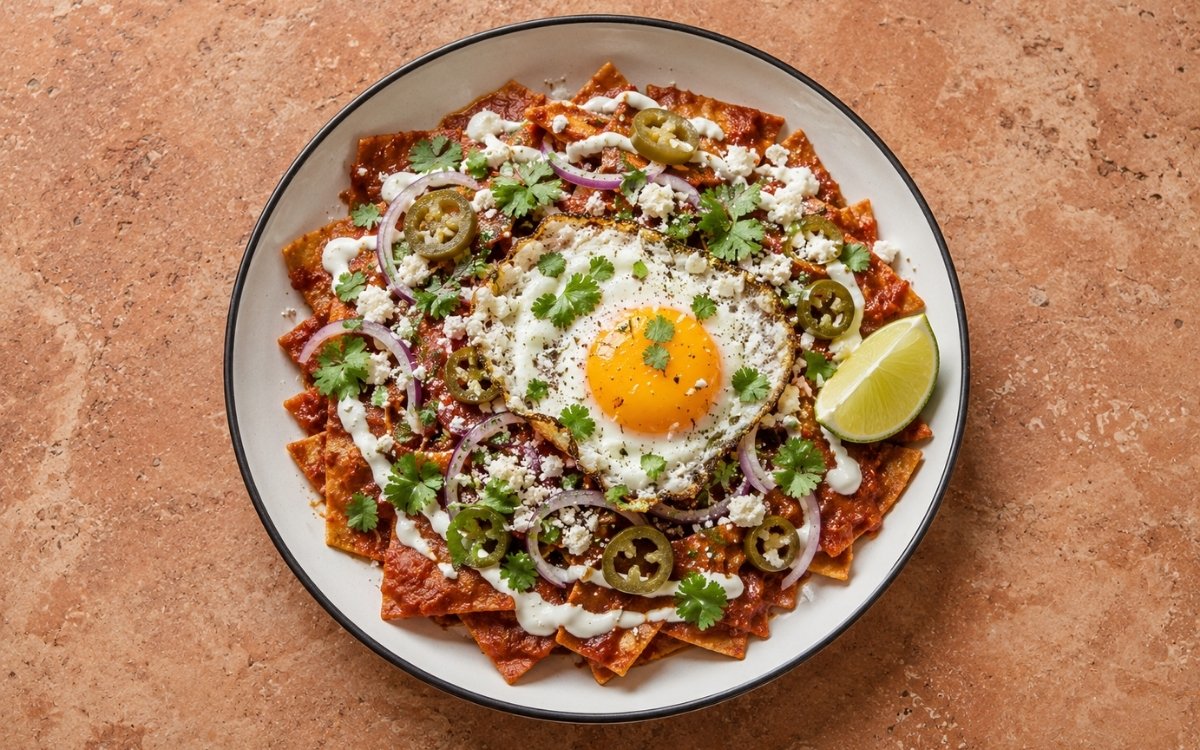
- Divide the sauced chips among four shallow bowls. Place one fried egg on top of each portion with the yolk facing up and unbroken. The yolk is intentionally left unbroken at this stage so each person breaks it at the table, mixing the runny yolk into the salsa and chips at the moment of eating. Drizzle 20ml of crema per bowl in a loose zigzag across the chips and egg. Crumble 15g of cotija per bowl. Scatter pickled jalapeños, thinly sliced red onion, and fresh cilantro. Place lime wedges alongside if desired. Serve immediately and without delay — chilaquiles are a dish designed to be eaten at the moment they are ready. The contrast between the slightly crisped chip edges, the sauced soft interior, the running egg yolk, and the smoky salsa exists only in a brief window before the chips continue absorbing liquid and the yolk cools.
Notes
The choice of dried chilies defines the flavour of this salsa roja more than any other variable. Guajillo — the most widely available Mexican dried chili outside Mexico — provides a moderate heat (2,500–5,000 SHU), a specific sweet, slightly tannic fruitiness, and a brilliant deep red colour. Ancho — dried poblano — adds earthiness, sweetness, and a mild chocolatey depth with minimal heat. Árbol — small, thin, very hot — provides the optional heat without additional flavour complexity. Together they produce a salsa with layered heat, fruit, earthiness, and colour that no single chili variety alone provides. The 5:1:1 guajillo-to-ancho-to-árbol ratio is calibrated for a moderately spiced result; adjusting the árbol quantity is the simplest heat control available.
Mexican crema is specifically different from sour cream and significantly different from crème fraîche in the context of this dish. Mexican crema has a thinner, pourable consistency and a milder, less aggressively sour flavour — it drizzles across the chilaquiles and provides cool, creamy contrast without the thicker, heavier coating of sour cream. If Mexican crema is unavailable, crème fraîche thinned with a small amount of whole milk to drizzling consistency is the closest substitute.