Ingredients
Method
Marinate the Chicken
- Combine the yogurt, ginger, garlic, lemon juice, oil, salt, Kashmiri chili, cumin, coriander, turmeric, and garam masala in a large bowl. Add the chicken and coat every piece thoroughly, then cover and refrigerate for at least 2 hours, preferably overnight. The yogurt and salt season the meat all the way through and help it stay juicy; a short marination leaves the chicken flatter in flavor and less tender once cooked.
Prepare the Rice
- Rinse the jasmine rice in several changes of cold water until the water runs mostly clear, then drain well. Combine the rice with 330 ml water for firmer grains or 360 ml for slightly softer grains, the salt, and the optional butter in a saucepan with a tight-fitting lid. Bring to a gentle boil, stir once, cover immediately, reduce the heat to very low, and cook for 12 minutes. Turn off the heat and leave the rice covered for 10 minutes without lifting the lid, then fluff gently with a fork. The trapped steam is what finishes cooking the rice, so keeping the lid shut through the rest matters as much as the simmer itself.
Char the Chicken
- Take the chicken out of the fridge 20–30 minutes before cooking. For the broiler or grill method, arrange the pieces on a rack over a tray or thread them onto skewers and cook on high heat for 10–15 minutes, turning once, until lightly charred in spots and nearly cooked through. For the pan method, heat a heavy skillet or grill pan over high heat with a little oil and cook the chicken in batches, about 2–3 minutes per side, until well colored and lightly charred on the outside; it doesn't need to be fully cooked yet. Set the chicken aside with any collected juices. Avoid crowding the pan or tray — crowded chicken steams instead of charring, and that char is where much of the dish's flavor comes from.
Build the Masala Base
- Heat the ghee or oil and the tablespoon of butter in a large sauté pan or pot over medium heat. Add the onion and cook for 8–12 minutes, stirring often, until softened and golden, then add the ginger and garlic and cook for 30–60 seconds, just until fragrant. Stir in the tomato paste and cook for 1 minute. Add the Kashmiri chili, cumin, coriander, turmeric, garam masala, and the initial ½ teaspoon salt, stirring constantly for 20–30 seconds to bloom the spices. Add the crushed tomatoes or passata and simmer over medium-low heat for 10–15 minutes, stirring regularly, until the sauce thickens, deepens in color, and loses its raw tomato edge. Add the sugar only if the sauce tastes sharp. An onion-and-tomato base that's rushed through this stage tastes thin and harsh instead of rounded, so give it the full simmer time.
Finish the Sauce
- Stir in 120 ml hot water first, adding more a little at a time if the sauce needs loosening, until it reaches a consistency that coats a spoon. Lower the heat, stir in the cream and the crushed kasuri methi, and simmer gently for 1–2 minutes. Add the charred chicken along with any collected juices and simmer for 4–6 minutes, until the chicken is fully cooked and tender — internal temperature should reach at least 74°C. Finish with the remaining 15 g butter and adjust the salt to taste. Keep the sauce at a gentle simmer once the cream goes in rather than a hard boil, so it stays smooth and glossy instead of breaking.
Serve
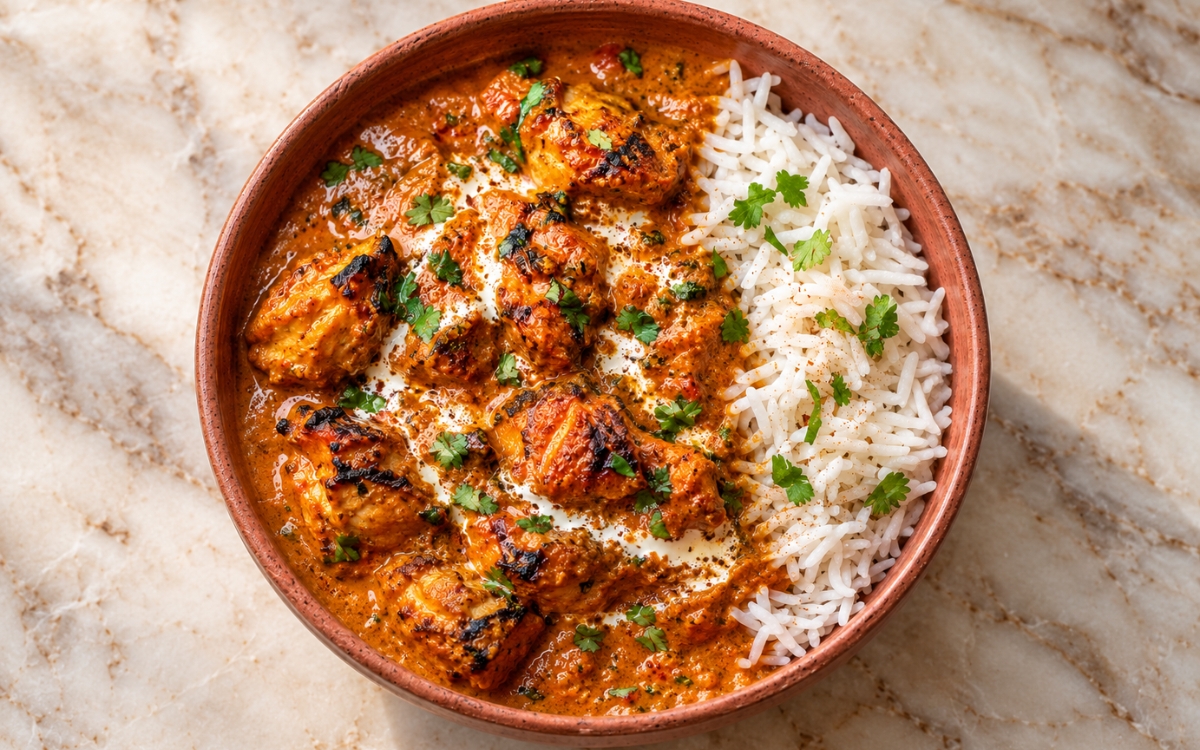
- Divide the rice between 4 bowls, about 75 g of uncooked rice per serving. Spoon the tikka masala alongside or partly over the rice, then top with a small swirl of cream, the chopped cilantro, and a light dusting of chili powder or garam masala. Serve right away.
Notes
Boneless skinless thighs hold up far better here than chicken breast, staying juicy through both the char and the final simmer rather than drying out. If breast is what's on hand, cut the marinating time down to 30 minutes–2 hours and watch the cooking more closely to avoid overcooking it.
Kashmiri chili powder is the ingredient responsible for the dish's deep red-orange color without adding much heat, so it's worth seeking out rather than substituting a hotter chili powder in equal amounts.
Blending the cooked tomato-onion base before the cream goes in gives a smoother, more restaurant-style finish to the sauce, though a slightly chunkier texture from skipping that step is still well within the style of a home-cooked version.
Kasuri methi is a small-quantity ingredient that contributes a disproportionate amount of the dish's familiar curry-house aroma, and leaving it out changes the final flavor more than its small measured amount would suggest.