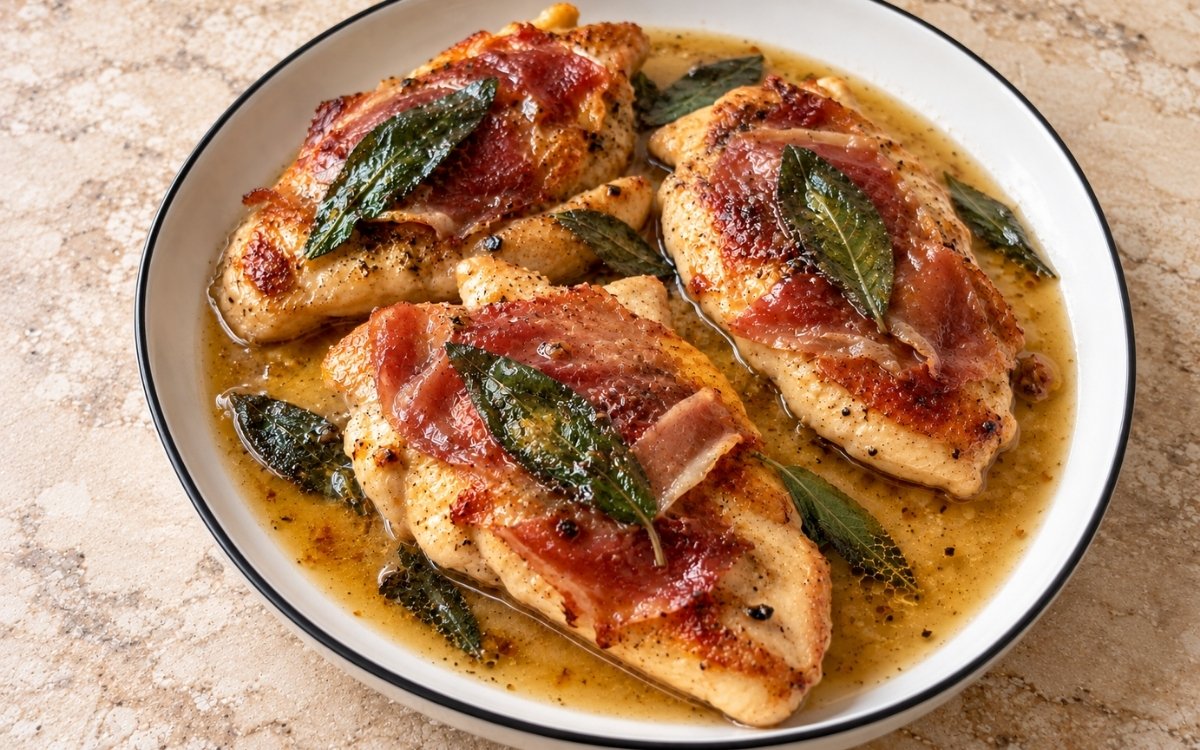
Ingredients
Method
Prep the Chicken
- Slice each chicken breast horizontally into 2 thinner cutlets, giving 8 cutlets total. Place each cutlet between sheets of parchment or plastic wrap and gently pound to an even thickness of about 6–8mm. Keep the cutlets even. If some parts are thick and others thin, the thin parts will dry out before the thicker parts finish cooking. Pat dry well. With every piece the same thickness, the whole batch reaches the same doneness in the short cooking time.
Top with Prosciutto and Sage
- Lay 1 slice of prosciutto over each chicken cutlet. Place 2 sage leaves on top of the prosciutto. Press lightly so the prosciutto adheres. If needed, secure with a toothpick. Season only the plain chicken side lightly with black pepper. Usually no extra salt is needed because the prosciutto is already salty. Go easy on salt from the start. Taste the finished sauce before deciding if it needs any. That deliberate restraint accounts for real, cumulative saltiness building throughout the dish — from the prosciutto itself through to the stock in the sauce — meaning early oversalting would be considerably harder to correct than underseasoning at the start.
Lightly Flour
- Put the flour on a plate. Lightly dredge only the plain chicken side of each cutlet in flour and shake off excess. You can also lightly dust the whole cutlet if preferred, but keep the coating very thin. Too much flour makes the sauce pasty. You only want a light film to help browning and give the pan sauce slight body. A thin flour coating helps browning and gives the sauce a little body later — a heavier dusting would instead cloud and thicken the sauce past the light, glossy consistency this dish depends on.
Sear the Cutlets
- Heat a large skillet over medium to medium-high heat. Add the olive oil and the 30g butter. When the butter foam settles, add the cutlets in batches if needed. Cook prosciutto-side down first for about 1–1½ minutes, just enough to lightly render and set the topping. Flip and cook the chicken side for another 1½ to 2½ minutes, depending on thickness, until lightly golden and just cooked through. Transfer to a warm plate. Do not overcook. Chicken breast goes dry quickly. Pull the cutlets once they are just done; they will return briefly to the sauce. The prosciutto should cling to the chicken, the sage should smell fragrant, and the chicken should be lightly browned, not deeply crusted. Searing prosciutto-side down first puts it in direct contact with the hot pan early on, letting it render and lightly crisp before the more delicate chicken side ever takes its turn against that same heat.
Make the Pan Sauce
- Lower the heat slightly if the pan looks too dark. Pour in the white wine and scrape up the browned bits. Let it reduce for about 1–2 minutes. Add the chicken stock and simmer until reduced by about one-third, about 3–4 minutes. Return the chicken to the pan, prosciutto-side up, and spoon the sauce over for 30–60 seconds just to reheat and glaze. Turn off the heat. Swirl in the cold butter until the sauce becomes glossy. Add the lemon juice only if the sauce tastes flat and needs a slight lift. Once the final butter goes in, do not boil hard. A strong boil can split the sauce and make it greasy instead of silky. That deglazing step lifts every bit of fond left behind by the seared chicken directly into the sauce, working real, concentrated flavour back in rather than leaving it stuck to the pan.
Serve
- Arrange the chicken on warm plates and spoon the pan sauce around and lightly over the cutlets. Serve immediately. This dish's whole appeal depends on the sauce's own glossy, silky consistency and the chicken's just-cooked tenderness — both begin to change the moment the plate sits, which is exactly why serving without delay matters here.
Notes
Pound every chicken cutlet to an even thickness so the dish cooks through cleanly. Uneven cutlets dry out at the thin points before the thicker sections finish.
Sear the cutlets prosciutto-side down first. That order gives the prosciutto real, direct contact with the hot pan early on, letting it render and lightly set before the chicken side ever takes its own turn — reversing that order would risk the prosciutto pulling away or staying undercooked by the time the chicken finishes.
Finish the pan sauce off the heat with cold butter, and don't let it boil hard afterward. A strong boil at this stage can split the sauce and make it greasy; the gentle, off-heat finish keeps the emulsion glossy.
Go easy on salt throughout and taste only at the very end, since this dish already carries several salty components. Prosciutto and stock both contribute real, cumulative saltiness, which is why low-sodium stock is recommended — this combination can tip into oversalted territory quickly.