Ingredients
Method
Marinate the Chicken
- Combine the lime juice, neutral oil, orange juice, soy sauce, garlic, cumin, smoked paprika, chilli powder, Mexican oregano, salt, and black pepper in a bowl. Add the chicken thighs and turn until fully coated. Cover and marinate for 30 minutes at room temperature, or up to 4 hours refrigerated. Do not leave the chicken in the acidic marinade overnight; the surface can become soft and slightly mushy. The relatively short marinating window here is deliberate — unlike a longer braise-bound marinade, this one just needs to season the surface and add a light citrus lift before the chicken is seared and shredded, so there's little benefit to extending it and real risk of the lime and orange juice softening the exterior past the point of a clean sear.
Prepare the Referenced Components
- Prepare 1 full batch of Homemade Wheat Tortillas according to its separate recipe, making 4 large tortillas about 12 inches / 30cm diameter. Prepare ½ batch of Classic Guacamole and the Pico de Gallo according to their separate recipes. Keep the guacamole chunky, not smooth. Keep the pico de gallo drained enough that it does not flood the plate. Handling these three components ahead of the actual cooking is what keeps the final assembly and crisping stage — the part of this recipe with the least margin for distraction — moving quickly and continuously rather than competing with prep work.
Sear the Chicken
- Remove the chicken from the marinade and let excess marinade drip off. Heat 15ml neutral oil in a large skillet over medium-high heat. Add the chicken thighs in a single layer and sear for 4–5 minutes on the first side, until deeply browned. Flip and cook another 4–5 minutes, until the thickest pieces reach 74°C internally. Work in batches if needed. Crowding the pan will steam the chicken and weaken the flavour. A genuinely single layer with space between pieces is what allows the pan's heat to stay concentrated at the surface of each piece — overcrowded chicken releases moisture that pools and simmers rather than evaporating, which is the difference between a well-browned sear and pale, boiled-tasting chicken.
Rest and Shred the Chicken
- Transfer the chicken to a board and rest for 8–10 minutes. Shred into medium strands using two forks or chop into rough shredded pieces. Return the shredded chicken to the skillet with 60ml water or chicken stock and scrape up the browned bits. Cook for 2–3 minutes over medium heat until the chicken is juicy but not wet. The filling should hold together without dripping liquid into the tortilla. Scraping up the fond with a splash of stock after shredding reintroduces the concentrated browned flavour left behind in the pan directly into the filling, rather than leaving it stuck to the skillet — but the 2–3 minute reduction afterward matters just as much, since it's what evaporates off the excess liquid that would otherwise soak into the tortilla and prevent it from crisping.
Mix the Cheese
- Combine the Monterey Jack, low-moisture mozzarella, and cotija in a bowl. Monterey Jack gives the main melt, mozzarella gives visible cheese pull, and cotija adds salty sharpness. Do not use too much cotija or the filling will become dry and gritty. Cotija doesn't melt the way the other two cheeses do — it's a firm, crumbly cheese that holds its texture under heat, which is exactly why it's used in restraint here, as a sharp, salty accent scattered through a filling rather than as a primary melting cheese.
Assemble the Quesadillas
- Lay one large flour tortilla flat. Add about 120–130g shredded chicken over one half of the tortilla. Scatter about 135g of the cheese mixture over the chicken. Fold the empty half over the filling and press gently. Repeat with the remaining tortillas. The quesadilla should be full but not overstuffed; too much filling prevents the cheese from melting before the tortilla over-browns. Keeping the filling to one half rather than spreading it across the whole tortilla is what makes the fold-and-press technique work — an evenly distributed half-fill gives the cheese a contained space to melt in without pushing filling out past the folded edge during crisping.
Crisp the Quesadillas
- Heat a large skillet or griddle over medium heat. Add 10g butter and let it melt until foaming but not browned. Place one folded quesadilla in the pan and cook for 3–4 minutes on the first side, pressing gently with a spatula, until the tortilla is golden-brown, blistered in spots, and crisp. Flip carefully and cook another 2–3 minutes, until the second side is golden and the cheese is fully melted at the cut edges. Repeat with the remaining quesadillas, adding more butter as needed. Medium heat is the specific setting that lets the cheese fully melt in the same window the tortilla needs to brown — higher heat browns the exterior before the interior cheese has caught up, while lower heat dries the tortilla out before it develops real colour.
Rest and Slice
- Transfer each quesadilla to a cutting board and rest for 2 minutes before slicing. This short rest prevents the cheese from pouring out immediately. Cut each folded quesadilla into 3 even wedges. The molten cheese directly out of the pan is thin and highly fluid; two minutes is enough for it to firm up just slightly so the first cut doesn't send it running across the board, while still being well within the window where it's fully melted and stretchy when eaten.
Serve
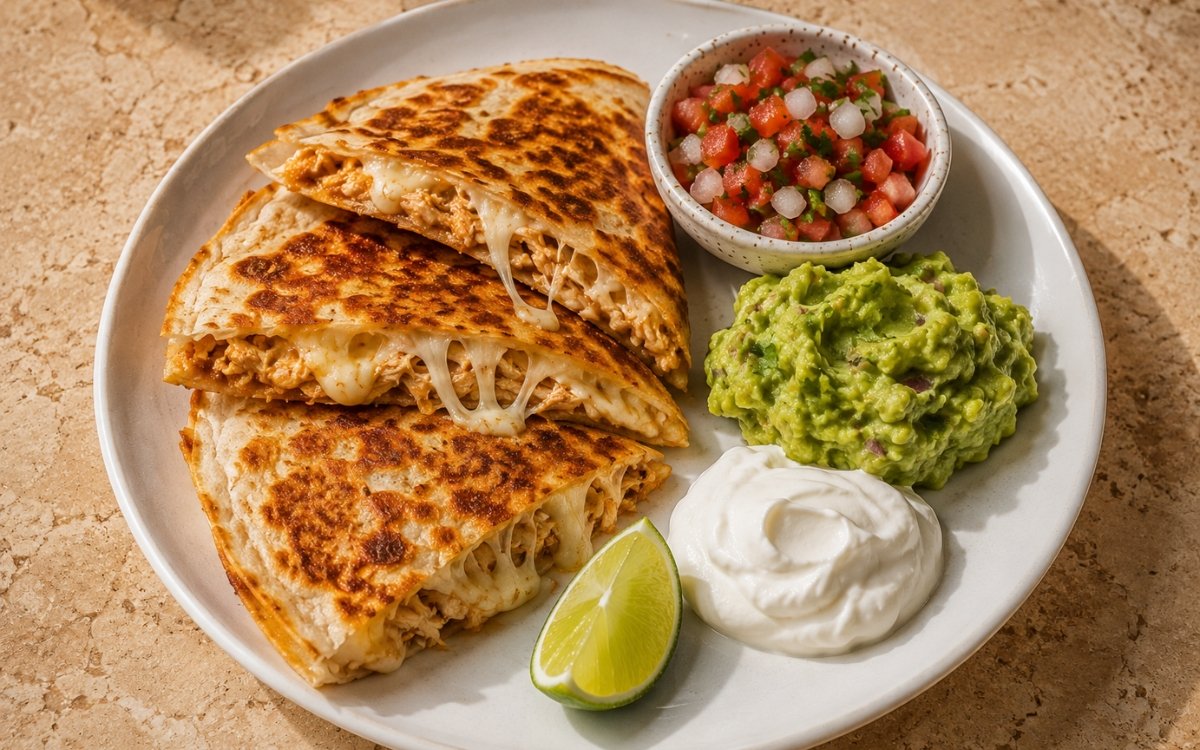
- Place 3 quesadilla wedges on each plate. Add a generous spoonful of guacamole, a large dollop of sour cream, a small bowl of pico de gallo, and a lime wedge. Serve immediately while the tortilla is crisp and the cheese is still melted and stretchy. The crisp shell begins softening the moment it sits, especially against the moisture of the guacamole and pico de gallo, so plating and serving without delay is what preserves the contrast between the crunchy exterior and the soft, cheesy interior.
Notes
The choice of low-moisture mozzarella over fresh mozzarella is worth understanding rather than treating as an arbitrary substitution. Fresh mozzarella is packed in brine and carries significant water content that releases as it melts — inside a quesadilla, that released moisture has nowhere to go and soaks directly into the tortilla from the inside, undermining the crisp exterior this recipe is built around. Low-moisture mozzarella melts with far less released liquid, which is exactly what makes it compatible with a filling that needs to stay contained rather than weeping into the shell.
Butter's role here goes beyond simply preventing sticking. Its milk solids brown as the quesadilla crisps, contributing a nutty, faintly caramelised flavour to the tortilla's exterior that a neutral oil alone can't replicate — but that same browning capacity is also why the layer needs to stay thin. Too much butter in the pan doesn't crisp the tortilla any faster; it mostly makes the finished quesadilla taste and feel greasy, since the tortilla can only absorb so much fat before the excess simply pools rather than contributing to browning.
This recipe deliberately references three separate component recipes — the wheat tortillas, the guacamole, and the pico de gallo — rather than folding simplified versions of them into the main method. Each of those preparations has its own specific technique worth following closely (particularly keeping the guacamole genuinely chunky and the pico de gallo well-drained), and treating them as standalone recipes prepared in parallel during the chicken's marinating time is what keeps this quesadilla recipe focused on the parts that are unique to it: the seared, shredded filling and the crisping technique.
The gap between "juicy" and "wet" in the shredded chicken filling is a genuinely narrow one and worth watching closely rather than eyeballing. Chicken that's too dry will sit flat and unremarkable inside the melted cheese; chicken that's too wet will actively work against the tortilla's ability to crisp, softening it from the inside before the exterior has finished browning. The brief reduction step after shredding — cooking the chicken with stock just until the liquid mostly evaporates — is what threads that needle reliably.