Ingredients
Method
Marinate the Chicken
- Mix the yogurt, ginger, garlic, salt, turmeric, and pepper in a bowl. Add the chicken and coat it thoroughly, then cover and marinate for 20–30 minutes at room temperature, or up to 4 hours in the fridge. The marinade should lightly coat each piece rather than pool thinly in the bottom of the bowl.
Build the Onion-Nut Base
- Heat the ghee in a wide pan or sauté pan over medium heat. Add the sliced onion and cook slowly for 10–12 minutes, stirring often, until softened and evenly golden — for a pale, elegant korma, keep the onions golden blond to light amber rather than letting them go dark brown. Add the cashews and almonds and cook for 1 minute more. Transfer the onion and nut mixture to a blender with 120–150 ml hot water and blend until very smooth, then set aside. A fully smooth paste here is what keeps the finished sauce silky instead of grainy.
Start the Korma
- Return the pan to medium heat, adding a small extra spoon of ghee if it looks dry. Add the bay leaves, cardamom, cloves, and cinnamon stick, and stir for 20–30 seconds until fragrant. Add the ground coriander, cumin, turmeric, and pepper, stirring briefly for 10–15 seconds just to bloom the spices without letting them scorch. Add the marinated chicken and cook for 4–5 minutes, stirring gently, until it loses its raw look and the yogurt coating begins to tighten around the pieces. The chicken doesn't need heavy browning at this stage.
Add the Sauce
- Reduce the heat to low, add the onion-nut paste, and stir well to coat the chicken. Cook for 3–4 minutes, stirring often, until the paste looks glossy and no longer raw. Whisk the remaining 150 g yogurt until smooth and add it gradually while stirring constantly over low heat, which keeps it from splitting against the hot pan. Add 250 ml hot water and bring to a very gentle simmer, never a hard boil. Cover partially and simmer on low for 12–15 minutes, stirring every few minutes, until the chicken is cooked through and tender, adding a little more hot water, 2–4 tablespoons at a time, if the sauce thickens before the chicken is done. The final consistency should be creamy enough to coat a spoon without turning stiff or dry.
Finish the Korma
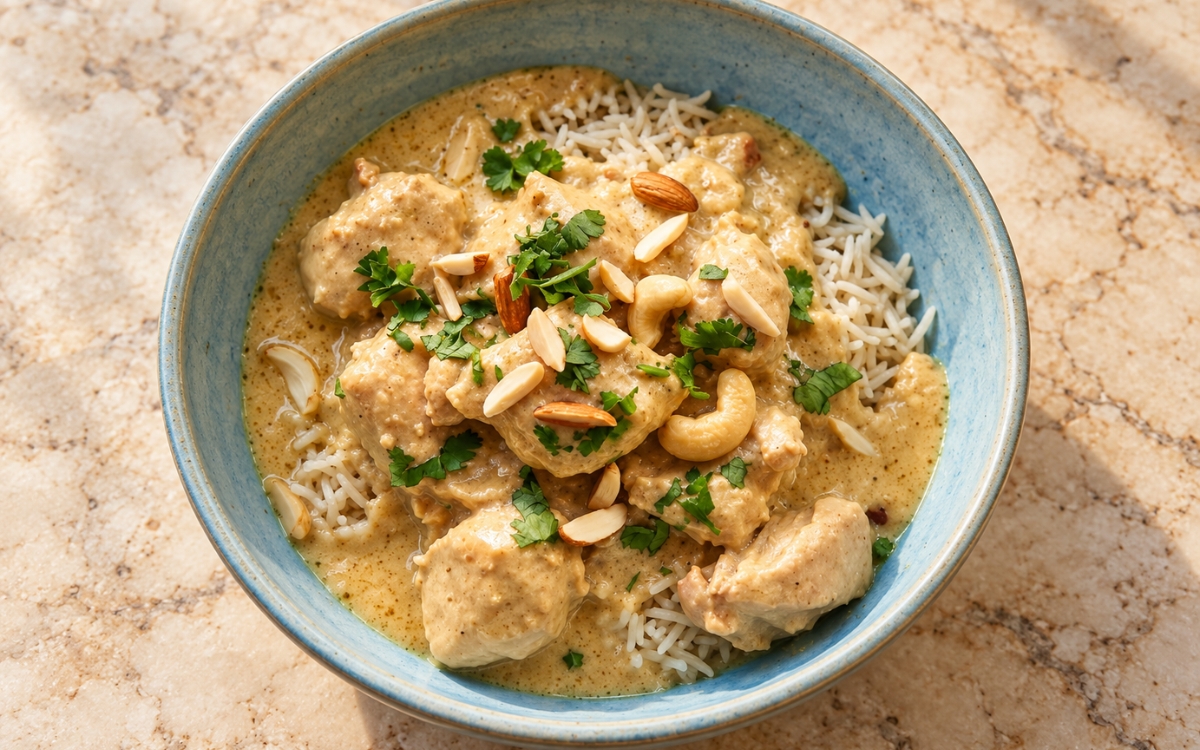
- Stir in the cream and garam masala, then simmer very gently, uncovered, for 2–3 minutes. Taste and adjust the salt. The finished sauce should be pale golden, smooth, lightly glossy, and rich enough to cling to the chicken while still flowing around the rice. The chicken is done once the pieces are tender and the internal temperature reaches 74°C. Remove the whole spices before serving if you prefer, or leave them in and simply avoid spooning them onto individual plates.
Cook the Jasmine Rice
- Rinse the jasmine rice under cold water until it runs mostly clear, then drain well. Combine the rice with the 450 ml water, salt, and optional butter or oil in a saucepan, bring to a boil over medium heat, then stir once, cover with a tight-fitting lid, and reduce the heat to low. Cook for 12 minutes, turn off the heat, and let the rice rest covered for 10 minutes before fluffing gently with a fork. This gives roughly 75 g of uncooked rice per serving.
Serve
- Divide the rice among 4 bowls, nestling it to one side or slightly underneath where the curry will sit. Spoon the chicken korma over so the rice sits partially under the sauce, then finish with the chopped cilantro and a light scatter of slivered almonds or cashews. Serve right away.
Notes
Thigh meat is the safer choice here because it stays juicy through the full simmer in the creamy sauce; breast can work too, but it needs a gentler simmer and closer attention to avoid overcooking in the same amount of time.
Keeping the onions at a golden blond to light amber color, rather than letting them deepen toward brown, is what keeps this korma's color pale rather than tipping it toward the darker tones of a more tomato-forward curry. A small amount of turmeric and avoiding darker chili powders support that same pale finish.
If the yogurt splits in the sauce, the pan was likely too hot when it went in. Keeping the heat low and whisking the yogurt smooth before adding it are both what prevent that from happening in the first place.
Blending the onion-nut base thoroughly, until it's completely smooth rather than just roughly broken down, is what separates a silky korma sauce from one with a grainy, uneven texture running through it.