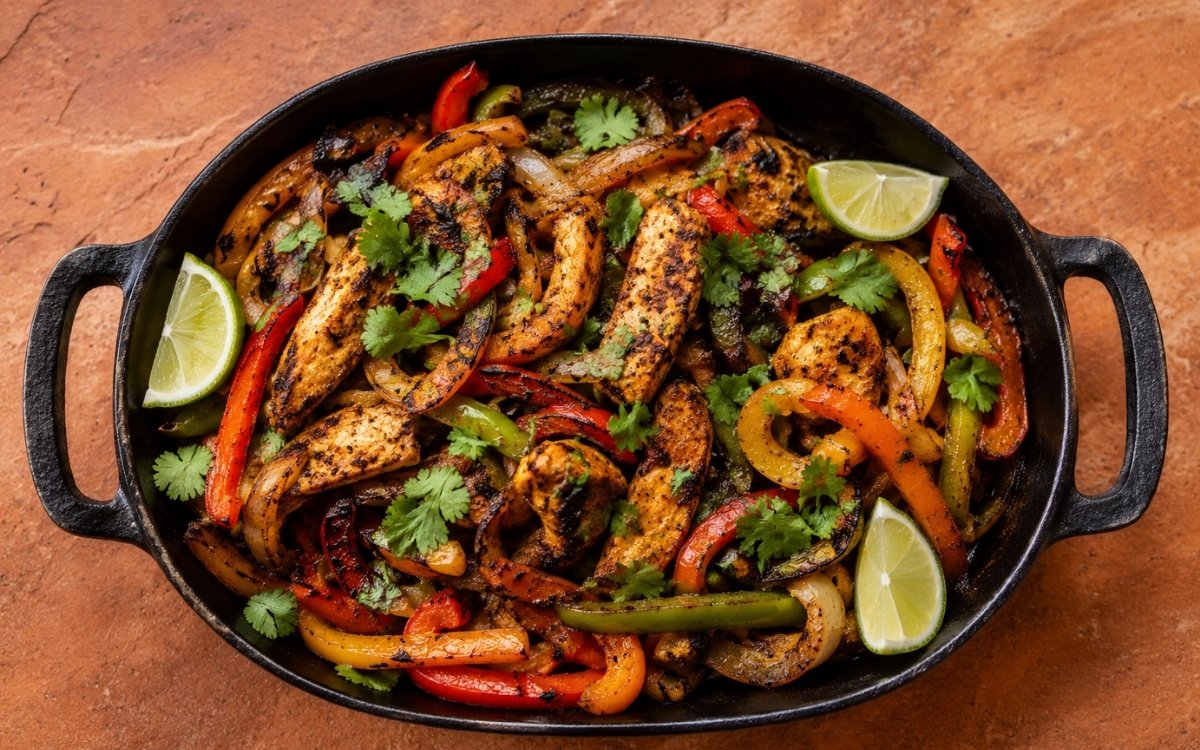
Ingredients
Method
Make the Marinade and Marinate the Chicken
- In a medium bowl, combine the smoked paprika, dried oregano, ground cumin, salt, garlic powder, lime zest, lime juice, and olive oil. Whisk together until fully combined into a uniform, fragrant paste — the olive oil and lime juice will not fully emulsify but should be evenly distributed. The marinade is a deliberate combination of dried spices and fresh acid: the smoked paprika provides the warm, slightly smoky foundation that defines fajita flavour; the cumin contributes the earthy, warm character essential to any Tex-Mex preparation; the oregano adds Mediterranean-herb depth that bridges the garlic and the citrus; the garlic powder distributes evenly through the marinade without the burning risk of fresh garlic during the high-heat cooking that follows; and the lime juice and zest together provide both the acidity that begins gentle tenderisation of the chicken surface and the bright citrus aroma that carries through the finished dish. Add the chicken thighs to the bowl and mix the marinade thoroughly into every surface of the meat with your hands — press and massage it in rather than simply stirring, ensuring the marinade penetrates into the folds of each thigh rather than remaining only on the outermost surfaces. If cooking immediately, allow to marinate at room temperature for a minimum of 30 minutes — the lime acid will begin working on the meat surface in this time and the spices will start to permeate the outer layer. For deeper, more thoroughly marinated fajita, cover and refrigerate for up to 24 hours. The overnight version is noticeably more flavourful and produces more tender chicken — the acid and salt have time to work progressively deeper into the meat rather than only seasoning the exterior.
Slice the Onions into Feathers
- Peel the white onions and cut the top and root ends off each one. Halve each onion from root to tip. Place each half flat on the cutting board and slice vertically from top to bottom in thin, consistent strips — following the natural lines of the onion's layers rather than cutting across them. These vertical strips, called feathers or julienne onions, are the correct cut for fajitas: they are long enough to char at the ends in the hot pan while remaining juicy and slightly crunchy in the thicker sections, and they collapse and interweave with the pepper strips in the finished fajita rather than sitting as separate, distinct pieces. Slice all three onions the same way and combine in a large bowl.
Slice the Peppers
- Cut the top and bottom off each bell pepper. Stand each pepper upright and use a knife to cut the four curved walls of flesh away from the central seed column — you will have four flat pieces of pepper wall, the core with seeds attached, and two end pieces. Trim any remaining seed membrane or white pith from the inside of each wall piece with the knife — the pith is slightly bitter and should be removed. Slice each flat pepper wall into strips of the same thickness as the onion feathers — approximately 5–7mm wide. Trim the bottom pieces the same way and discard the tops and seed core. Mix all the sliced pepper strips with the onion feathers in the bowl and toss to combine. The three-colour pepper combination — green, yellow, and red — is not merely visual. Each colour represents a different stage of ripeness and has a different flavour profile: green bell peppers are the least ripe and have a slightly bitter, more vegetal flavour; yellow peppers are moderately ripe with a sweet, mild character; red peppers are the most ripe with the highest sugar content and the most pronounced sweetness. The combination of all three produces a more complex, layered vegetable component than any single colour alone.
Cook the Chicken in Batches
- Heat a large cast iron skillet, carbon steel pan, or stainless steel skillet over high heat for 2–3 minutes until genuinely hot. Add a drizzle of olive oil and swirl to coat. Cast iron is the preferred pan for fajitas because its exceptional heat retention maintains cooking temperature when the cold, marinated chicken is added — a temperature drop upon adding cold protein is the most common cause of steaming rather than searing. Add the chicken thighs in a single layer with space between each piece — do not crowd the pan. Crowding traps the steam released from the chicken, preventing the caramelised crust and char that give fajita chicken its character, and causing the chicken to stew in its own juices rather than sear. Cook in two batches if necessary. Sear the first side without moving for 3–4 minutes until a deep golden-brown crust has developed and the thigh releases naturally from the pan surface. Flip and cook the second side for 3–4 minutes until the internal temperature reaches 74°C (165°F). Transfer the cooked thighs to a cutting board or bowl. Repeat with the remaining chicken. The goal is chicken with a properly charred, caramelised exterior and juicy interior — not pale, grey, steamed chicken.
Cook the Peppers and Onions in the Same Pan
- Without washing the pan, add the sliced pepper and onion mixture directly onto the surface that cooked the chicken. The fond — the caramelised chicken and spice residue adhering to the pan surface — is concentrated flavour, and the moisture released by the vegetables as they begin to cook will deglaze the pan and incorporate this fond into the vegetable mixture. This is the reason the vegetables go into the same pan rather than a fresh one: every flavour compound left behind by the chicken is picked up by the vegetables. Stir frequently over high heat for 6–8 minutes. You can and should allow the vegetables to char more than feels comfortable — slight blackening at the thinnest edges of the onion feathers and some dark charring on the pepper ends adds the smoky depth that defines good fajita vegetables. When the vegetables come together later with the chicken and any accumulated juices, the more aggressively charred edges soften and their char character lightens and distributes — the combined dish will taste smoky and rich rather than burnt. Work in batches if the pan is not large enough to cook all the vegetables at once. If any marinade remains in the chicken bowl, pour it into the pan with the vegetables — it will sizzle, caramelise, and add its spice flavour to the vegetables.
Slice the Chicken and Combine
- While the vegetables cook, slice the rested chicken thighs on the cutting board. Cut each thigh against the grain into strips approximately 1–1.5cm wide — thick enough to be substantial in the finished dish, thin enough to work easily in tacos and burritos. Identify the grain — the visible parallel lines of muscle fibre — and cut perpendicular to it for maximum tenderness. When all the vegetables are cooked, transfer them to the bowl with the sliced chicken and any accumulated resting juices from the cutting board. Toss everything together once to combine — the chicken juices mix with the vegetable char and the spiced pan fond to create a unified, coherent sauce that coats every piece. Allow the combined mixture to rest for 5 minutes before serving. During this rest, the temperature equalises between the hot vegetables and the slightly cooled chicken, the juices redistribute, and the overall flavour integrates.
Notes
The choice of chicken thighs over breast is the most important single ingredient decision in this recipe. Thigh meat contains significantly more fat and connective tissue than breast meat, making it far more forgiving under the high-heat conditions required for proper fajita searing. A breast fillet at 74°C internal temperature is at the edge of dryness; a thigh at the same temperature remains juicy with room to spare, and can be cooked slightly beyond that point without deteriorating significantly. The char-forward cooking method required for fajita character is simply too aggressive for breast meat — it will be dry before the crust is properly developed. Always use thighs.
The three-colour pepper combination produces a visual and flavour diversity that makes fajita visually recognisable and more interesting to eat than a single-colour version. The green pepper's slight bitterness balances the red and yellow peppers' sweetness. If only one or two colours are available, prioritise the red pepper for sweetness and the green for the slightly more assertive flavour.
The leftover marinade from the chicken bowl should always be added to the vegetable pan rather than discarded. The raw chicken has been in this marinade — so it cannot be used without cooking — but pouring it directly into the hot pan cooks it immediately and safely, and the spiced, lime-infused liquid caramelises into the vegetables and contributes flavour that would otherwise be lost.