Ingredients
Method
Wash and Soak the Rice
- Rinse the basmati rice several times until the water runs mostly clear, then soak in cold water for 30 minutes and drain. Aged basmati is worth seeking out here, since it gives better grain separation and is less likely to break during parboiling and dum.
Fry the Onions
- Heat oil in a wide pan over medium heat and fry the sliced onions in batches until deep golden brown and crisp, not just soft and pale. Remove to paper towel or a tray; they'll darken slightly more as they cool. Under-frying them loses a major part of biryani's flavor, while burning them risks turning the whole pot bitter, so this step deserves close attention either way.
Marinate the Chicken
- Combine the chicken, yogurt, ginger-garlic paste, lemon juice, salt, Kashmiri chili powder, hot chili powder if using, turmeric, coriander, cumin, and garam masala in a large bowl, mixing thoroughly so every piece is well coated. Cover and marinate for at least 1 hour, preferably 2–4 hours in the fridge, taking it out about 20–30 minutes before cooking so it isn't ice-cold going into the pot.
Build the Chicken Masala Base
- Heat the ghee and oil in a heavy-bottomed pot or Dutch oven. Add the bay leaves, cumin or shahi jeera, green cardamom, cloves, black cardamom if using, and cinnamon, cooking for 30–40 seconds until fragrant. Add the chopped tomatoes and slit green chilies, cooking for 5–7 minutes, stirring, until the tomatoes soften and begin to break down. Add the marinated chicken along with all the marinade, cooking over medium-high heat for 8–10 minutes, stirring occasionally, until the chicken loses its raw look and the masala thickens. Add the cilantro and mint, cover, and cook on medium-low heat for 15–20 minutes, stirring once or twice, until the chicken is about 70–80% cooked. Before layering, the chicken masala needs to be thick and clingy rather than watery — uncover and reduce for a few minutes if there's too much liquid, since excess liquid at this stage can make the finished rice soggy.
Parboil the Rice
- Bring 3 to 3.5 liters water to a strong boil in a large pot. Add the salt, bay leaves, green cardamom, cloves, black cardamom if using, cumin or shahi jeera, and cinnamon stick, then add the drained soaked rice. Boil until the rice is about 70% cooked, usually 5–7 minutes depending on the rice, until the grains are elongated and softened outside but still have a firm white core when broken. Drain immediately. The rice should stay underdone here — fully cooking it at this stage leaves the finished biryani heavy and compressed instead of fluffy.
Layer the Biryani
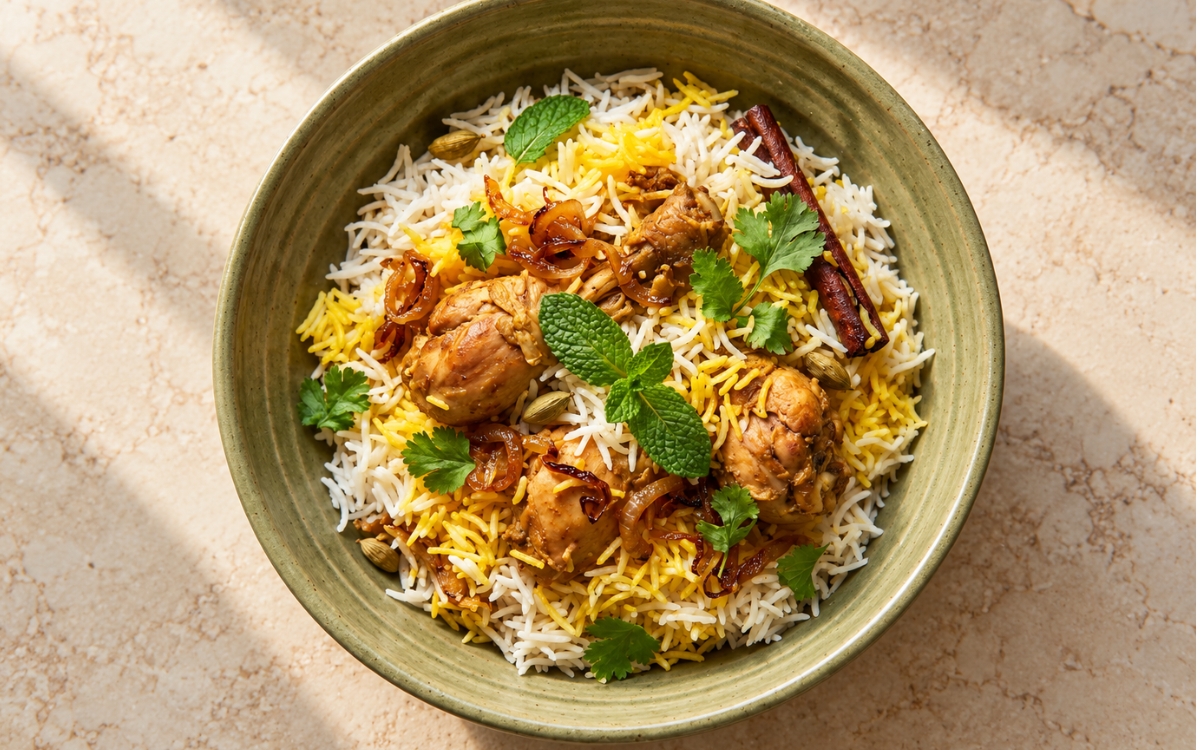
- Spread the chicken evenly in the bottom of the heavy pot if needed, then scatter over about half the fried onions along with a little more cilantro and mint. Spread the parboiled rice gently over the top in an even layer, then finish with the remaining fried onions, cilantro, mint, saffron milk, kewra or rose water if using, and the melted ghee. The top should show visible white rice, yellow saffron patches, herbs, and fried onion distributed across it.
Dum Cooking
- Cover the pot tightly, sealing the rim with foil or dough if the lid isn't very tight. Set the pot over medium heat for 5 minutes to build steam, then lower to very low heat and cook for 25–30 minutes. Turn off the heat and let the biryani rest, still covered, for 10–15 minutes. Low heat is essential through this stage — the goal is gentle trapped steam rather than aggressive scorching at the bottom.
Open and Fluff
- Open the pot and gently fluff from the sides downward with a flat spoon or rice paddle, lifting rather than stirring hard, trying to keep some layering intact so each serving gets fluffy rice, chicken, masala, herbs, and fried onions together.
Notes
Bone-in leg meat gives the best flavor and stays juicier through the long dum cooking than breast, which tends to dry out more easily over the same timeline.
Aged basmati rice is strongly preferred over fresh rice here, since fresh rice breaks more easily during parboiling and can turn sticky rather than staying long and separate.
The boiling water for parboiling the rice should taste clearly seasoned, since this is one of the main places the rice itself picks up flavor before it ever meets the chicken masala.
Resting the biryani after dum, rather than opening the pot immediately, lets the rice finish cooking gently from residual steam and makes the final fluffing noticeably cleaner.