Ingredients
Method
Brine the Chicken
- Pat the chicken thighs dry and season lightly with fine sea salt. In a bowl, whisk together the buttermilk, salt, garlic powder, onion powder, paprika, white pepper, cayenne if using, and hot sauce if using. Add the chicken thighs and turn until fully coated. Cover and refrigerate for at least 2 hours, ideally overnight. Overnight is better. Two hours works, but it is the weaker version. The buttermilk seasons the chicken and gives the dredge something to grip. That extended time lets the buttermilk's mild acidity work gradually into the meat, seasoning it throughout rather than just on the surface, while also leaving a tacky residue the dry dredge can properly adhere to.
Prepare the Waffle Batter
- In a large bowl, whisk together the flour, sugar, baking powder, baking soda, and salt. In a separate bowl, whisk together the eggs, buttermilk, melted butter, and vanilla if using. Pour the wet ingredients into the dry ingredients and stir just until combined. The batter should be thick but pourable, with a few small lumps. Let the batter rest for 10 to 15 minutes while you prepare the chicken coating. Do not beat the batter smooth. Overmixed waffle batter makes dense, bready waffles instead of crisp-edged and fluffy waffles. Stopping the mixing the moment the ingredients come together, rather than continuing for a smoother-looking batter, is what protects the finished waffles from toughening — flour's gluten develops more the longer it's worked, and this batter has genuinely little need for that extra structure.
Prepare the Dredge
- In a wide bowl or tray, whisk together the flour, cornstarch, salt, garlic powder, onion powder, paprika, white pepper, black pepper, and baking soda. The mixture should look completely even, with no streaks of plain flour or spices. The cornstarch lightens the crust, and the small amount of baking soda helps browning. Do not increase the baking soda or the coating can taste bitter. Cornstarch's own lower protein content, compared to flour alone, is what produces a genuinely lighter, crisper fried texture, while the small measured amount of baking soda promotes real browning without tipping into the bitterness a larger amount would introduce.
First Dredge the Chicken
- Remove one chicken thigh from the buttermilk, letting excess drip off but not wiping it clean. Place it into the dry dredge and press the flour mixture firmly into every surface. Shake off only the loose flour that is barely attached. Transfer to a wire rack and repeat with the remaining chicken. Let the dredged chicken rest for 5 to 10 minutes, until the coating looks patchy, rough, and slightly damp in spots. If the coating still looks like loose dry flour everywhere, it has not hydrated enough yet. That short rest helps the crust cling instead of falling off in the oil. That brief rest lets the buttermilk residue still clinging to the chicken begin actually binding with the dry coating, giving the crust real adhesion before it ever meets the shock of hot oil.
Cold-Water Dip and Second Dredge
- Fill a bowl with ice-cold water. Working one piece at a time, lower the dredged chicken into the cold water for 10 to 15 seconds without moving it aggressively. Lift it out, let excess water drip off for a few seconds, then return it immediately to the dry dredge. Press the flour mixture firmly into the chicken again, building a thick, rough, craggy coating. Transfer back to the wire rack and repeat with the remaining chicken. This is the main crust step. The cold water turns the first coating into a sticky layer, and the second dredge builds the heavy craggy crust. That cold-water dip dissolves just enough of the first coating's surface to turn it genuinely tacky, giving the second layer of dry dredge something real to cling to — this is specifically what builds the thick, rugged crust this style of fried chicken depends on.
Rest the Final Coating
- Let the fully dredged chicken rest on the rack for 10 to 15 minutes while the oil heats. The coating should look rugged, uneven, and slightly hydrated. If the coating looks smooth, it was not pressed on firmly enough. A rough surface now becomes a craggy fried crust later. That surface irregularity is a genuine, visual confirmation the double-dredge process worked as intended — a smooth coating at this stage would fry up correspondingly smoother and less texturally interesting.
Cook the Waffles
- Heat the waffle iron and lightly grease it. Cook the batter according to your waffle iron, usually 3 to 5 minutes per waffle, until deeply golden, crisp at the edges, and cooked through. Transfer the waffles to a rack in a low oven around 90–100°C while you fry the chicken. Do not stack hot waffles on a plate. Steam makes them soft. A rack keeps the edges crisp. Stacking hot waffles traps their own released steam against each other, and that trapped moisture is exactly what softens their otherwise crisp edges — a rack lets that steam escape freely instead.
First Fry the Chicken
- Heat the oil to 155–160°C. Fry the chicken thighs in batches, without crowding, for about 4 to 5 minutes, until the crust is set and pale to medium golden. Transfer to a clean wire rack. Boneless thighs cook faster than bone-in chicken. This first fry sets the crust and starts cooking the meat without driving the exterior too dark. That first, gentler fry gives the meat genuine time to cook through at a moderate pace, deliberately leaving the exterior colour underdeveloped for now so the second, hotter fry has real room to build deep, dark crispness without overcooking the interior.
Rest Before the Second Fry
- Let the chicken rest on the rack for 8 to 10 minutes. This lets the internal heat even out and lets surface steam escape before the final crisping fry. That resting window does genuine, active work beyond simple pause — it lets residual heat distribute evenly through the meat while surface moisture has real time to evaporate, both of which set the crust up to crisp properly rather than steam during the second fry.
Second Fry the Chicken
- Increase the oil temperature to 185–190°C. Fry the chicken again for 2 to 3 minutes, until deeply golden-brown, craggy, and very crisp. The chicken is done when the internal temperature reaches 74°C at the thickest point. Transfer to a clean wire rack and let rest for 3 to 5 minutes. Stop as soon as the crust is deep golden and the chicken hits 74°C. Boneless thighs are forgiving, but they can still dry out if you keep frying after they are done. That higher second-fry temperature is specifically what builds real, deep colour and maximum crispness quickly, in a genuinely brief window — since the interior is already properly cooked from the first fry, this stage exists purely to finish the crust.
Assemble and Serve
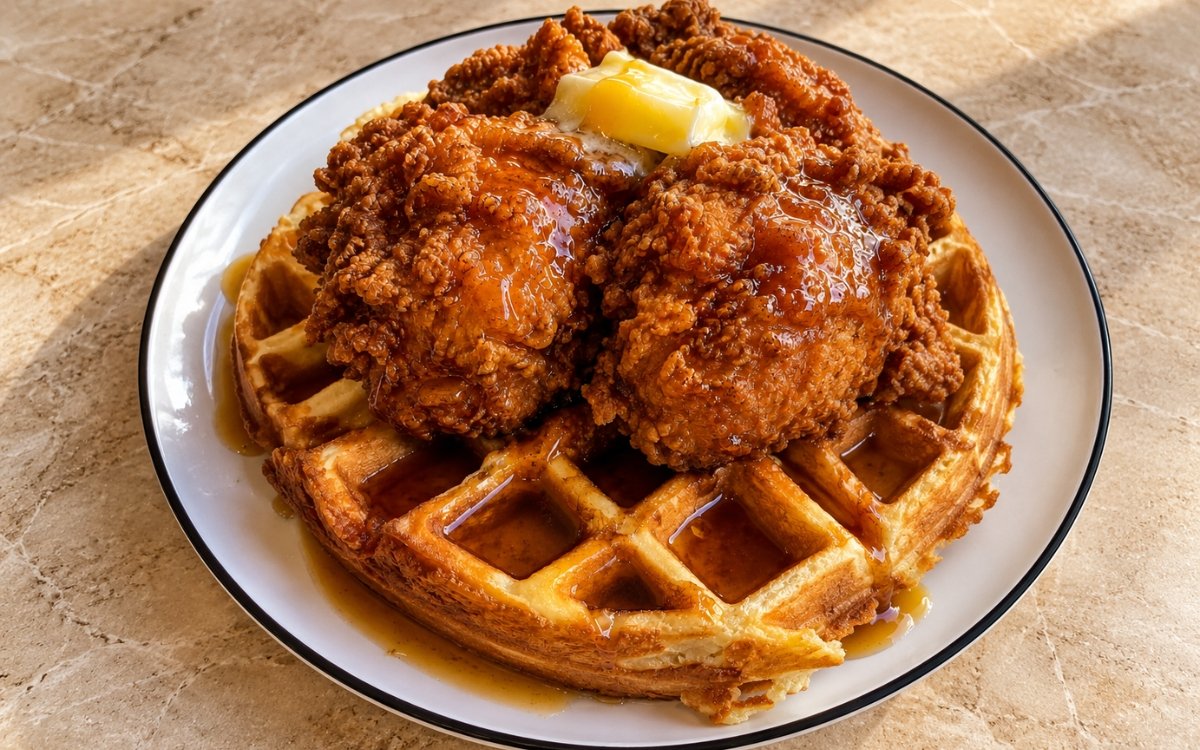
- Place one hot waffle on each plate. Top each waffle with one piece of crispy fried chicken. Add a small piece of butter on top and drizzle with maple syrup. Finish with a little black pepper if desired. Serve immediately while the chicken crust is crisp and the waffles are still warm. Frying the chicken only after the waffles are already cooked and held warm is what lets that crust arrive at the plate at its absolute loudest and crispiest, rather than softening during any extended wait.
Notes
The cold-water dip between the two dredging stages deserves genuine recognition as the single technique most responsible for this fried chicken's real, craggy crust. That brief immersion dissolves just enough of the first coating's own surface to turn it properly tacky, giving the second layer of dry dredge something real to bind onto — skipping this step, or rushing through it, would leave the crust considerably thinner and smoother than the rugged, craggy result this recipe is specifically built around.
Frying the chicken in two distinct stages — a gentler first fry, then a hotter, briefer second fry — deserves the same attention this collection gives to every two-stage fried protein. The first fry is deliberately calibrated to cook the interior through at a moderate pace, without pushing the exterior too dark too early; the second, hotter fry then has real room to build deep colour and maximum crispness in a genuinely brief window, since the meat's own doneness is already largely handled.
The resting period between the two fries deserves genuine respect as more than simple patience. That window lets the meat's own internal heat distribute evenly while surface moisture has real time to evaporate — both of which set the crust up to crisp properly during the second fry rather than steaming under any lingering surface wetness.
Keeping the finished waffles on a wire rack rather than stacking them, as the recipe's own notes emphasise, deserves attention as a small but genuinely consequential detail. Stacked waffles trap their own released steam against one another, and that trapped moisture is directly what softens their otherwise crisp edges — a rack lets that steam escape freely instead.