Ingredients
Method
Cook the Rice
- Rinse the jasmine rice until the water runs mostly clear. Combine with 360ml water and cook until tender. Rest covered for 10 minutes, then fluff. Hold warm. That resting period lets residual steam finish distributing evenly through the rice, which is directly what makes it easier to fluff into tender, separate grains rather than a compacted mass.
Marinate the Chicken
- In a bowl, combine the chicken thighs, garlic, soy sauce, bay leaves, and black peppercorns. Marinate for 30 minutes. Keep the vinegar out of the marinade. Adding it later gives a cleaner adobo flavor and better control over the braise. That deliberate exclusion of vinegar at this stage protects the whole dish's final balance — vinegar mixed in from the very start would begin working on the chicken's own proteins right away, well before the braise's own controlled, later-stage acidity is actually meant to be introduced.
Brown the Chicken
- Lift the chicken out of the marinade, letting excess drip back into the bowl. Reserve the marinade and garlic. Heat the oil in a wide heavy pan or sauté pan over medium-high heat. Brown the chicken in batches for 2–3 minutes per side until lightly caramelized. Do not fully cook it through at this stage. Add the reserved garlic cloves and cook for 1 minute so they begin to take on a little color. Do not crowd the pan. The chicken should sear, not steam. Good browning builds the dark adobo flavor. That real, deliberate browning at this early stage is exactly what builds the fond directly responsible for the sauce's own eventual dark, developed colour and depth — chicken added straight to a braise without this step would miss that foundational flavour entirely.
Braise the Adobo
- Return all the chicken to the pan. Add the reserved soy marinade and 180ml water. Bring to a simmer. Pour in the vinegar. Let it come to a boil without stirring for about 2 minutes, then lower to a gentle simmer. Cover partially and cook for 15–20 minutes, stirring only occasionally after the first few minutes, until the chicken is tender and the garlic is soft. Letting the vinegar boil before stirring helps cook off the raw acidic edge and keeps the sauce balanced rather than sharp. That specific, undisturbed boil right after the vinegar joins is what lets its own sharpest, harshest notes actually cook off into the air — stirring too early would instead work that same raw acidity directly through the whole braise before it's had the chance to mellow.
Reduce the Sauce
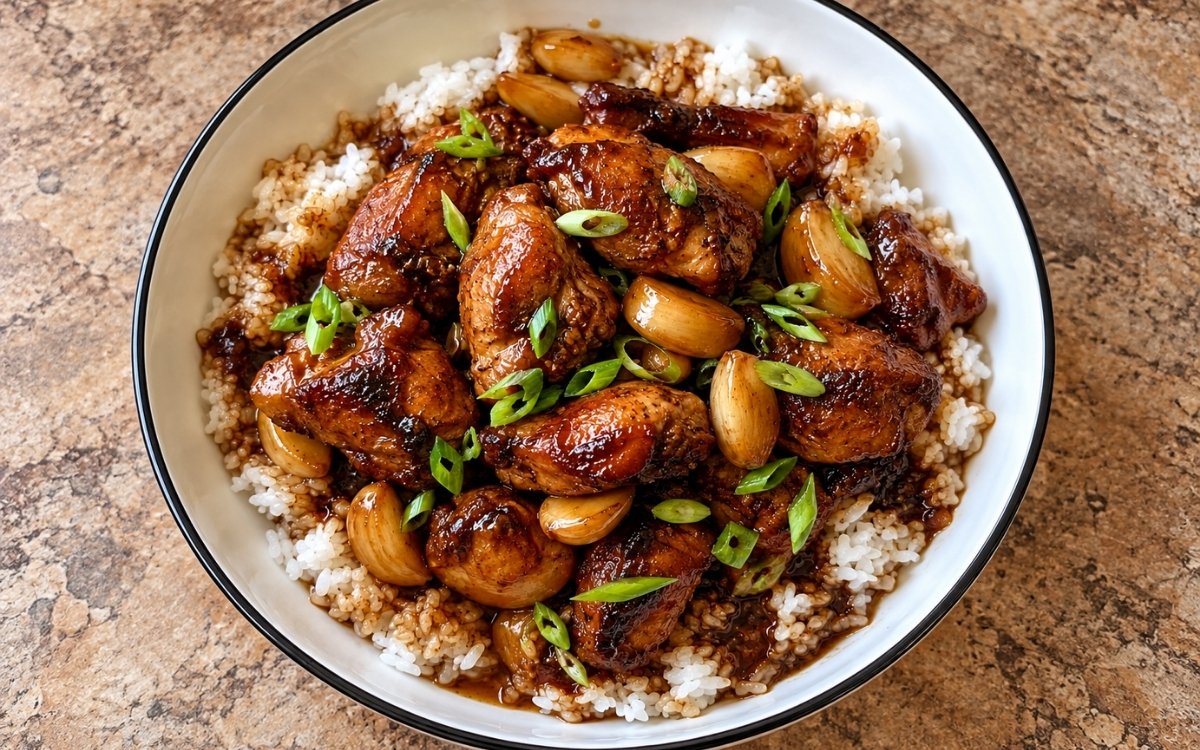
- Uncover and continue simmering for 8–12 minutes, turning the chicken occasionally, until the sauce reduces to a glossy consistency that coats the meat and leaves a hearty pool for the rice. Taste. Add the 1 tsp brown sugar only if the sauce needs slight rounding. Remove bay leaves if desired. The finished sauce should be salty, tangy, garlicky and shiny — not watery. It should lightly cling to the chicken and stain the rice dark at the edges. That final, uncovered reduction stage concentrates the sauce's own real flavour, converting it from a thinner braising liquid into the glossy, clinging consistency this dish depends on for coating both the chicken and the rice properly.
Assemble the Bowls
- Divide the warm rice among 4 bowls. Spoon over the chicken and all the soft braised garlic cloves. Generously spoon the reduced adobo sauce over and around the rice. Finish with sliced scallions. Serve immediately. Spooning that reduced sauce generously and directly over the rice, rather than serving it only alongside the chicken, is what actually lets the grains soak up its own dark, savoury flavour the way this dish is specifically meant to be eaten.
Notes
Keeping the vinegar out of the initial marinade deserves genuine recognition as the technique most directly responsible for this dish's real, clean adobo flavour. The recipe's own explicit note that adding it later "gives a cleaner adobo flavor and better control over the braise" reflects a real, deliberate choice — vinegar mixed in from the very start would begin acting on the chicken well before the braise's own controlled acidity is actually meant to be introduced.
Letting the vinegar boil undisturbed for a genuine couple of minutes once it joins the braise deserves the same attention this technique receives throughout classical adobo preparation generally. That specific, unstirred boiling window is what lets the vinegar's own sharpest, rawest edge actually cook off into the air, protecting the finished sauce from tasting harsh rather than properly balanced.
Browning the chicken thoroughly before it ever meets the braising liquid deserves genuine respect as the technique responsible for adobo's whole characteristic dark, developed flavour. The recipe's own explicit framing — "good browning builds the dark adobo flavor" — reflects real understanding that this early searing stage builds fond directly into the pan, fond that carries straight through into the finished, reduced sauce.
Leaving the garlic cloves genuinely whole throughout the braise, rather than mincing them, deserves attention as a deliberate technique specific to this dish's own character. The recipe's own explicit note that whole cloves "soften and sweeten in the sauce instead of disappearing" reflects real understanding that this approach delivers distinct, spreadably soft garlic as its own component, rather than diffusing it invisibly throughout the sauce.