Ingredients
Method
Dry the Chicken and Mix the Marinade
- Cut the 1kg boneless chicken thighs into even 3–4cm bite-size pieces, then pat them thoroughly dry with paper towels until no moisture shows on the surface. In a large bowl, whisk together the 150g thick yogurt, 1½ tbsp ginger-garlic paste, 2 tbsp lemon juice, 2 tsp fine salt, 2 tbsp Kashmiri chilli powder, ½–1 tsp hot red chilli powder, ½ tsp turmeric, 1½ tsp ground coriander, 1 tsp ground cumin, 1 tsp garam masala, 1 tsp black pepper and the egg. Whisk until completely smooth and brick-red, with no streaks of yogurt or lumps of spice. Use the lower amount of hot chilli powder for moderate heat, or the full 1 tsp for a sharper bite. That thorough drying is what lets the marinade grip the meat, since a wet surface makes the coating slip and fry up thin and patchy.
Coat and Marinate
- Add the 40g cornstarch, 35g rice flour and 15g all-purpose flour to the bowl and stir into a thick, smooth red paste. Add the chicken and mix thoroughly with a spoon or gloved hands, turning the pieces until every surface is evenly coated with no pale patches. The marinade should cling tightly and look thick and pasty, never runny or pooling at the bottom of the bowl. If it looks loose, stir in a little extra rice flour or cornstarch, 1 tsp at a time, until it genuinely grips the chicken. Cover and refrigerate for 45 minutes. That thick, clinging coating is exactly what fries up into the craggy, deep red-orange crust, since a wet marinade slides off in the oil and leaves the chicken pale and uneven.
Take the Chill Off the Chicken
- Remove the chicken from the refrigerator 15–20 minutes before frying and leave it covered at room temperature. Stir once to redistribute the marinade and check it again — if the chicken has released liquid and the coating looks wet, stir in a little more rice flour, 1 tsp at a time, until it is thick and pasty once more. Meanwhile, pour the neutral oil into a deep, heavy pot to a depth of about 6–8cm, keeping it no more than half full, and begin heating it over medium heat. Check that the 20–25 curry leaves are completely dry, patting them with paper towel if needed. That short rest is what stops fridge-cold chicken from dropping the oil temperature too sharply, which would leave the coating greasy instead of crisp.
Fry the Chicken in Batches
- Bring the oil to 170–175°C, checking with a thermometer. Fry the chicken in 3 batches, lowering the pieces in one at a time and separating any that touch so they do not fuse together. Fry each batch for 4–6 minutes, turning occasionally, until deep red-orange, crisp and firm outside and cooked through, with the thickest piece reaching at least 74°C. Lift out with a slotted spoon onto a wire rack or paper towel-lined tray, and let the oil return to 170–175°C before adding the next batch. Make sure every piece is crisp and set before it leaves the oil, because under-fried pieces soften quickly in the tempering. For extra crispness, especially if serving later, rest the fried chicken for 5 minutes, then refry it in 185–190°C oil for 45–60 seconds just before the final toss. That steady oil temperature is what sets the crust genuinely fast, since overloaded, cooler oil soaks into the coating and turns it heavy instead of crisp.
Make the Finishing Tempering
- Heat the 2 tbsp neutral oil in a wide pan or wok over medium heat. Add the 5–6 slit green chillies and fry for 20–30 seconds, until blistered in spots. Add the dried curry leaves carefully, standing back as they splutter, and fry for a few seconds until crisp, aromatic and glossy. Add the 1 tbsp chopped garlic and cook for 15–20 seconds, just until fragrant and never browned. Add the ½ tsp Kashmiri chilli powder and ¼ tsp black pepper, stir immediately, then add 1–2 tbsp water at once to stop the spices scorching and form a light coating, followed by the 1 tsp lemon juice. That splash of water is what protects the ground chilli from burning, keeping the tempering bright red-orange instead of dark and bitter.
Toss and Serve
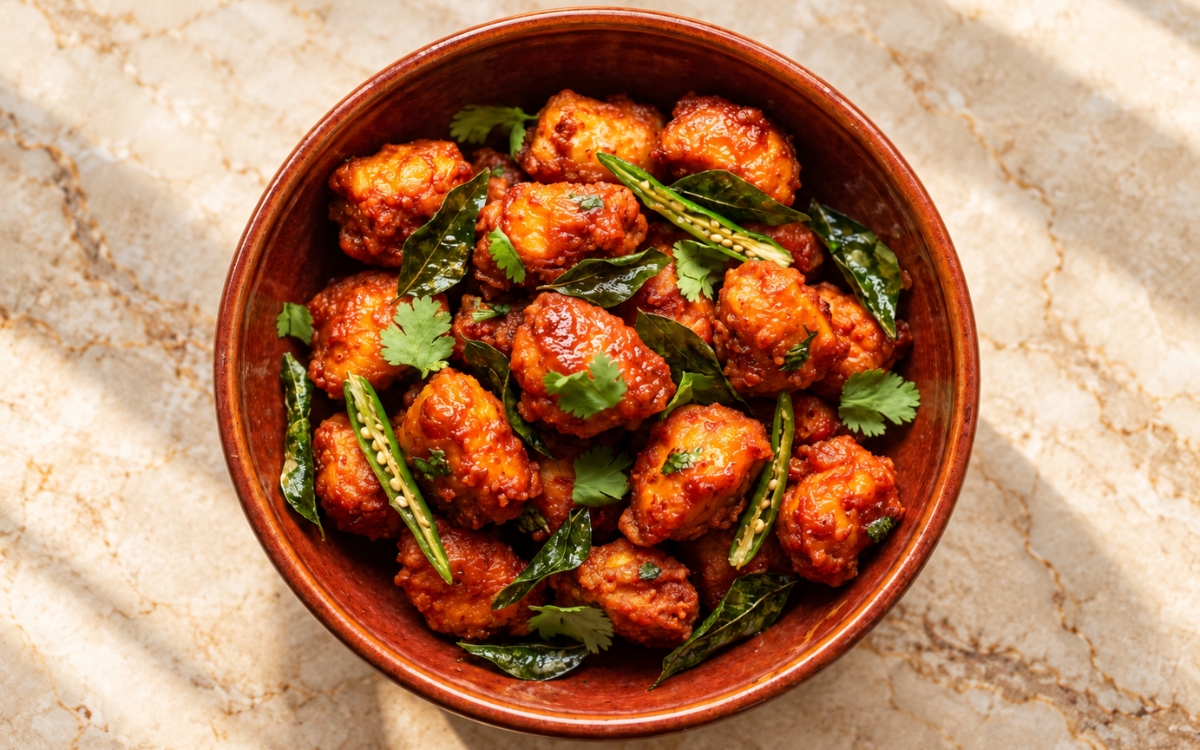
- Raise the heat to medium-high, add all the fried chicken and toss well for 30–60 seconds, just until every piece is evenly coated and glossy, with the curry leaves and chillies spread throughout. Turn off the heat, add the 2 tbsp chopped cilantro and toss again. Taste a piece and add a pinch of salt only if needed. The chicken should look glossy and dry, with no liquid pooling in the pan; if a little remains, toss over the heat for a few seconds more. Serve immediately, while hot and crisp. That brief final toss is what coats the chicken without softening it, since lingering in the pan turns the light glaze into a wet sauce that steams the crust.
Notes
The thick, clinging marinade deserves genuine recognition as the technique most directly responsible for the characteristic Chicken 65 crust. The recipe's own warning that "A wet marinade slides off in the fryer and gives pale, uneven crust" reflects simple frying physics — cornstarch and rice flour bind with the yogurt and egg into a paste that grips the dried chicken, then dehydrates and sets into a craggy shell the moment it meets hot oil.
Frying in batches at a steady 170–175°C deserves the same attention this technique receives throughout this collection's other deep-fried recipes, because oil temperature decides whether the coating crisps or soaks. Crowding the pot or adding fridge-cold chicken drops the temperature too sharply — the coating then absorbs oil before it can set, which is exactly why the method takes the chill off the chicken and lets the oil recover between batches.
The rice flour and cornstarch blend deserves genuine respect as the detail most directly responsible for a light, crisp crust rather than a bready one. The recipe's own note that "Rice flour is important for a lighter, crisper crust" holds because rice flour has no gluten to toughen, while cornstarch helps the coating cling and fry up craggy — the small 15g of all-purpose flour simply adds enough structure to hold the shell together.
The dryness of the finishing tempering deserves attention as a genuine, checkable readiness cue rather than a loose approximation. The chicken should look glossy with no liquid pooling in the pan after a 30–60 second toss — the recipe's own reminder that "The goal is a light spicy glossy coating, not a wet sauce that softens the crust" is the reason the water stays at 1–2 tbsp and the heat goes off promptly.