Ingredients
Method
Zest and Macerate
- Finely zest the 4 limes, using only the green outer part and avoiding the bitter white pith. Place 600g of the pitted cherries in a large bowl. Add the lime zest and the sugar or honey. Mash and muddle thoroughly until the cherries release plenty of juice and the sugar begins dissolving. Let sit for 20–30 minutes so the sugar draws out the cherry juices and the lime zest oils. Combining the sugar, cherries, and lime zest together in one maceration, rather than treating them separately, lets a single osmotic process do double duty — the same sugar pulling juice from the cherries is simultaneously pulling aromatic oil from the zest, building both flavours into one concentrated mixture at once.
Strain the Cherry Base
- Transfer the macerated cherry mixture to a fine-mesh strainer set over a large bowl or pitcher. Press firmly to extract as much juice as possible. Discard the solids. You should have a concentrated cherry-lime base. Pressing firmly at this stage, rather than gently, is the right call specifically because this base has already had its aromatics fully developed through maceration — unlike a delicate herb infusion, there's no risk of forcing out unwanted bitterness from macerated cherry pulp the way there would be with something like mint or lavender.
Build the Limeade
- Add the fresh lime juice to the strained cherry base. Pour into a large pitcher. Add 3.2 liters of very cold water and stir well. Taste. Add a little more water if needed, aiming for a bright, tart-sweet balance. You want about 4 liters total once everything is in. This tasting checkpoint matters directly given how much cherry sweetness and lime tartness can both vary batch to batch — building in that adjustment stage accounts for that natural variability rather than assuming a fixed recipe always lands at the same balance.
Second Infusion
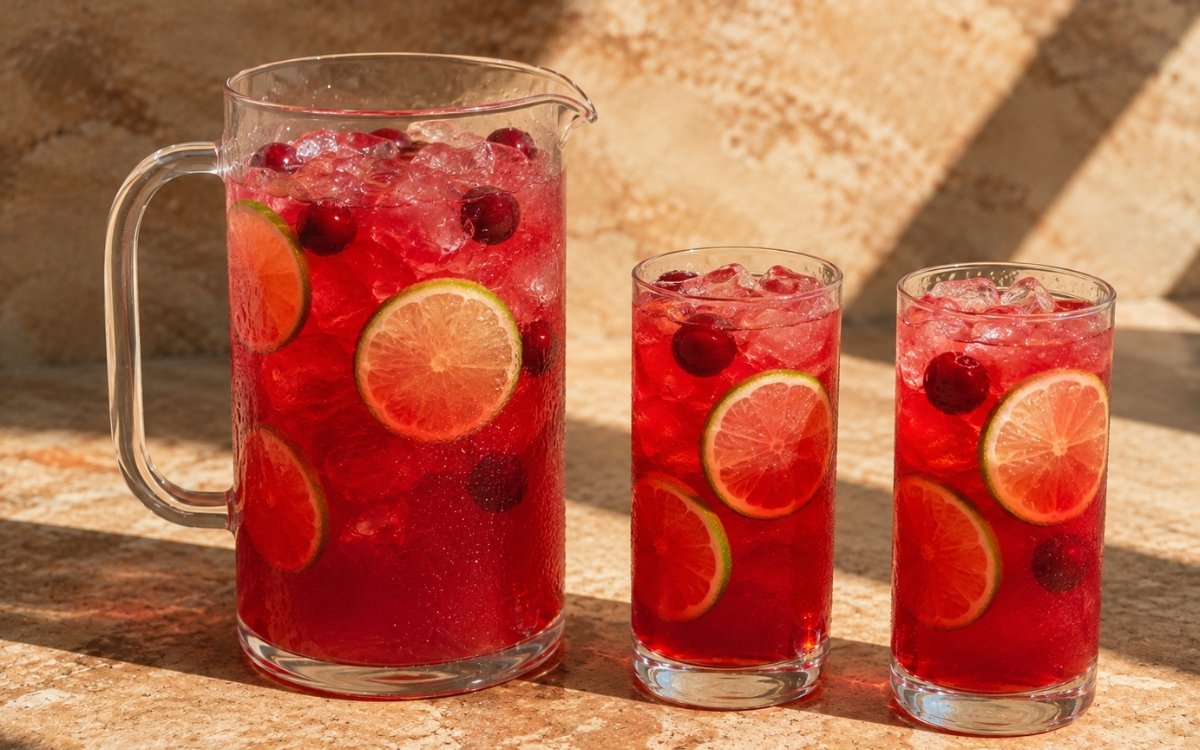
- Add the remaining 300g pitted cherries, lightly popped open with your fingers, to the pitcher. Add the sliced lime wheels or half-wheels. Refrigerate for 1 to 2 hours so the drink picks up a fresh second layer of cherry and lime flavor. Lightly popping this second batch open, rather than leaving the cherries whole or crushing them hard, is what releases just enough fresh juice to layer new flavour into the already-built base without clouding the pitcher with excess pulp.
Add Ice and Serve
- Just before serving, add ice to the pitcher and stir gently. Serve in ice-filled glasses with some cherries and lime slices in each glass. Adding the ice only at this final stage, rather than earlier during the infusion, protects the drink from being diluted before it's had its full chilling and second-infusion time to develop properly.
Notes
Macerating the cherries together with lime zest and sugar, rather than handling each component separately, deserves recognition as the technique responsible for this drink's real, concentrated flavour foundation. That combined maceration lets one process — sugar's osmotic draw — work on two ingredients simultaneously, pulling juice from the cherries and aromatic oil from the zest together, producing a base with real depth before any dilution ever begins.
The two-stage cherry approach — one portion fully macerated and strained into a concentrated base, a second portion only lightly popped and added later as whole fruit — deserves genuine attention as a deliberate structural choice. That first portion builds the drink's actual flavour foundation; the second, added only once the base is already built, contributes a fresh, distinct layer of flavour and visual appeal that a single-stage approach wouldn't provide.
The instruction to press firmly when straining the macerated cherry base, in contrast to the gentler pressing this collection typically recommends for delicate herbs, reflects real understanding of the ingredients involved. Cherries, unlike mint or lavender, don't carry the same risk of releasing unwanted bitterness under firmer pressure — that distinction is worth noting specifically because it runs counter to the gentler default this collection applies elsewhere.
The strict avoidance of white pith throughout zesting deserves the same careful attention it receives across every citrus-forward drink in this collection. Lime pith carries a real, distinct bitterness entirely separate from the fruit's natural tartness — even a small amount worked accidentally into the zest can introduce a flavour that works directly against this drink's bright, clean cherry-lime balance.