Ingredients
Method
Soak and Cook the Chickpeas
- Rinse the chickpeas well, then soak them in 1.5 L water for 8–12 hours, until they've noticeably expanded and softened slightly. Drain and rinse again. Transfer the soaked chickpeas to a pot with 1.2 L fresh water, the salt, the optional tea bag, bay leaf, green cardamom, and black cardamom if using. Bring to a boil, skim off any foam, then reduce to a gentle simmer. Cover partially and cook for 50–70 minutes, until the chickpeas are fully tender all the way through — they should mash easily between your fingers with no chalky center left. Undercooked chickpeas never quite come together with the sauce later, so this stage is worth getting right. Reserve at least 300 ml of the cooking liquid, then discard the whole spices and tea bag.
Build the Onion Base
- Heat the oil or ghee in a wide sauté pan or kadai over medium heat. Add the cumin seeds and bay leaf and let them sizzle for 20–30 seconds. Add the onions and cook for 10–14 minutes, stirring often, until deep golden brown but not burnt — this stage builds most of the dish's depth, and onions left pale leave the finished curry tasting flat and sweet instead of rich. Add the green chilies and ginger-garlic paste and cook for 1 minute, stirring constantly, until fragrant and the raw smell is gone.
Bhuno the Tomato Masala
- Add the tomatoes, the optional tomato paste, and the salt. Cook over medium heat for 8–12 minutes, stirring often, until the tomatoes break down and the mixture thickens. Add the coriander, cumin, turmeric, Kashmiri chili powder, hot chili powder if using, chana masala powder, and garam masala, cooking for 1–2 minutes, stirring constantly, adding a small splash of hot water if the pan looks dry so the spices don't scorch. Keep cooking the masala until it looks thick and glossy and starts releasing a little oil around the edges — this bhuno stage is one of the main points where the dish's flavor actually develops.
Add Chickpeas and Develop Body
- Add the cooked chickpeas and 120 ml of the reserved cooking liquid, stirring well to coat everything in the masala. Mash about a quarter of the chickpeas lightly with a potato masher or the back of a spoon directly in the pan, leaving the rest whole — this is what thickens the masala naturally and gives the curry its hearty, clingy texture, rather than any added flour or starch. Simmer uncovered over low to medium-low heat for 15–20 minutes, stirring regularly so the bottom doesn't catch, adding more reserved cooking liquid only as needed. By the end, the masala should coat the chickpeas thickly and show a light sheen of oil in spots rather than looking watery.
Finish the Curry
- Stir in the amchur, crushed kasuri methi if using, and chopped cilantro stems, then simmer for 1 minute more and taste. Adjust the seasoning with more salt if needed, and add ½ to 1 teaspoon lemon juice only if the curry needs brightness — if it tastes too sharp instead, let it simmer another 2–3 minutes rather than adding more acid. Turn off the heat and let the curry rest for 5–10 minutes before serving, which gives the chickpeas time to absorb the masala and the texture time to tighten slightly.
Garnish and Serve
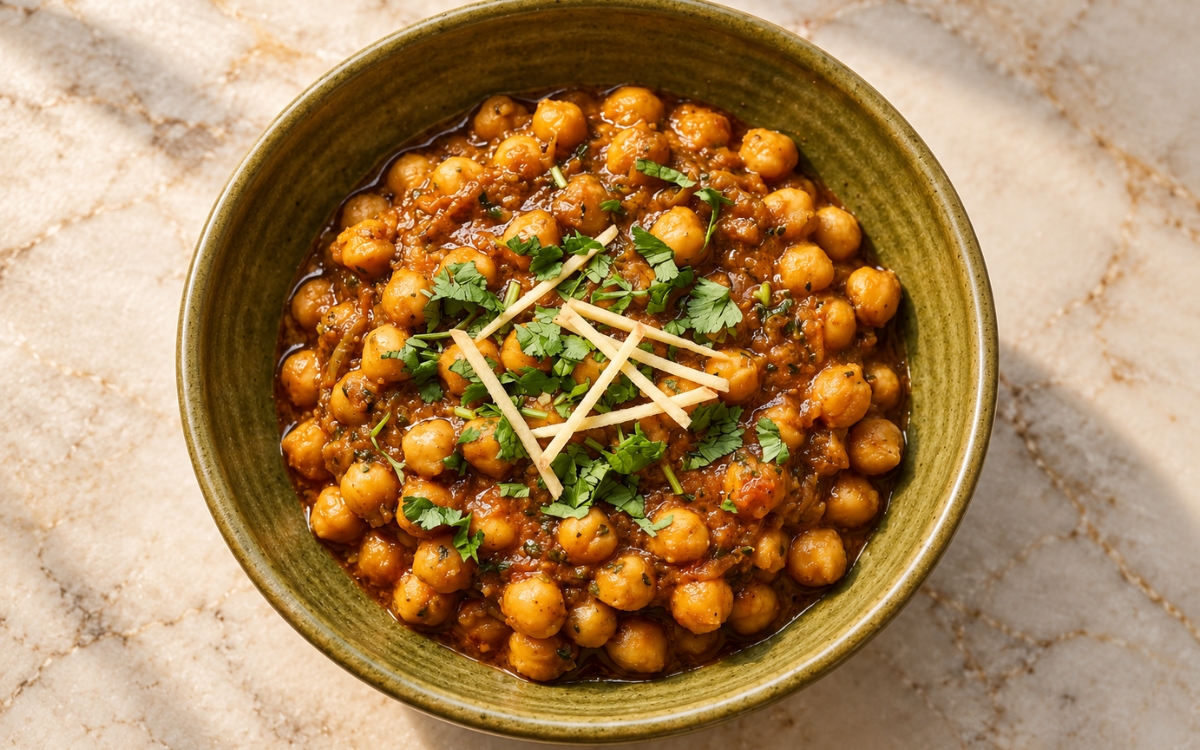
- Spoon the chana masala into bowls and garnish with the chopped cilantro leaves and ginger matchsticks. Serve hot. The finished dish should look thick, richly spiced, and glossy, with the chickpeas well coated and the masala visibly textured rather than smooth like a puree.
Notes
Dried chickpeas give the best texture and flavor for this dish, though canned chickpeas work as a shortcut — use about two 400 g cans, drained and rinsed, and simmer them directly in the finished masala for 20–25 minutes with a little water or stock so they have time to absorb the flavor they'd otherwise pick up from cooking in their own seasoned liquid.
The chickpeas need to be fully tender before they ever meet the masala. Even slightly undercooked chickpeas stay separate from the sauce instead of absorbing it, leaving them tasting dull on the inside no matter how long the masala simmers afterward.
Deep golden brown onions are the real marker to aim for here, not just translucent ones — that extra cooking time is what builds the dish's depth, and stopping too early leaves the curry tasting flatter and sweeter than it should.
Mashing a portion of the chickpeas directly in the pan is the main technique responsible for this curry's thick, clingy body. It's a simpler route to that texture than adding flour or starch, and it keeps the dish's flavor concentrated rather than diluted.