Ingredients
Method
Chop the Base
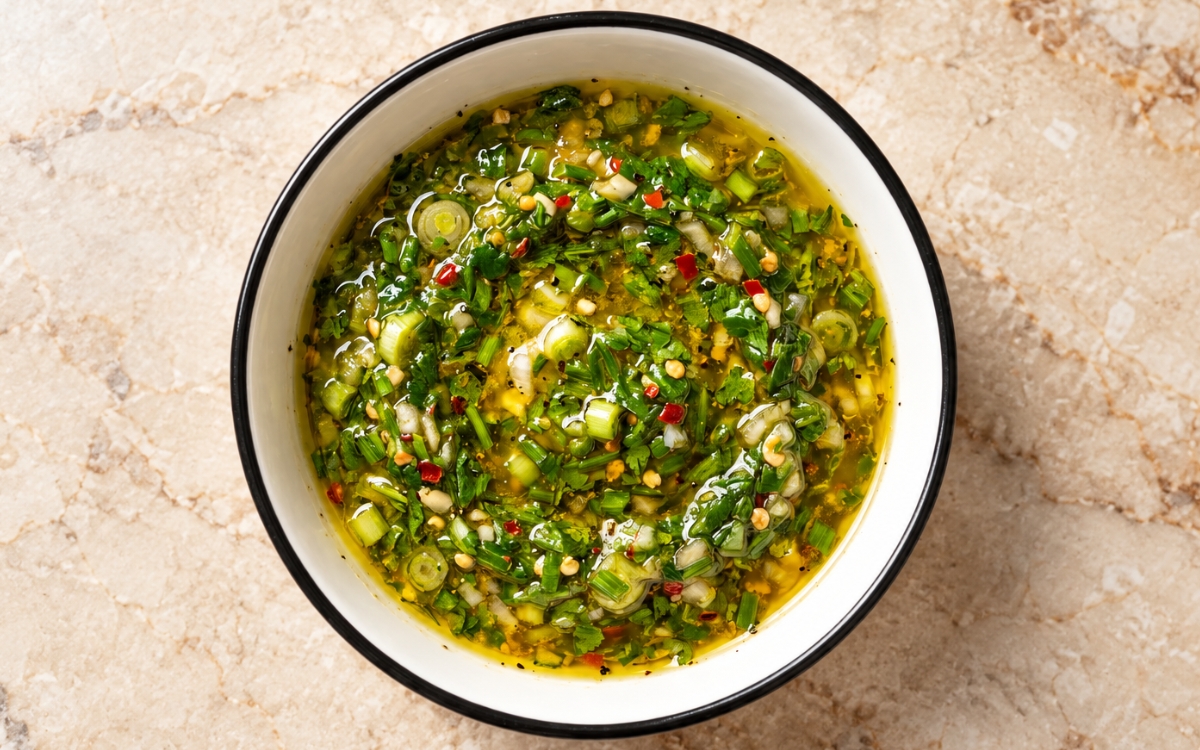
- Finely chop the scallions, parsley, chives, onion, garlic, chili, and thyme by hand, keeping the pieces small enough to suspend evenly in the liquid later. Dice the onion very fine and mince or grate the garlic almost to a paste so that neither tastes harsh. Combine everything in a medium heatproof bowl, then add the salt and black pepper and mix well. The mixture should look like densely packed green-and-white confetti, visibly chopped rather than mashed. That hand-chopped texture is exactly what sets sauce chien apart, since a blender would bruise the herbs and erase the distinct pieces the whole sauce is built on.
Bloom with Hot Water
- Pour the 60ml of just-boiled water over the chopped mixture and stir immediately so every piece meets the heat. Let it sit for 2–3 minutes, until the onion and scallion look slightly softened and the herbs turn a deeper, glossier green and smell noticeably more fragrant. Do not add more water than this; the mixture should look moist and spoonable, not like soup. That brief hot-water bloom is what lightly softens the raw aromatics and wakes up the herbs and chili, which is why the amount stays small enough to keep the sauce concentrated.
Add Citrus and Oil
- Stir in the 60ml of lime juice and the 15ml of lemon juice, then slowly pour in the 80ml of oil while stirring just until combined. Taste and adjust with extra salt, pepper, or a small squeeze of lime juice if needed. The sauce should be loose and pourable, not thick and not fully emulsified like a vinaigrette, with a glossy oil sheen on the surface and citrusy liquid visible underneath. If it tastes too sharp, stir in 1–2 tsp of extra hot water or a little more oil. That deliberately loose, only partly combined texture is what lets the sauce run over hot food instead of sitting on top of it like a paste.
Rest and Serve
- Let the sauce rest at room temperature for 10 minutes so the flavours can meld, then taste once more and add a pinch of salt or a small squeeze of lime if it tastes flat. The chopped herbs will rise and settle naturally in the liquid, which is normal, so stir again just before each use. Spoon about 2 tbsp over each serving of grilled fish, shrimp, chicken, pork, yuca, or roasted vegetables. That short rest is what rounds out the raw onion and garlic, so the sauce tastes balanced and bright rather than aggressively sharp.
Notes
Chopping everything by hand, rather than blending, deserves genuine recognition as the technique most directly responsible for whether this is a true sauce chien or a flat green purée. Blender blades bruise the herbs and break the onion and garlic into a uniform paste, which turns the colour murky and the flavour bitter, while a sharp knife leaves small, distinct pieces that suspend evenly and keep every spoonful visibly fresh.
The small, measured pour of just-boiled water deserves the same attention this technique receives throughout this collection’s other fresh herb and raw-aromatic condiments. Too little leaves the onion and garlic harsh and the herbs dull, while too much floods the bowl and dilutes the concentrated citrus-and-herb flavour into something thin that runs straight off the food.
Adding the oil last and slowly, stirring only until combined, deserves genuine respect as the detail most directly responsible for the sauce’s loose, glossy texture. Because the oil is meant to float as a sheen over the citrus rather than emulsify into a thick vinaigrette, vigorous whisking would turn the sauce cloudy and opaque, hiding the translucent green-and-golden look that defines it.
The 10-minute rest deserves attention as a genuine, checkable readiness cue rather than an optional pause, since the sauce tastes visibly different before and after it. Straight after mixing, the raw onion and garlic taste sharp and separate, whereas after resting the flavours meld and round out, which is why a second taste at the end is worth the extra moment.