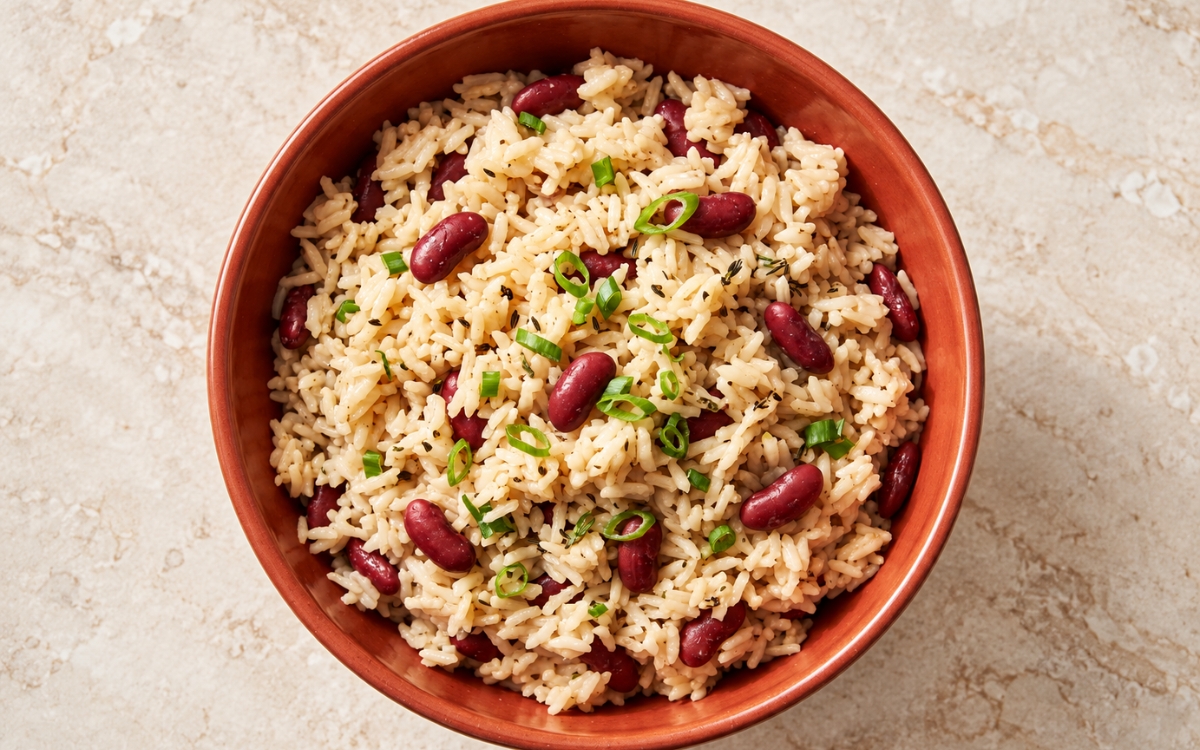
Ingredients
Method
Rinse and Drain the Rice
- Rinse the 280g rice in a fine sieve under cold running water, swishing it with your fingers, until the water runs mostly clear. Shake the sieve well, then leave the rice to drip for 5–10 minutes so the excess water falls away. Do not skip this draining, because water clinging to the grains quietly adds to the liquid you have measured and can push the pot toward soupy. That rinsing and draining is what removes surface starch and keeps the cooked grains separate rather than sticky.
Build the Aromatic Base
- Heat the 1 tbsp oil or butter in a medium heavy pot with a tight-fitting lid over medium heat. Add the finely diced onion and the white and light green scallion parts and cook for 2–3 minutes, stirring, until softened, glossy, and still pale. Stir in the garlic, thyme, allspice, and bay leaf, if using, and cook for 20–30 seconds until fragrant. Lower the heat if anything starts to colour, because browned onion turns the rice darker and coloured garlic turns bitter. That gentle softening is what gives the pot its clean, pale, sweetly aromatic base.
Toast the Rice
- Add the drained rice to the pot and stir for 1–2 minutes, until every grain looks lightly coated in the fat and aromatics and smells faintly nutty. Keep the heat at medium and keep the grains moving, because the rice should stay white and only just warm through rather than take on any brown colour. That brief toasting is what helps the grains stay distinct and carry the coconut and herb flavour evenly from edge to centre.
Add the Coconut Milk, Beans, and Seasoning
- Shake the can of coconut milk well and pour it into the pot, then add 180ml water, the rinsed kidney beans, 1¼ tsp salt, the pepper, and the whole Scotch bonnet, if using. Stir once well to loosen the bottom, then bring the pot up to a gentle simmer. If the mixture looks unusually thick before it simmers, add another 30–60ml water, because the rice should be comfortably submerged but never soupy. That single thorough stir is the last one the pot will get.
Simmer Covered
- As soon as the liquid reaches a gentle simmer, reduce the heat to low, cover tightly, and cook for 15–18 minutes without lifting the lid for most of that time. Resist stirring, because stirring releases starch and can break the beans. The rice is ready when the surface looks dry, small steam holes appear across the top, and the grains are tender. Too much heat can scorch the bottom before the centre cooks through. That steady, low heat is what lets the rice steam gently instead of catching on the base.
Rest, Fluff, and Serve
- Turn off the heat and leave the pot covered for 10 minutes so the rice finishes steaming. Remove the bay leaf, thyme stems, and Scotch bonnet, then fluff gently with a fork and fold in the reserved dark green scallion tops. Taste and add a pinch more salt if needed, because coconut milk can mute seasoning. If the rice is still firm, sprinkle in 2–3 tbsp hot water, cover, and steam 5 more minutes on very low heat. That covered rest is what firms the texture so the rice fluffs cleanly.
Notes
The tightly covered, undisturbed simmer deserves genuine recognition as the technique most directly responsible for whether this rice finishes with separate grains or a gummy, broken mass. The recipe’s own instruction “Do not stir repeatedly once the liquid is simmering” reflects how stirring releases starch and breaks the beans, while lifting the lid lets out the steam that cooks the top of the pot.
Softening the aromatics gently deserves the same attention this technique receives throughout this collection’s other rice and one-pot dishes built on a soft, unbrowned base. Onion and scallion whites cooked for 2–3 minutes until just soft, then garlic for only 20–30 seconds, keep the pot pale and sweet, whereas browned onion or coloured garlic darkens the rice and leaves a bitter edge.
The whole Scotch bonnet deserves genuine respect as the detail most directly responsible for fragrance without fire. Left intact it perfumes the steam with a fruity, floral aroma, but a pepper that bursts or is chopped into the pot makes the rice noticeably spicy, which is why it comes out before the rice is fluffed.
The 10-minute covered rest deserves attention as a genuine, checkable finishing step rather than a loose approximation. The recipe’s own note that “The covered rest is essential” reflects how residual steam finishes the centre of each grain and firms the texture, so the rice fluffs cleanly instead of smearing under the fork or staying wet and soft at the middle.