Ingredients
Method
Drain the Ricotta
- Line a sieve with cheesecloth or paper towels, add the ricotta, and place it over a bowl. Refrigerate for at least 4 hours, preferably overnight, until noticeably drier and thicker. This is one of the most important steps. If the ricotta is too wet, the filling will be loose and will quickly soften the shells. That extended draining period removes real, considerable moisture from the ricotta before it ever meets the sugar and flavourings, protecting the finished filling's own thick, pipeable consistency and, by extension, the shells' own crispness once filled.
Make the Shell Dough
- In a bowl, combine the flour, sugar, cocoa powder if using, cinnamon, and salt. Rub in the lard until the mixture looks sandy. Add the egg, Marsala, and vinegar. Mix until a rough dough forms, then knead for 8–10 minutes until smooth and fairly firm. If the dough feels too dry, add Marsala 1 teaspoon at a time. If sticky, add a very small amount of flour. Wrap tightly and let rest at room temperature for 1 hour. The dough should feel smooth, elastic, and firmer than pasta dough. Resting is essential so it can be rolled thinly without springing back.
Make the Ricotta Filling
- Once the ricotta is well drained, transfer it to a bowl and press it through a fine sieve or beat briefly until smooth. Add the powdered sugar, vanilla, and cinnamon. Mix until smooth. Fold in the mini chocolate chips and candied orange if using. Cover and refrigerate until needed. Do not overmix into a loose, whipped mixture. The filling should be creamy but thick enough to pipe and hold its shape. That deliberate restraint in mixing protects the ricotta's own naturally thick texture from being whipped into something looser — overmixing at this stage would work against everything the earlier draining step accomplished.
Roll and Cut the Dough
- Divide the rested dough into 2 pieces. Keep one covered while rolling the other. Roll the dough very thin, about 1–2mm thick, using a pasta machine or rolling pin. Thin dough is crucial for crisp, delicate shells. Cut into circles about 10–12cm wide. Re-roll scraps once if needed. Wrap each round around a metal cannoli tube, overlapping the ends slightly. Brush one overlapping edge with egg white and press to seal firmly. If the dough is too thick, the shells will be hard and bready instead of light and shatter-crisp. If the seal is weak, the shells can open while frying.
Fry the Shells
- Heat neutral oil to 175–180°C. Fry the wrapped dough tubes in batches for about 1½–2 minutes, turning as needed, until deep golden and blistered. Lift out and drain on paper towels. Let cool just enough to handle, then carefully slide the shells off the metal tubes while still slightly warm. Repeat with the remaining dough. The shells should be evenly golden with small bubbles and blisters. Too cool oil means greasy shells; too hot oil means a dark outside before the dough fully crisps. Remove shells from the tubes while still warm; if fully cold, they can stick and crack. Let shells cool completely before filling. That specific timing for removing the shells from their tubes — warm, not fully cold — is a narrow window; wait too long and the shell's own contraction as it cools can cause it to stick and crack against the metal.
Fill and Finish
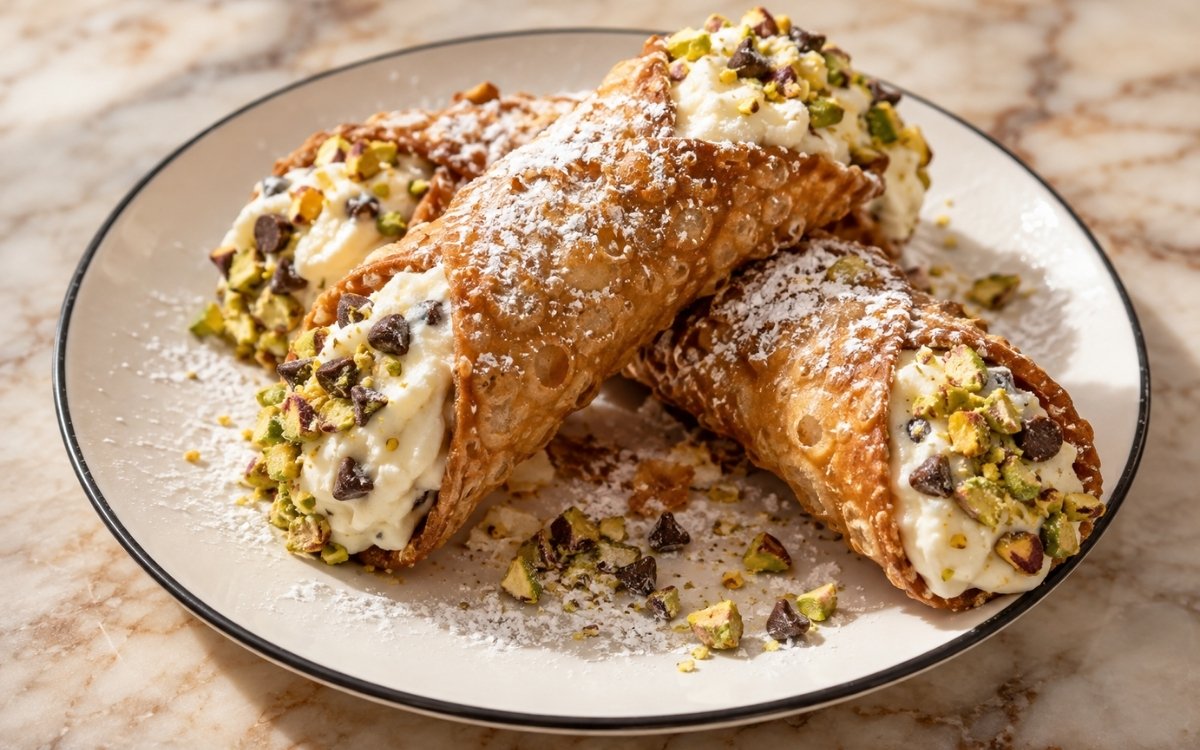
- Transfer the ricotta filling to a piping bag. Pipe the filling into each shell from both ends so the center is fully filled. Dip or sprinkle the exposed ends with chopped pistachios, mini chocolate chips, or both. Dust lightly with powdered sugar. Serve immediately or within a short time of filling. Fill only right before serving. Once filled, cannoli gradually lose their crispness. That deliberate, last-minute timing protects the shells' own moisture-sensitive crispness from the ricotta filling's own real moisture content, which begins softening the shell the moment the two actually meet.
Notes
Drain the ricotta for 4 hours or more so the filling holds its shape. A wetter ricotta produces a correspondingly wetter filling that compromises the crisp shell it's meant to sit inside.
Remove the fried shells from their metal tubes while they're still warm, rather than letting them cool fully. The shell's own structure contracts as it cools, and waiting too long risks it sticking to and cracking against the metal tube it was shaped around — getting them off while warm keeps the shells intact.
Fill the shells only right before serving to keep the contrast between crisp shell and creamy filling. Filled cannoli gradually lose their crispness, because the ricotta's moisture starts softening the shell from the moment of contact, which is exactly why this final assembly step is held back until as close to serving as possible.