Ingredients
Method
Cook the Jasmine Rice
- Rinse the 200g jasmine rice in cold water, swirling and draining it 3–4 times, until the water runs mostly clear, then drain well. Combine the rice, 300ml water and the pinch of salt, if using, in a small heavy saucepan and bring to a boil over medium-high heat. Stir once, cover tightly, reduce to the lowest heat and cook for 12 minutes, then turn off the heat and leave it to stand, still covered, for 10 minutes. Resist lifting the lid at any point, since every peek releases the steam the grains need to finish cooking. The rice is ready when the grains are tender and separate, with no wet layer of water left at the bottom of the pan. Fluff it with a fork only just before serving. That undisturbed steam is what cooks every grain evenly in such a small volume of water.
Marinate the Beef
- While the rice comes to a boil, pat the 700g beef very dry with paper towels and check that every cube sits close to 2.5–3cm, trimming any oversized pieces so they all cook at the same rate. In a bowl, mix the 4 grated garlic cloves, 2 tbsp oyster sauce, 1 tbsp soy sauce, 1 tbsp fish sauce, 1 tbsp light brown sugar, 1 tsp cornstarch, ½ tsp black pepper and 1 tbsp neutral oil until the sugar and cornstarch have dissolved into a smooth, glossy paste. Add the beef and toss until every cube is evenly coated, with the marinade clinging lightly rather than pooling thinly in the bowl. Leave to marinate for 20 minutes, and never longer than 30, since the salty sauces begin to draw moisture out of the meat. That short, clinging marinade is what seasons the surface while leaving it dry enough to sear.
Prepare the Fresh Components
- While the beef marinates, wash the 8–12 lettuce leaves and dry them thoroughly, since clinging water dilutes the dipping sauce and wilts the leaves faster beside hot beef. Slice the 2 tomatoes and the cucumber, cut the lime into wedges and pick the 10g cilantro leaves. Separate the onion wedges into petals if you prefer, keeping each piece thick enough to hold its shape in the wok. Arrange the lettuce, tomato and cucumber on a plate or tray, cover and keep them cold, with the cilantro, lime and extra black pepper within reach of the stove. Every component must be ready before the stir-fry starts, because the beef cooks in only a few minutes. That advance preparation is what keeps the vegetables genuinely cold and crisp while the beef goes straight from wok to bowl.
Make the Pepper-Lime Sauce
- In a small bowl, stir together the 1½ tbsp lime juice, ½ tsp fish sauce, ½ tsp sugar and ½ tsp freshly cracked black pepper for about 30 seconds, until the sugar has completely dissolved. Taste it on its own: it should be bright, salty, lightly sweet and noticeably peppery, with a sharp lime aroma and a real cracked-pepper bite. If it tastes flat, squeeze in a few drops of juice from one of the lime wedges and stir again. The sauce should taste strong by itself, because it is meant to season small bites of beef and rice rather than be eaten alone. Divide it among 4 small dipping dishes or leave it in one bowl for the table. That concentrated balance is what lets a single spoonful lift each mouthful of rich, glossy beef.
Char the Onion and Sear the Beef
- Heat a large wok or heavy skillet over high heat for 2–3 minutes, until very hot and just starting to smoke. Add 1 tbsp of the neutral oil, then the onion, and stir-fry for 1–2 minutes, until it is just starting to soften and char at the edges but still holds its shape; transfer it to a plate, leaving the oil behind. Add the remaining ½ tbsp oil, let the pan reheat fully, then add half the beef in a single layer. Sear without moving for 45–60 seconds, then toss and cook for 1–2 minutes more, until browned outside but still juicy inside, and transfer to the plate. Let the pan get very hot again and repeat with the remaining beef in the fat left behind. If the cubes release liquid and start to bubble, the pan is crowded or not hot enough; if the garlic residue begins to burn rather than simply smoke, lower the heat slightly. That fast, uncrowded sear is what caramelises the marinade instead of boiling the beef in its own juices.
Glaze and Season
- Return all the beef, any juices from the plate and the onion to the hot pan. Add the 1 tbsp unsalted butter, if using, and toss everything for 20–30 seconds, until the juices reduce to a shiny glaze that clings to every cube. Sprinkle over the ½ tsp black pepper, toss once more and take the pan off the heat immediately. The edges should be dark and glossy, the onion lightly softened and the centres medium-rare to medium, depending on preference; with tenderloin, keep each stage toward the shorter end, since it cooks faster. Stop the moment the glaze clings, because further tossing only tightens the meat and turns the coating sticky. That brief final toss is what turns the pan juices into a lacquered coating without cooking the beef any further.
Assemble the Bowls
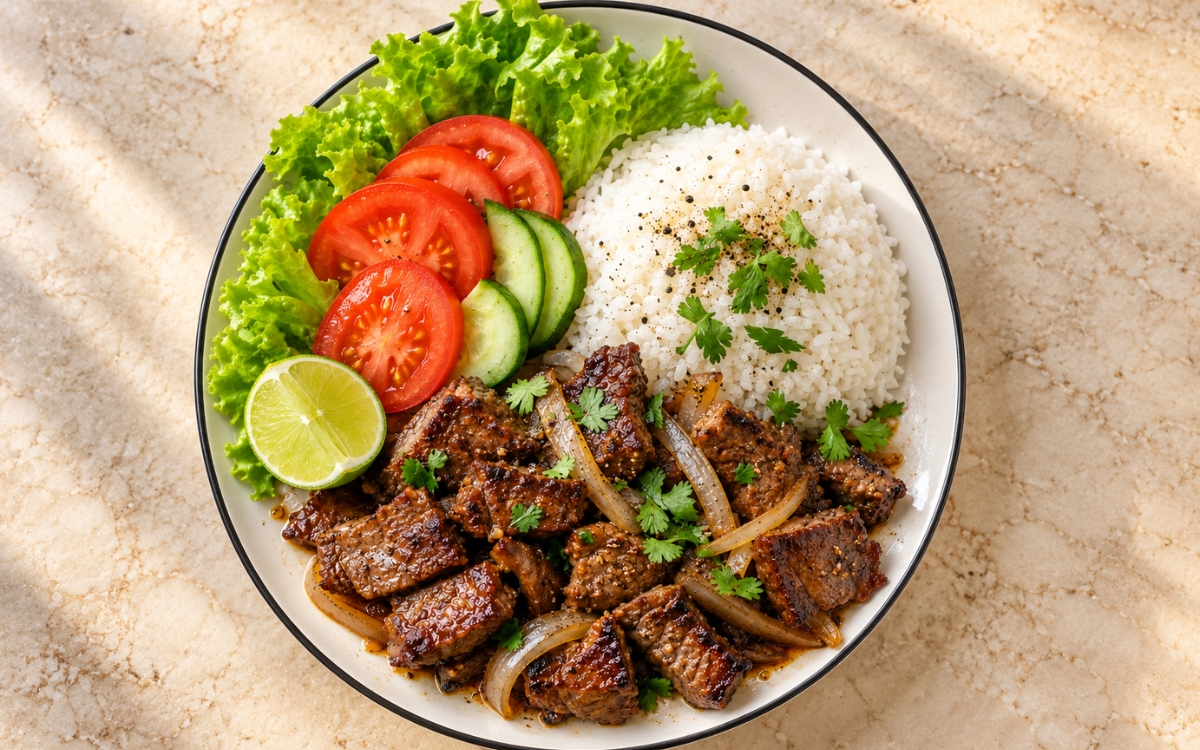
- Fluff the rice with a fork and divide it among 4 bowls, then arrange the lettuce, tomato slices and cucumber slices beside it. Spoon the hot beef and onion next to or partly over the rice, giving each bowl about a quarter of the beef and scraping every bit of glaze from the pan over the top. Scatter over the cilantro leaves, add a few grinds of extra black pepper and tuck the lime wedges alongside. Serve straight away with the pepper-lime sauce on the side, or spoon a little over the beef just before eating. Keep the salad separate from the hot beef in each bowl, so the lettuce stays crisp instead of wilting under the heat. That immediate, clean assembly is what keeps the beef glossy and hot against the genuinely cool, crunchy vegetables.
Notes
Searing the beef in 2 small batches over smoking-hot heat deserves genuine recognition as the technique most directly responsible for the dark, lacquered edges that define lok lak. The recipe's own warning, "Do not overcrowd the pan or the beef will release moisture and boil instead of sear," reflects simple heat physics — too many cold cubes cool the metal below browning temperature, so their juices pool and the meat poaches grey instead.
Choosing a tender, quick-cooking steak deserves the same attention this technique receives throughout this collection's other fast beef stir-fries, because 2–3 minutes in a wok cannot soften tough connective tissue. The recipe's own note, "Use a tender quick-cooking cut; lok lak is not for stewing beef," reflects exactly this — sirloin, rump, ribeye and tenderloin turn juicy almost instantly, while chuck or shin stay genuinely rubbery however hot the pan.
Keeping the marinade to about 20 minutes deserves genuine respect as the detail most directly responsible for the beef browning at all rather than steaming. The recipe's own instruction, "Do not marinate too long with salt-heavy sauces; 20–30 minutes is enough," matters because oyster, soy and fish sauce slowly pull moisture to the surface, while the teaspoon of cornstarch needs a dry, tacky coating to set into its lacquered finish.
The finished glaze deserves attention as a genuine, checkable readiness cue rather than a loose estimate of cooking time. The recipe's own target, "If sauce starts reducing to a shiny glaze clinging to the beef, it is done—do not keep cooking past that point," gives a clear signal — shiny cubes over an almost dry pan mean the centres are still medium-rare to medium, while further tossing only tightens and dries them.