Ingredients
Method
Bring the Dough to Room Temperature
- Remove the 4 pizza dough balls from the refrigerator 2–3 hours before shaping. Keep them covered so the surface does not dry out. The dough should feel soft, relaxed, and airy before shaping. Cold dough fights back, tears more easily, and will not stretch cleanly into a calzone. Warm, relaxed dough folds and seals much better. That tempering window lets the cold, tightened gluten network genuinely relax before it's ever asked to fold, seal, and hold a generous filling.
Drain the Ricotta
- If the ricotta looks loose or wet, place it in a fine sieve over a bowl for 30–60 minutes. It should be creamy but thick, not watery. Wet ricotta is one of the main reasons calzones leak or turn soggy inside. The filling should hold together on a spoon. That draining step protects the whole calzone downstream — any excess moisture left in the ricotta has nowhere to go once sealed inside the dough except directly into the crust itself.
Make the Cheese Filling
- In a bowl, mix the ricotta, grated mozzarella, Parmesan or Pecorino, egg yolk, basil, salt, black pepper, and oregano if using. Mix just until combined. The filling should be thick, creamy, and spoonable. The egg yolk helps bind the ricotta filling without making it heavy. Do not add a whole egg unless your ricotta is very dry. Using only the yolk, rather than the whole egg, adds real binding structure to the filling without introducing the extra water content the white would carry.
Prepare the Tomato Sauce
- Stir the tomato sauce with the olive oil and garlic if using. Taste and adjust with a small pinch of salt only if needed. Use a thick sauce. If the sauce is loose or watery, simmer it for a few minutes until tighter, then cool before using. Only a little tomato sauce goes inside the calzone. Too much sauce makes the center wet and increases the chance of leaking. That deliberately thick, modest sauce amount protects the sealed dough from the same kind of moisture overload a wet ricotta would cause, keeping the filling's overall liquid content genuinely manageable.
Preheat the Oven
- Place a pizza steel or pizza stone in the oven and preheat to the highest temperature your oven can safely reach, ideally 260–290°C, for at least 45–60 minutes. If baking on a tray instead, preheat the tray as well. Strong bottom heat sets the crust quickly and helps the calzone puff instead of spreading flat. That extended preheat ensures the baking surface itself, not just the surrounding air, has genuinely reached its target temperature throughout.
Shape the First Dough Round
- Dust the work surface lightly with 00 flour or semolina. Place one dough ball on the surface and press from the center outward, leaving the outer edge slightly thicker. Stretch gently into a round about 25–28cm wide. Do not roll it paper-thin. The dough needs enough strength to hold the filling and seal without tearing. Keeping the dough at this specific thickness, rather than rolling it thinner, is what gives it the structural strength this calzone's genuinely substantial filling actually requires to stay contained.
Fill the Calzone
- Spread 1–2 tbsp tomato sauce over one half of the dough, leaving a clean border of about 2cm around the edge. Add about ¼ of the ricotta filling over the sauce. Keep the filling slightly away from the edge. Fold the empty half of the dough over the filling to make a half-moon. Do not overfill. A calzone should look full but still seal easily. If filling squeezes out while closing, there is too much inside. Leaving that clean, filling-free border around the edge is what gives the dough real, uncontaminated surface to actually press together and seal cleanly in the next stage.
Seal the Edge
- Press the edges firmly together with your fingers, then fold or crimp the seam over itself to make a tight seal. Make 1–2 small slits on top with a sharp knife to let steam escape. Brush the top lightly with olive oil. Sealing is not cosmetic. A weak seam opens in the oven, cheese leaks out, and the calzone loses its puff. That deliberate crimping, folding the seam over itself rather than simply pinching it once, is what actually protects the calzone from splitting under the internal steam pressure that builds as it bakes.
Bake
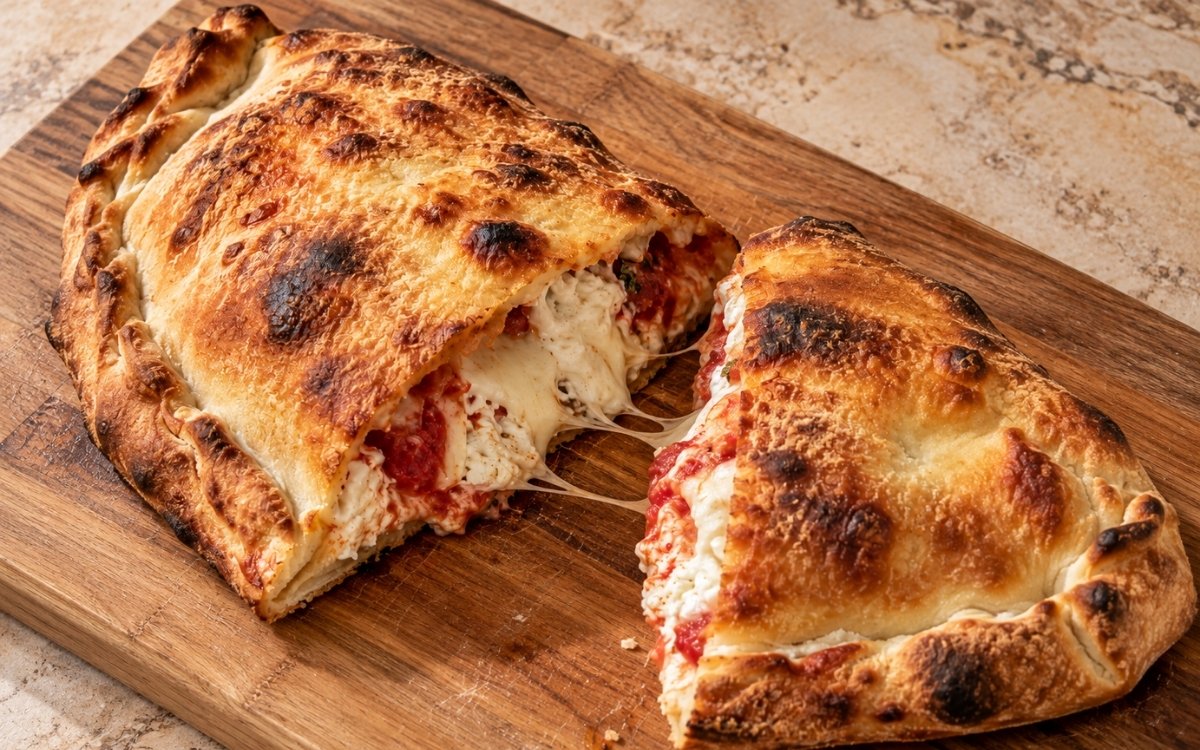
- Transfer the calzone to the hot stone, steel, or tray. Bake for 10–14 minutes, until deeply golden, puffed, blistered in spots, and crisp around the edges. The calzone is ready when the crust is fully browned and the filling inside is hot and melted. If the outside is browning too fast before the dough feels set, lower the oven slightly after the first few minutes. The crust needs colour, but the folded dough must cook through. That willingness to lower the oven partway through protects the dough's own doneness from being sacrificed for the sake of surface colour alone — a browned exterior over a still-raw fold would miss the point entirely.
Repeat with the Remaining Dough
- Shape, fill, seal, and bake the remaining 3 calzones the same way. Keep unused dough balls covered while working so they do not dry out. Keeping every unshaped dough ball genuinely covered protects its surface from drying and cracking, which would otherwise compromise its ability to fold and seal cleanly once its turn comes.
Rest and Serve
- Let each calzone rest for 3–5 minutes before cutting. Serve with warm tomato sauce on the side and a little extra Parmesan or Pecorino if desired. Cutting immediately can make the cheese spill out aggressively. A short rest lets the filling settle while staying hot and stretchy. That brief rest lets the molten filling firm up just enough to hold together cleanly when cut, rather than flooding out the moment a knife or fork breaks the crust.
Notes
Draining the ricotta thoroughly before it ever joins the rest of the filling deserves genuine recognition as the technique most directly responsible for whether these calzones stay properly sealed or leak and turn soggy. Wet ricotta has nowhere else to release its excess moisture once fully enclosed in dough, and that trapped liquid works directly against both the filling's own texture and the surrounding crust's ability to bake through cleanly.
Sealing the edge with real, deliberate crimping, rather than a single quick pinch, deserves the same attention this collection gives to every dumpling or stuffed dough that faces real internal pressure during baking. The recipe's own explicit statement that sealing "is not cosmetic" reflects a genuine, functional requirement — a weak seam is specifically where the internal steam pressure a baking calzone builds finds its way out, taking the cheese filling along with it.
Keeping the tomato sauce inside the calzone genuinely modest, with the bulk of it reserved for dipping on the side, deserves attention as a deliberate structural choice rather than a matter of taste. That restraint protects the filling's overall moisture balance in exactly the same way draining the ricotta does, giving the sealed dough a real chance to bake through without becoming waterlogged from the inside.
Using only the egg yolk in the filling, rather than the whole egg, deserves genuine respect as a small but functionally precise ingredient choice. The yolk contributes real binding structure to the ricotta mixture without introducing the extra water content the white would carry — a distinction that matters directly given how much this recipe already depends on managing the filling's total moisture.