Ingredients
Method
Make the Chicken Broth
- Place the chicken in a medium-large pot and add the water, halved onion, garlic cloves, bay leaves, peppercorns, and 2 tsp salt. Bring to a gentle boil over medium heat, then immediately lower to a very gentle simmer. Skim off any foam that rises during the first 10–15 minutes. Simmer for 30–35 minutes, or until the chicken is fully cooked and tender. Remove the chicken and set it aside until cool enough to handle. Strain the broth and discard the solids. You should have a clean, lightly golden broth. The broth should taste clearly of chicken and aromatics, but still clean and light. It should not be cloudy or greasy. Skimming diligently in that early window, when the most concentrated release of foam and impurities happens, is what sets this broth's clean, light character for the rest of the cook.
Shred the Chicken
- Once the chicken is cool enough to handle, remove and discard the skin and bones. Shred the meat into medium bite-sized strands. Set the shredded chicken aside. Do not shred the chicken too finely. Caldo Tlalpeño should have visible, generous strands of chicken that stay distinct in the soup. Keeping the strands genuinely substantial, rather than shredding down to fine threads, protects the chicken's own texture and presence in the finished bowl — overly fine shreds tend to disperse and lose their distinct identity once stirred into the broth and simmered further.
Build the Chipotle-Tomato Base
- In a blender, combine the tomatoes, the chopped onion, the 2 garlic cloves, the chipotle chiles, the adobo sauce, and the dried oregano. Blend until smooth. Heat the oil in a pot over medium heat. Pour in the blended mixture carefully and cook for 8–10 minutes, stirring occasionally, until it darkens slightly, thickens a little, and loses its raw tomato smell. If using epazote, add it now. This stage matters. The tomato-chipotle mixture should be properly cooked before the broth is added. If it still smells raw and sharp, the finished soup will taste flat and harsh. This active cooking stage is what transforms the blended mixture from raw, sharp-tasting purée into a genuinely developed flavour base — that transformation simply doesn't happen once the base is diluted into the much larger volume of broth that follows, which is exactly why it needs to happen fully here, first.
Turn It Into Soup
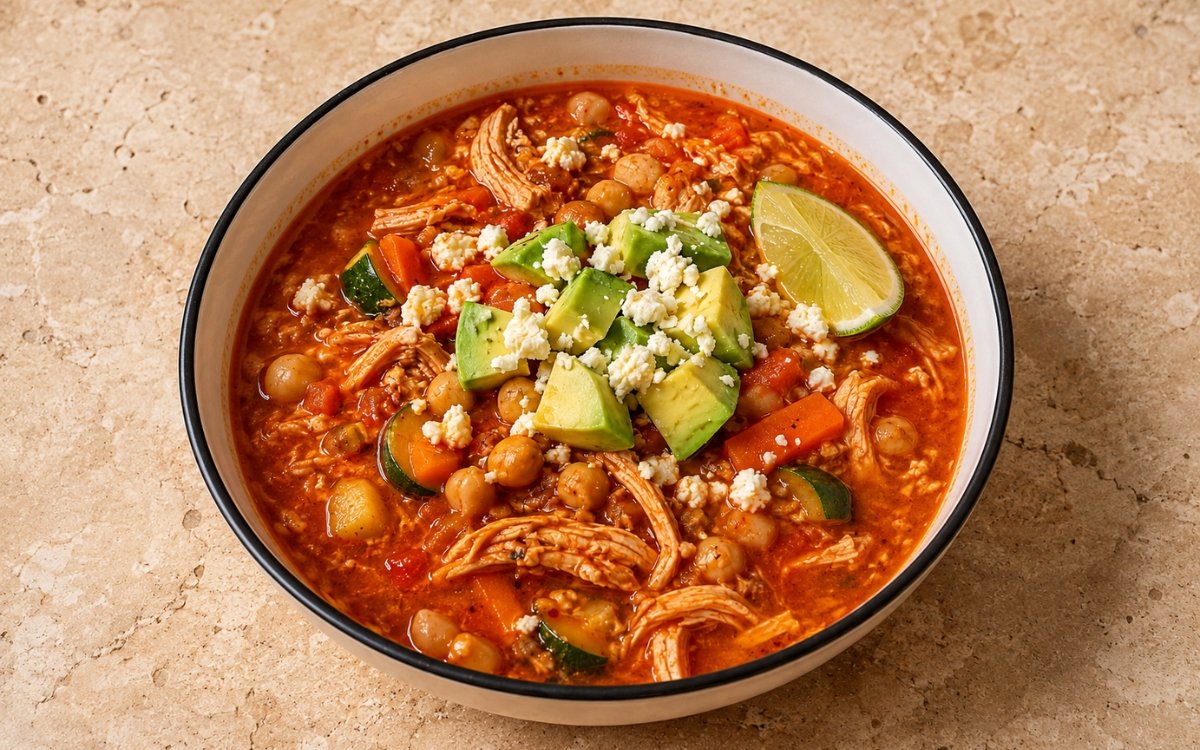
- Pour the strained chicken broth into the cooked tomato-chipotle base and stir well. Bring to a gentle simmer. Add the carrots first and cook for 10 minutes. Then add the chickpeas and zucchini. Simmer for another 8–10 minutes, until the carrots are tender, the zucchini is cooked but not collapsing, and the chickpeas are fully warmed through. Add the shredded chicken back to the pot and simmer for 3–4 minutes more, just until heated through. Taste and adjust with more salt as needed. Add 1 tbsp fresh lime juice, or to taste. The broth should be golden-red, lightly smoky, and brothy — not thick like a sauce. The vegetables should stay intact and distinct rather than melting into the soup. Returning the chicken to the pot only near the very end, after the vegetables are already close to done, is what keeps it from overcooking during this final simmering stage — it was already fully cooked during the initial broth-making, so it only needs to be reheated through here, not cooked further.
Finish and Serve
- Ladle the soup into bowls. Top each serving with diced avocado and crumbled queso fresco. Serve with lime wedges on the side and, if you like, a little fresh cilantro. Serve immediately while the broth is hot and the avocado stays fresh and cool against the soup. The final bowl should have contrast — hot smoky broth, tender chicken, soft chickpeas, fresh avocado, salty queso fresco, and bright lime. Adding the avocado and queso fresco only at the very moment of serving, rather than into the simmering pot, is what preserves their genuinely fresh, cool, distinct character against the hot broth — either ingredient would soften and lose that contrast if it spent any real time simmering.
Notes
Cooking the blended chipotle-tomato base thoroughly before it ever meets the broth deserves to be understood as the single step most responsible for whether this soup tastes properly developed or flat and harsh. A blended purée straight from the blender, however good its individual ingredients, still tastes distinctly raw — that sharp, uncooked edge doesn't simply disappear once the mixture is diluted into a much larger volume of broth. It needs real, active cooking time in the pot first, specifically to lose that raw quality before the broth ever joins it.
Keeping the shredded chicken in generous, visible strands rather than fine shreds is worth treating as a genuine textural decision defining this soup's character. Caldo Tlalpeño is meant to read as a chicken-forward soup with real, identifiable pieces of meat throughout — chicken shredded too finely tends to disperse into the broth and lose that distinct presence, shifting the soup's whole texture toward something closer to a thinner, less substantial result.
The staged vegetable additions here follow the same logic used throughout this collection's other brothy soups — carrots, needing more time, go in well before the quicker-cooking zucchini and chickpeas. That staging is what lets every component finish properly tender at roughly the same point rather than some overcooking while others remain underdone.
Reserving the avocado and queso fresco entirely for the serving stage, never letting either simmer in the pot, protects a genuine and important contrast this soup depends on. Both ingredients bring something specifically fresh and cool against the hot, smoky broth — simmering either would soften that contrast considerably, working against the very quality that makes the finished bowl feel complete rather than simply hot and one-dimensional.