Ingredients
Method
Marinate the Pork
- If the pork chops are very thick or uneven, lightly pound the thickest parts so they cook more evenly, but keep them whole. Make a few shallow cuts through the fat edge so the chops do not curl during cooking. Mix the lemongrass, garlic, shallot, fish sauce, soy sauce, oyster sauce, sugar, honey, oil, black pepper, five-spice if using, and lime juice or vinegar. Coat the pork chops thoroughly. Cover and marinate in the fridge for at least 4 hours, preferably overnight. The lemongrass must be minced very finely so it perfumes the meat without burning in big fibrous pieces. Sugar and honey are important because they give the pork the traditional lacquered caramelization and char. If using very thick chops, do not skip the long marination; otherwise the center tastes bland. That extended marinating time gives the salt and aromatics genuine hours to actually penetrate beyond the surface of a thick chop — a brief marinade would only ever season the exterior, leaving the center comparatively flat.
Make the Pickles
- Toss the carrot and daikon with the salt and let stand for 10 minutes. Squeeze gently to remove excess moisture. Mix the sugar, rice vinegar, and warm water until dissolved. Add the carrot and daikon and let pickle for at least 30 minutes. The pickles should taste lightly sweet-tart and stay crisp. Do not soak them too long in an overly strong vinegar mix or they become harsh. That initial salting and squeezing step draws real moisture out of the vegetables first, which is what lets them actually absorb the pickling liquid afterward rather than simply diluting it.
Make the Nước Chấm
- Stir together the fish sauce, warm water, sugar, lime juice, garlic, and chili until the sugar dissolves. Taste and adjust. It should be balanced: salty, lightly sweet, bright, and pourable. Nước chấm should not be too sharp or too salty on its own. It is meant to season the rice and pork when eaten together. That specific, deliberately balanced target reflects the sauce's real functional role — it's not eaten alone, but spooned over the rest of the plate, so a sauce that reads slightly mild on its own is exactly what seasons the whole dish correctly once combined.
Make the Scallion Oil
- Put the sliced scallions and a pinch of salt in a heatproof bowl. Heat the oil until hot, then pour it over the scallions. Stir and set aside. The scallions should soften and turn glossy, not brown. Pouring genuinely hot oil directly over the raw scallions is what gently cooks and wilts them on contact, releasing their own aromatics without needing any further direct heat that would risk browning them.
Cook the Broken Rice
- Rinse the broken rice briefly until the water is less cloudy, then drain. Cook with 360ml water for firmer rice or 390ml water for softer rice, plus the salt, using a rice cooker or covered pot. Once cooked, let the rice rest 10 minutes, then fluff gently. Broken rice cooks softer and slightly faster than whole jasmine rice. Do not overfill with water or it turns mushy; the grains should stay tender but distinct. That resting period after cooking lets residual steam finish distributing evenly through the rice, which is directly what makes it easier to fluff into tender, still-distinct grains rather than a compacted mass.
Cook the Pork Chops
- Take the pork chops out of the fridge 20–30 minutes before cooking. Preheat a grill, grill pan, or heavy skillet over medium-high to high heat. Lightly oil the grate or pan. Cook the chops until well caramelized and slightly charred at the edges, about 4–6 minutes per side, depending on thickness. Turn as needed to prevent the sugars from scorching too fast. If needed, lower the heat slightly after the first side browns so the inside finishes cooking without the outside burning. Rest the chops for 5 minutes before serving. You want deep caramelization, not burnt bitterness. Thick chops need enough time to cook through; if the surface darkens too quickly, finish over slightly gentler heat. The pork should be juicy and cooked through, not dry. Target an internal temperature of about 63°C / 145°F, then rest. That willingness to lower the heat partway through protects the marinade's own sugar content from crossing into genuine burning — sugar caramelizes readily under high heat, and this particular marinade carries real amounts of both sugar and honey.
Fry the Eggs
- Heat a little oil in a skillet over medium heat and fry the eggs until the whites are set and the edges lightly crisp. Keep the yolks runny or softly set. A lightly crisp-edged sunny-side egg is the most classical for this plate and adds richness when broken over the rice. That specific, lightly crisp-edged style is what lets the egg contribute real, additional richness once broken — a fully firm yolk wouldn't provide that same enriching pool of sauce across the rice.
Assemble the Plates
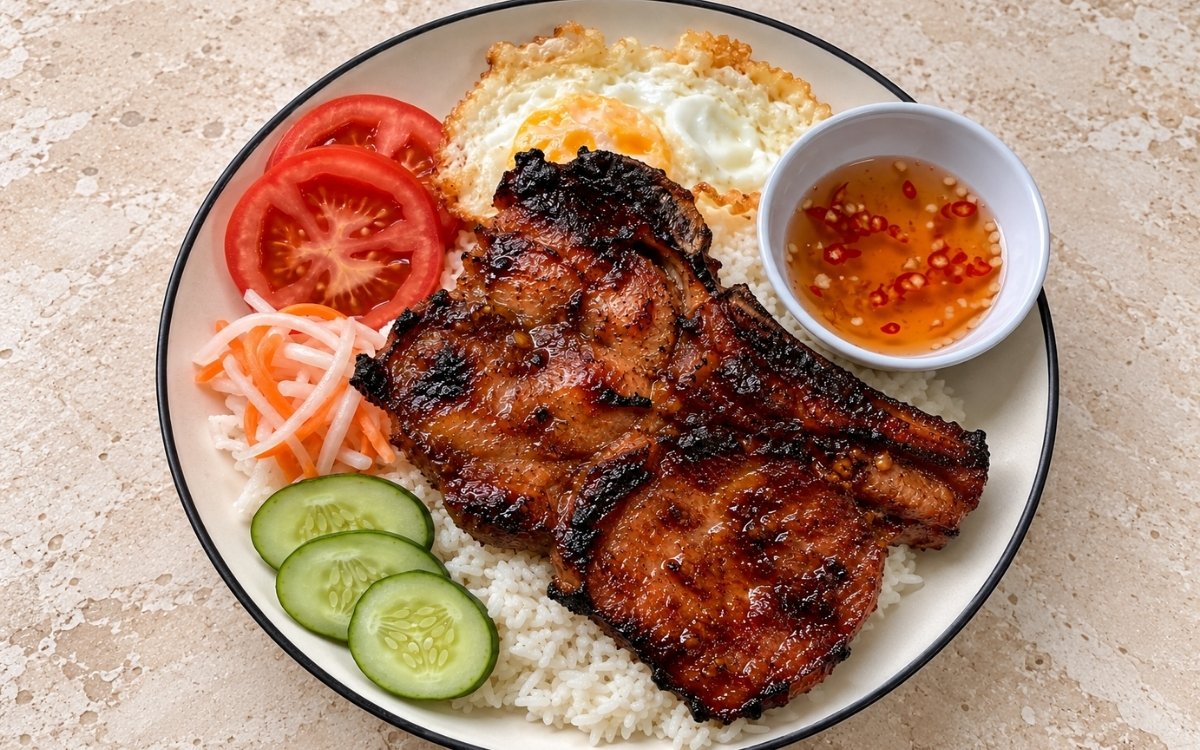
- For each serving, place a mound of broken rice, 1 whole grilled pork chop, 1 fried egg, some pickled carrot and daikon, sliced cucumber, sliced tomato, a spoonful of scallion oil over the rice, and a small dish or spoonful of nước chấm on the side. Serve immediately. The plate works best when the pork, rice, and egg are hot, while the pickles and vegetables stay cool and fresh. That deliberate temperature contrast, hot components against cool ones, is central to this plate's whole classical identity — serving everything at the same temperature would lose exactly the layered sensation this dish is built around.
Notes
Marinating the pork for a genuine 4-hour minimum, ideally overnight, deserves genuine recognition as the technique most directly responsible for whether the meat tastes seasoned all the way through. The recipe's own explicit warning that skipping the long marination leaves thick chops tasting bland at the center reflects a real, common shortfall — that extended time is what actually gives the salt, fish sauce, and aromatics room to penetrate beyond the surface.
Mincing the lemongrass genuinely finely deserves the same attention this technique receives throughout this collection's other lemongrass-forward marinades. Large, fibrous pieces don't distribute their own aroma evenly and risk burning during the pork's high-heat cook, while a properly fine mince perfumes the meat throughout without leaving behind anything unpleasant to actually chew.
Cooking the pork over genuinely strong heat, while staying carefully watchful for the line between deep caramelization and outright burning, deserves genuine respect given how much sugar and honey this particular marinade carries. That real risk of scorching is exactly why the recipe builds in the option to lower the heat partway through — protecting the sugars' own caramelization from tipping over into bitterness.
The deliberate temperature contrast built into the final assembly — hot pork, rice, and egg against cool pickles and fresh vegetables — deserves recognition as a genuine, central organizing principle of this dish's whole identity. The recipe's own explicit framing of this contrast as when "the plate works best" reflects real understanding that cơm tấm's appeal depends specifically on that layered temperature and texture difference, not simply on the individual components alone.