Ingredients
Method
Boil the Potato and Beetroot
- Place the whole, unpeeled potatoes in one pot and the whole beetroot in a separate pot, so the beetroot does not stain the potatoes. Cover both with cold water, add a generous pinch of salt for the cooking water to the potato pot, and bring both to a boil. Simmer the potatoes for 15–18 minutes and the beetroot for 30–40 minutes, depending on size, until a knife slides in easily. The potatoes should be cooked through but still firm enough to slice cleanly, and the beetroot tender but not soft. Drain each, then let them cool until comfortable to handle. That restraint in the pot is what keeps the filling genuinely sliceable, since overcooked potato crumbles into mash and soft beetroot bleeds moisture into the bread.
Make the Green Chutney
- While the vegetables cook, place the 50g cilantro, the 20g mint leaves, the 2 green chillies, the 10g ginger, the garlic clove if using, the 1 tbsp lemon juice, the ½ tsp roasted cumin powder, the ½ tsp chaat masala, the ½ tsp sugar and the ½ tsp salt in a small blender jar. Add 2 tbsp of the cold water and blend, scraping down the sides, until smooth. Add the remaining water a spoonful at a time only if the blades cannot move. The chutney should be vivid green, punchy and thick enough to hold a ridge on a spoon, never pourable. Taste and adjust the salt or lemon. That thick consistency is what lets the chutney sit on the bread as a genuine layer of flavour instead of soaking into the crumb.
Slice the Vegetables and Mix the Masala
- Peel the cooled potatoes and slice them 3–4mm thick, keeping the slices mostly intact. Peel the cooled beetroot and slice it thinly. Peel the cucumber if the skin is thick, then slice it thinly. Slice the 2 tomatoes thinly and, if they are very juicy, lay the slices on paper towel for a few minutes. Slice the red onion very thinly. Mix the 1 tsp chaat masala, the ½ tsp roasted cumin powder, the ¼ tsp black salt, the ¼ tsp salt and the ¼ tsp black pepper in a small bowl. If you want more seasoned potatoes, toss them gently with a pinch of this masala, the chopped cilantro and the 1–2 tsp lemon juice. That even, thin slicing is what lets the sandwich compress neatly instead of bulging and bursting when it is cut.
Butter and Chutney the Bread
- Lay out the 8 slices of soft white sandwich bread on a clean board. Spread a thin, even layer of the softened butter over one side of every slice, right to the edges and corners. Spread a generous but even layer of green chutney over the butter on each slice, again reaching the edges. The butter should form a continuous film with no bare patches, and the chutney should sit on top as a distinct green layer. If the butter is too firm to spread without tearing the bread, soften it a little longer at room temperature. That buttered base is what acts as a moisture barrier, keeping the bread genuinely soft rather than soaked by the chutney and the vegetables above it.
Layer the Sandwiches
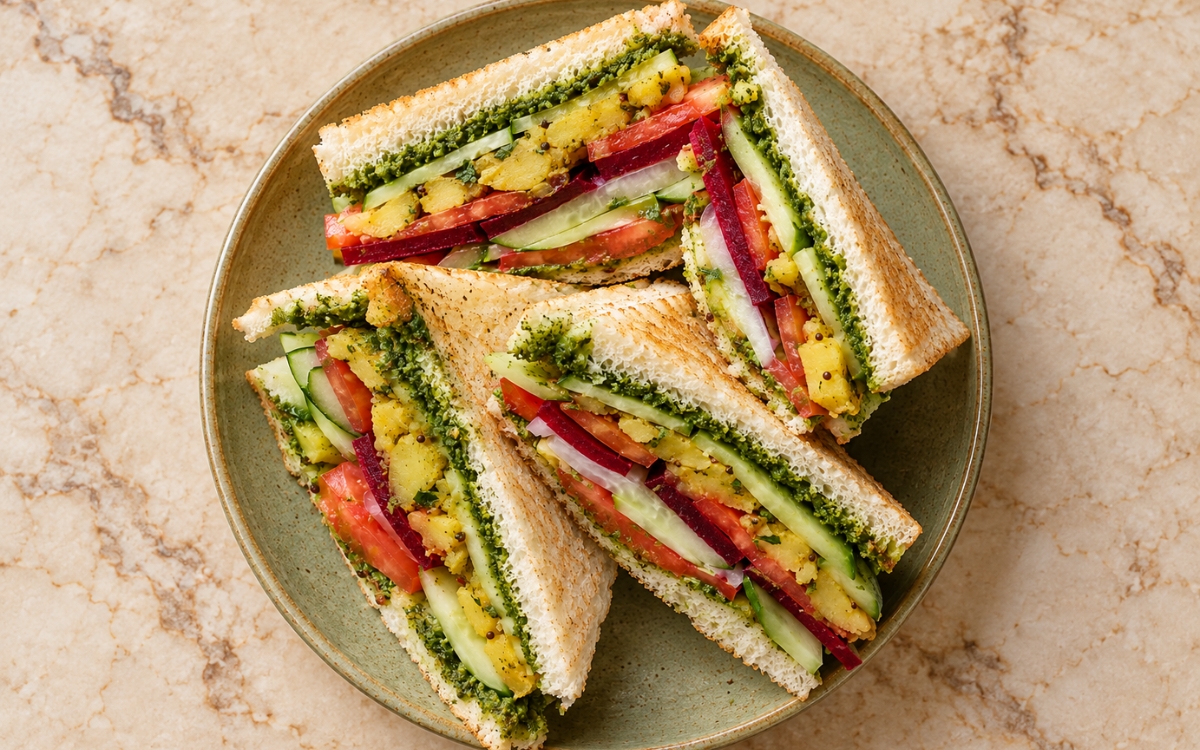
- Choose 4 of the chutney-coated slices as bases. On each, arrange a layer of potato slices, then sprinkle lightly with sandwich masala. Add a layer of cucumber, then tomato, then beetroot, then onion, overlapping each layer slightly so it covers the bread evenly. Finish each stack with another very light sprinkle of sandwich masala, using the remainder of the blend across all 4 sandwiches. Top with the remaining 4 slices, chutney side down. Press gently but firmly with a flat palm to compact the layers. The finished sandwich should feel level and settled, not domed or sliding. That light, measured seasoning is what keeps the filling genuinely crisp, since excess salt draws water from the cucumber and tomato and wets the bread.
Cut and Serve
- Trim the crusts with a sharp serrated knife if you want the classic neat look, though this is optional. Cut each sandwich diagonally into 2 triangles, using a gentle sawing motion rather than pressing straight down. Wipe the blade between cuts if chutney or beetroot smears onto it, so each cut edge stays clean. The cross-section should show distinct bands of white potato, pale green cucumber, red tomato, deep purple beetroot and onion between two green-edged slices. Serve immediately, while the vegetables are still cool and crisp. That immediate serving is what preserves the genuine contrast between soft bread and fresh filling, before the vegetables slowly release moisture into the crumb.
Notes
Keeping the chutney thick and the vegetables dry deserves genuine recognition as the technique most directly responsible for whether this sandwich stays clean or turns wet. The recipe's own note that this "is the main difference between a clean layered sandwich and a wet one" reflects how soft white bread behaves — its fine, open crumb draws in any free liquid almost immediately, so watery chutney or dripping tomato collapses it within minutes.
The butter layer deserves the same attention this technique receives throughout this collection's other layered sandwich and filled-bread dishes, because it does a structural job rather than a purely flavour one. Spread thinly to the edges, the fat forms a water-repellent film between the crumb and the chutney, which keeps the bread soft and intact even with a generous green layer on top.
Cooking the potato and beetroot only until just tender deserves genuine respect as the detail most directly responsible for slices that sit flat and hold their shape. Overcooked potato breaks into crumbly mash that cannot form an even layer, while soft, overcooked beetroot weeps juice into the bread — the recipe's own warning that overcooked vegetables "make the sandwich wet and messy" is exactly that problem.
The 3–4mm potato slice deserves attention as a genuine, checkable readiness cue rather than a loose approximation. Thin, even slices of every vegetable let the stack compress into a level sandwich that cuts cleanly into triangles, whereas thick or uneven pieces create gaps and bulges that slide apart under the knife and push the filling out of the bread.