Ingredients
Method
Make the Peel-Infused Simple Syrup
- Combine the 180ml of water and 150g of white sugar in a small saucepan over medium heat. Stir until the sugar is completely dissolved and the liquid is clear. Remove from the heat immediately. Add the orange peel and lemon peel strips — both cut with a vegetable peeler to include only the coloured outer layer with minimal white pith. Cover the saucepan and steep for 10–12 minutes. The covered infusion is essential — both orange and lemon peels' primary aromatic volatile compounds, particularly limonene and various terpene esters, escape readily as steam from an uncovered vessel. The 10–12 minute maximum for orange and lemon peel is specifically shorter than the 15-minute maximum used for grapefruit peel in the pink grapefruit lemonade. Orange peel's bitter compounds — particularly phlorin, naringin, and various flavanones — extract at a faster rate than grapefruit's nootkatone-dominant profile. At 10–12 minutes in the warm off-heat syrup, the aromatic oils are meaningfully present without a significant bitter contribution. Beyond 12 minutes the bitter flavanones develop to a concentration where they specifically compete with the blood orange juice's characteristic sweetness rather than complementing its natural slight bitterness. Always strain within the 12-minute window. Strain the peels completely and allow to cool.
Prepare and Gently Mash the Citrus Pulp
- Prepare the pulp from 1 blood orange and 1 lemon — removing the seeds and all tough membrane pieces while retaining the juice-containing segments as cleanly as possible. The pulp's function is the textural counterpoint that distinguishes this from a purely juice-based preparation: the intact citrus membrane contributes a light, pleasant bitterness and a fruity, slightly chewy citrus presence in the glass that makes each sip more specifically interesting. The emphasis on removing seeds and tough membranes is specifically because these contribute specifically unpleasant rather than pleasantly bitter flavour. Add the prepared pulp to a large pitcher. Using a muddler or the back of a large spoon, press and mash gently — specific enough pressure to release juice from each piece and partially break down the segment structure without completely puréeing the pulp into a uniform paste. The goal is a lightly textured, juice-releasing mixture that provides both liquid contribution and visible segment fragments. Blood orange's flesh is softer than lemon's and will break down more readily; the lemon segments provide a more specific textural component alongside.
Build the Lemonade Base
- Add the 500ml of fresh blood orange juice, 120ml of the cooled peel-infused syrup, 750ml of ice-cold water, and the pinch of fine sea salt to the pitcher with the mashed pulp. Stir thoroughly. Taste carefully. Blood orange's flavour profile is significantly different from grapefruit's — it is specifically sweeter, less bitter, more specifically fruity and jammy-adjacent, with the distinctive floral-raspberry undertone from its anthocyanin content. The optional lemon juice is present specifically because blood oranges vary widely in their natural acidity between varieties and seasons: Moro blood oranges — the most vivid, most deeply coloured variety — are more acidic and may not require any lemon juice addition; Tarocco blood oranges — the sweetest, most aromatic Italian variety — have lower natural acidity and often benefit from 40–80ml of fresh lemon juice to produce the lively, refreshing, citrus-forward result this preparation requires. If the blood orange's natural acidity is sufficient for a bright, refreshing result without lemon juice, proceed without adding it. If the base tastes specifically sweet and round without sufficient acid brightness, add lemon juice in 20ml increments up to 80ml total. Adjust the water quantity for concentration and the syrup for sweetness. The correct balance is citrus-forward, lightly bitter from the peel infusion, bright from the blood orange's acidity, and refreshing rather than syrupy.
Chill and Serve
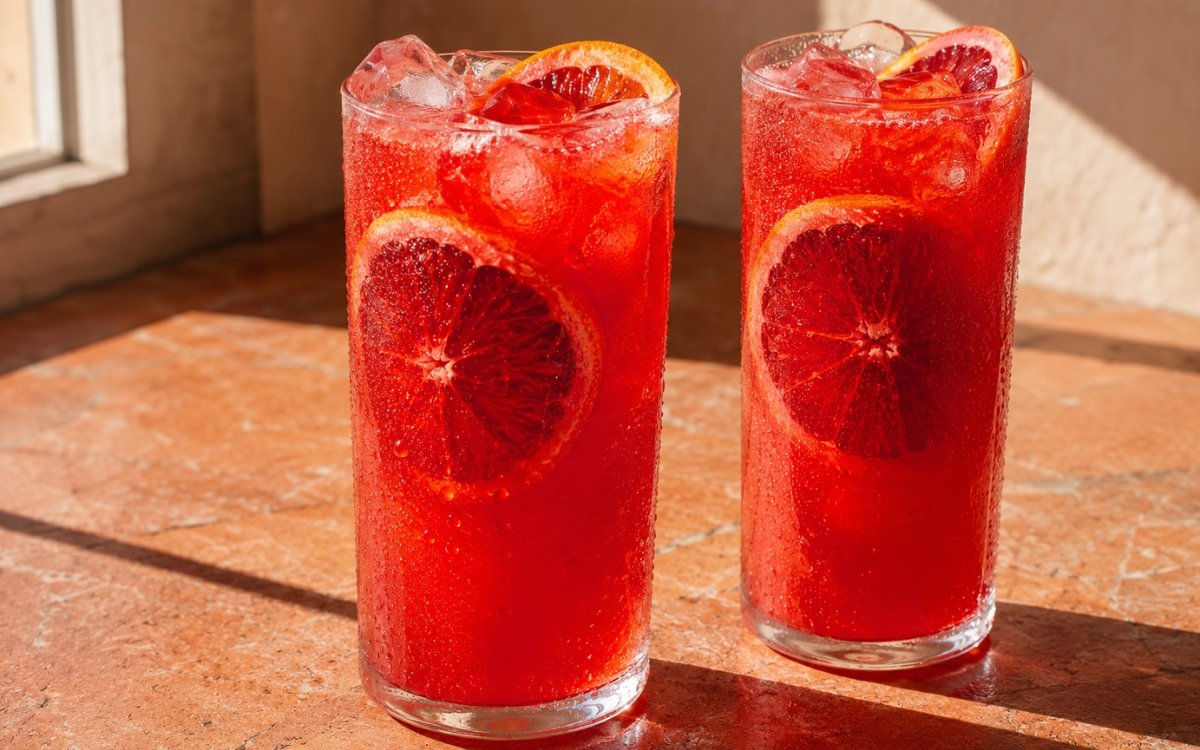
- Refrigerate for 1–2 hours. The blood orange's anthocyanin pigments are pH-sensitive in the same way as blueberry's — the lemon juice's acidity shifts the colour slightly from the deep ruby-red of pure blood orange juice toward a more specifically red-orange in the combined acidic medium. Both colours are natural and vivid; the finished lemonade's colour is one of the most visually striking of any preparation in this collection regardless of the shade. Fill glasses with ice. Pour the chilled blood orange lemonade over the ice, including some of the mashed pulp in each glass for textural interest. Garnish with a blood orange slice and a lemon peel twist. Serve immediately while cold, vivid, and citrusy.
Notes
Blood orange varieties produce meaningfully different lemonade results. Moro — the deepest, most ruby-red, most intensely pigmented variety — produces the most vivid colour and the most assertive, most specifically blood-orange-distinctive flavour with the characteristic raspberry-adjacent floral note at its most vivid. Tarocco — an Italian variety considered among the most aromatic and flavourful — produces a warmer, more amber-orange-tinted colour but the most specifically complex and aromatic flavour. Sanguinello — the Spanish variety common in supermarkets through winter — produces a result between the two: good colour, pleasant flavour. All three work well; the preparation should be adjusted for each variety's natural acidity.
Blood orange season in the Northern Hemisphere is typically December through March — the cold exposure during the growing period that develops the anthocyanin pigments requires consistent cold nights. Outside of this window, blood oranges may be available from the Southern Hemisphere in reverse season; the flavour is comparable.