Ingredients
Method
Drain the Olives and Capers Thoroughly
- Drain the 450g of olives through a colander and allow them to sit and continue draining for at least 5 minutes — pressing lightly with the back of a spoon to encourage the remaining brine to run out. Drain the 40g of capers through a fine-mesh sieve and shake firmly. Excess liquid from either source is the specific cause of the muddy, thin, loose tapenade that is the preparation's most common failure mode. A properly drained tapenade has a rich, concentrated, slightly glossy consistency — excess liquid dilutes both the flavour and the texture simultaneously, producing a spread that tastes flat and runs off the bread rather than adhering. The choice of olive variety is the single most impactful flavour decision in this recipe. Niçoise olives — small, firm, very fruity and aromatic — are the traditional Provençal choice and produce the most authentically flavoured tapenade. Kalamata olives produce a more pungent, more assertively briny result with a firmer flesh. Gaeta olives, salt-cured and slightly wrinkled, produce a meatier, earthier depth. Oil-cured black olives produce the most intensely flavoured, least briny result. Avoid canned black olives that have been processed in lye — their flavour is mild and lacking in the complex, slightly bitter, fruity depth that makes tapenade worth making.
Pulse the Garlic and Anchovies First
- Add the 1–2 garlic cloves and 3 anchovy fillets to the food processor bowl. Pulse 8–10 times until both are broken down into a rough, combined paste — the anchovies dissolving almost completely into the garlic and coating the processor bowl. Processing the anchovies and garlic before the olives is the sequence that ensures these two foundational flavour elements are uniformly distributed through every portion of the finished tapenade. Anchovies added at the same time as the olives can remain as identifiable pieces rather than fully integrating — producing the specific textural unpleasantness of biting into a visible piece of anchovy rather than experiencing the fish's flavour as a background umami depth. At 3 fillets, the anchovy is imperceptible as fish in the finished tapenade — its glutamate-rich savoury depth amplifies the olive and caper flavours without announcing itself. Taste after incorporating the olives and add the additional 1–2 fillets if deeper savoury character is preferred.
Add the Remaining Ingredients and Pulse to Correct Texture
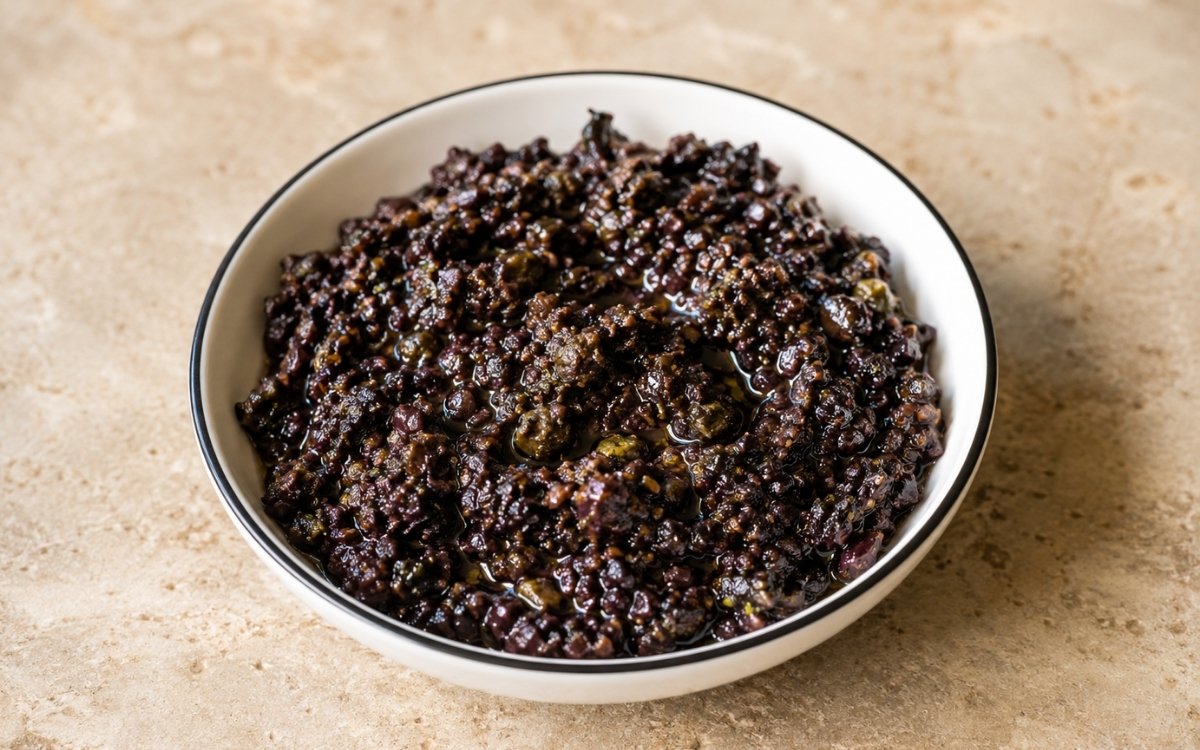
- Add the drained olives, drained capers, 1 tsp of fresh thyme leaves, 1 tsp of dried oregano, ½ tsp of black pepper, 1 tsp of lemon zest, and 1 tbsp of lemon juice to the garlic-anchovy paste in the processor bowl. Pulse in short, controlled bursts of 1–2 seconds each — 10–15 pulses total, pausing between each to assess the texture. The target texture is finely chopped and cohesive: every piece reduced to approximately 3–5mm, the mixture holding together when pressed but with visible texture and individual ingredient identity remaining. This is the specific texture that makes tapenade satisfying rather than simply a paste. Stop pulsing as soon as this texture is achieved — continued processing converts the correctly textured tapenade into a smooth, uniform paste in very few additional pulses, removing all textural interest. Scrape down the sides of the processor bowl between pulses to ensure the pieces at the edges receive the same processing as those near the blades.
Drizzle in the Olive Oil
- With the processor running at low speed, drizzle in the 60ml of extra-virgin olive oil in a thin, steady stream. Stop the processor and assess the texture — the tapenade should be glossy, slightly loosened, and spreadable. The oil both carries the fat-soluble aromatic compounds from the herbs and lemon zest through the entire mixture and provides the emollience that makes the tapenade spreadable without being runny. If the tapenade appears too dense — stiff, dry, or difficult to spread — add additional olive oil in 1 tbsp increments, pulsing briefly after each addition. The maximum 90ml total produces a noticeably softer, looser result; the minimum 60ml produces a firmer, more concentrated spread.
Taste and Adjust Without Adding Salt Prematurely
- Transfer the tapenade to a bowl and taste carefully before any salt is added. The olives, capers, and anchovies together provide significant sodium — a properly made tapenade from these three ingredients rarely requires additional salt, and salt added before tasting produces the aggressively salty result that is the most common reason people dislike tapenade. Adjust each dimension specifically: if the savoury depth is insufficient, add 1–2 additional anchovy fillets (pulse briefly to incorporate). If the brightness is insufficient, add additional lemon juice in 5ml increments. If the texture needs softening, add additional olive oil. If gentle background heat is desired, add a small pinch of chili flakes and fold through. Only if the finished tapenade tastes genuinely flat despite these adjustments should a very small amount of salt be added — and only after all other adjustments have been made.
Rest and Finish
- Allow the tapenade to rest at room temperature for 15–20 minutes before serving. During this rest the thyme's and oregano's aromatic essential oils distribute more evenly through the oil-rich mixture, the lemon zest's volatile aromatics bloom into the surrounding fat, and the distinct garlic-anchovy-caper-olive flavour notes integrate into the unified, specifically Provençal flavour profile that makes tapenade distinctive. A drizzle of good extra-virgin olive oil over the surface of the finished tapenade at serving amplifies the olive's character and provides the glossy, visually appealing finish.
Notes
The tapenade takes its name from tapèno — the Provençal word for caper — reflecting that capers are not simply a supporting ingredient but one of the three foundational flavour pillars alongside the olives and anchovies. The classic ratio of olive-to-caper is approximately 10:1 by weight — enough caper to provide its specific sharp, briny punctuation in every spoonful without overwhelming the olive's primary character.
The anchovy's role in tapenade is specifically savoury amplification rather than fish flavour. Anchovies, like MSG and Parmesan, are exceptionally high in free glutamates — the amino acids that produce the umami taste. At the 3–5 fillet quantity used here, the anchovies contribute their glutamates to the surrounding olive and caper environment, amplifying every other savoury compound present without producing a detectable fish flavour in the finished spread. This is why tapenade made without anchovies — however good the olives — tastes flatter and less compelling than properly anchovy-seasoned versions, even to people who dislike fish.
The texture distinction between correctly made tapenade and over-processed tapenade is worth understanding as the specific quality indicator to aim for. Correctly textured tapenade — finely chopped but not smooth, cohesive but with identifiable pieces — provides textural interest in each spoonful and adheres to bread without running. Over-processed smooth tapenade lacks textural interest and its paste-like consistency makes it difficult to spread attractively. The difference in the food processor is a matter of 5–10 additional pulses — always stop earlier than feels intuitively complete and assess before continuing.