Ingredients
Method
Prep the Toppings
- Wash and dry the raspberries, blueberries, and strawberries, then slice the strawberries thinly and cut the bananas into coins. Measure out the granola and pumpkin seeds so everything is ready before blending. If you want the bowls to stay cold and thick longer, chill four serving bowls in the fridge or freezer for 5 to 10 minutes. Smoothie bowls soften fast, so finishing all the topping prep before the base is blended matters more here than it would for a drinkable smoothie.
Build the Blender
- Add the Greek yogurt, milk, honey or maple syrup, lemon juice, and salt to the blender, then add the chilled cooked beet, frozen strawberries, frozen blueberries, frozen raspberries, and frozen banana. Adding the yogurt and liquid first helps the blades catch the mixture, but keeping that liquid low at the start is what keeps the base thick and spoonable once everything else goes in.
Blend the Base
- Blend on low first, then increase speed as the fruit begins to break down, stopping as needed to scrape down the sides and push the mixture toward the blades. Add more liquid only if needed, a tablespoon at a time, until the mixture turns smooth, thick, and creamy. The base should end up dense enough to hold soft ridges from a spoon and support toppings without them sinking — not pourable like a drink.
Adjust Texture and Flavor
- Taste and adjust as needed: a little more honey if the berries came out tart, a few extra drops of lemon juice if it tastes flat, more frozen fruit or banana if the base turned too loose, or another small splash of liquid only if the blender is struggling. Stop blending as soon as the mixture turns smooth and glossy — overblending warms the base and thins it out past its best texture.
Portion the Bowls
- Divide the base evenly between four bowls, about 350–400 ml per bowl, then smooth the tops with the back of a spoon so the toppings have an even surface to sit on.
Finish with Toppings
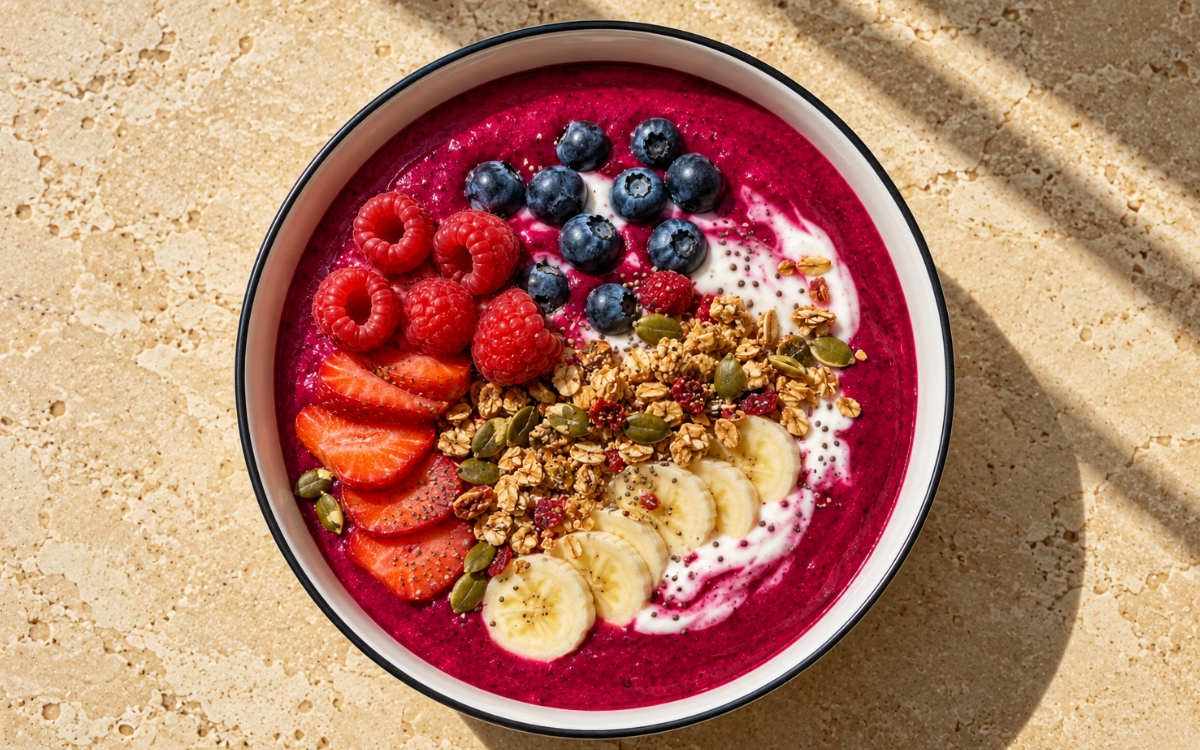
- Top each bowl with fresh raspberries, fresh blueberries, sliced strawberries, banana coins, a strip of granola, a sprinkle of pumpkin seeds, and a small spoonful or loose swirl of Greek yogurt, arranging everything in clean, distinct sections so the deep ruby-magenta base stays visible. Serve immediately.
Notes
Cooked beet is the only form that works in this bowl, and the distinction matters more than it might seem. Raw beet carries an earthy, slightly bitter edge that the berries and banana can't fully cover, while cooked beet mellows into something sweeter and far more compatible with the rest of the base.
Starting the blend with the yogurt and liquid before the beet and frozen berries go in isn't just a convenience step, since this load is genuinely dense — beet, three kinds of frozen berries, and frozen banana all at once can stall a blender quickly without something fluid underneath to help the blades catch.
Stopping the blend the moment it turns smooth and glossy is worth treating as a real rule rather than a suggestion. Overblending doesn't just thin the texture — it warms the fruit and beet enough to soften the bowl faster than it should, undercutting the thick, spoonable result the rest of the recipe is working toward.
Raspberries contribute visible seeds and specks throughout the base, which is part of the intended texture here rather than something to minimize. If a smoother finish matters more than the fleck pattern, shifting some of the raspberry weight toward more strawberries or blueberries keeps the same color without the same texture.