Ingredients
Method
Make the Peel-Infused Simple Syrup
- Combine the 180ml of water and 150g of white sugar in a small saucepan over medium heat. Stir until completely dissolved and clear. Remove from heat immediately. Add the lemon zest. Cover and steep for 8–10 minutes. Strain completely. Allow to cool. The peel-infused syrup's stable aromatic depth is specifically more important in the basil blended lemonade than in the mint version for a nuanced reason. Basil's pleasant warm-sweet aromatic compounds — particularly linalool and the anise-adjacent methylchavicol — share aromatic space with lemon's own aromatic compounds more closely than mint's menthol does. The lemon peel's terpene oils infused into the syrup provide a citrus depth that specifically resonates with basil's warm terpene character in a way that creates a more specifically unified herbal-citrus aromatic profile in the finished blended drink.
Prepare the Lemon Pulp
- Segment 2–3 lemons, removing all seeds and tough membranes while keeping clean citrus pulp. Remove all white pith completely. In the blended format, complete pith removal is as critical as in the Mint Lemonade — Blended for the same reason: the blender's mechanical action fully extracts pith bitterness into the liquid rather than the selective pressure-and-mash release of the still lemonade preparations.
Build the Blender With Basil Added Last
- Add the ingredients in sequence: ice cubes first, then lemon pulp, then fresh lemon juice, then 120ml of cooled peel-infused syrup, then 360ml of ice-cold water, then the pinch of salt. Add the basil leaves last — placed on top of the other ingredients. The same blade-contact management principle from the mint version applies: basil placed on top is drawn into the vortex from above rather than being at direct, immediate, sustained blade contact from the blender's start. The difference is marginal in absolute terms but meaningful for a preparation where the blend time is deliberately so brief. The quantity: begin with ⅓ cup of loosely packed fresh basil leaves — approximately 10g — rather than the ½ cup starting point of the mint preparation. Basil contains a higher concentration of its primary aromatic compounds per gram than mint does, meaning ⅓ cup of basil provides an aromatic impact broadly comparable to ½ cup of mint at the same very brief blend time. Starting at ⅓ cup and adjusting after the initial blend allows the basil's concentration to be calibrated to the specific preference and specific batch of basil without the irreversibility of starting too high.
Blend Briefly — The Basil-Specific Timing
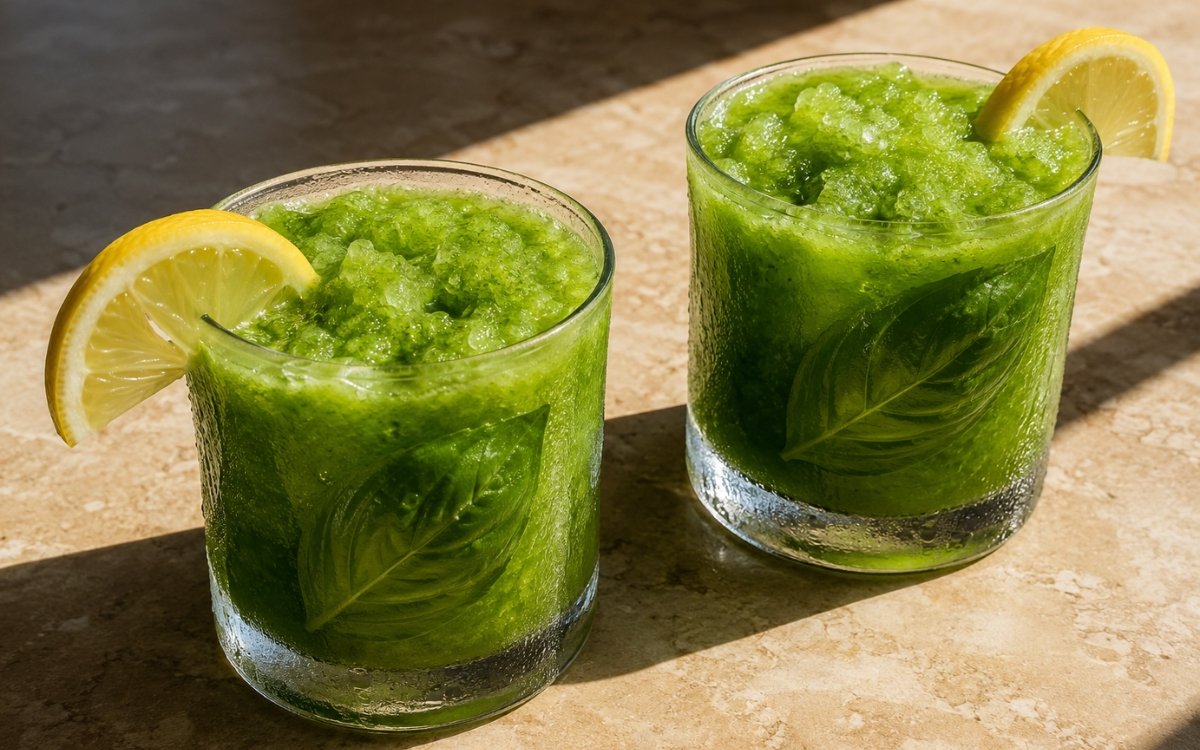
- Blend at high speed for 15–25 seconds only — the same window as the mint preparation with the same absolute stop. The visual target state is the same: pale to medium green, slushy-thick, ice granules visible throughout, a vortex moving but not fully smooth. The colour indicator differs between mint and basil: correctly blended basil produces a pale-to-medium, somewhat grassy green colour — slightly more yellow-green than mint's more vivid blue-green. Over-blended basil produces a dark, olive-drab green from chlorophyll dominance alongside the harsh eugenol and pepper-adjacent bitterness. The colour is a reliable indicator. After the initial brief blend, taste immediately. If the basil character is specifically present and warm-herbal-sweet but clearly behind the lemon's brightness — correct, proceed to serve. If the basil is not sufficiently present, add the additional basil leaves (up to the remaining ½ cup total) to the blender and pulse 3–4 times rather than running a full second blend. Short pulses add basil character with less additional over-blend risk than a sustained second blend. Once the basil character is at or above the desired level, no further basil addition can be corrected — only dilution with cold water reduces the basil concentration.
Adjust and Serve Immediately
- If additional adjustments are needed beyond the basil calibration: more cold water (up to 60ml, pulsed in) for concentration; more ice (30–40g, pulsed in) for texture; more peel-infused syrup (small amount, pulsed in) for sweetness. Always minimal additional blending after adjustments — short pulses rather than sustained blends. Pour immediately into chilled glasses. Garnish with a lemon slice and 2–3 fresh whole basil leaves resting on top of the slushy surface — the fresh leaves' surface aromatic oils providing the first aromatic impression. Serve within 2–3 minutes. Do not store — basil's volatile aromatic compounds diminish faster than mint's once blended and distributed into liquid; the characteristic warm-sweet basil character fades noticeably within 10–15 minutes and the colour shifts from pale green toward a darker, duller tone as chlorophyll oxidises.
Notes
Italian sweet basil — the standard large-leaf, mild-sweet basil available in supermarkets — is the specifically correct variety for this preparation. Thai basil, with its more assertive anise and clove character from higher eugenol and methylchavicol concentrations, produces a significantly more assertive, more specifically spiced result that is interesting but different in character. Lemon basil — a hybrid with high citral content — produces a specifically more citrusy, more specifically lemon-herb result that is excellent and specifically beautiful in this preparation for those who can source it.
Fresh basil quality varies significantly by season. Summer-grown field basil in warm conditions produces the most specifically fragrant, most aromatic leaves with the highest volatile oil concentration. Supermarket basil grown under glass in cooler conditions has a noticeably milder aromatic character and may require the full ½ cup rather than the ⅓ cup starting point.