Ingredients
Method
Make the Bao Dough
- In the bowl of a stand mixer, combine flour, sugar, instant yeast, baking powder and salt. Add the lukewarm milk or water and neutral oil. Knead with the dough hook for 8–10 minutes, until smooth, soft and elastic. Cover and proof for 60–75 minutes, until about doubled. The dough should be smooth before proofing. If it looks rough or tears easily, knead longer. Smooth dough gives smoother bao. That thorough kneading, worked until genuinely smooth, is what builds enough gluten structure to prevent the pleated, folded bun from wrinkling once it's actually steamed.
Shape the Bao Buns
- Punch down the dough and divide into 12 equal pieces, about 70g each. Roll each piece into a smooth ball. Rest covered for 10 minutes. Roll each ball into an oval about 12–13cm long. Brush the surface lightly with neutral oil, then fold in half without sealing. Place each folded bun on a small square of parchment. Cover and proof for 25–35 minutes, until slightly puffed and airy. Do not overproof. Bao should be puffy but still structured. Overproofed buns wrinkle and collapse after steaming. Brushing the oiled surface before folding, rather than leaving the dough bare, is what keeps the two folded layers from actually sealing together during steaming, letting the bun open cleanly once it's time to fill.
Blanch the Pork Belly
- Place the pork belly pieces in a pot, cover with cold water and bring to a boil. Boil for 5 minutes, skimming any foam. Drain, rinse the pork, and pat dry. Blanching gives a cleaner braising sauce and removes harsh porky foam. Do not skip it if you want a clean glossy glaze. That upfront removal of impurities protects the entire braise still to come — any released proteins and foam left unaddressed would carry straight through into the finished glaze, muddying the flavour every later stage depends on.
Brown and Caramelize
- Heat neutral oil in a heavy pot over medium heat. Add the pork belly pieces and brown lightly on the fatty sides, about 3–5 minutes total. Remove the pork briefly. Add the ginger, garlic and scallions and fry for 1 minute. Add the sugar and let it melt into the aromatics until it begins to turn amber and syrupy. Return the pork to the pot and coat it in the caramel. Caramelize the sugar only to amber, not dark brown. Burnt sugar makes the braise bitter. That specific, watched colour target protects the entire braise from a real, common risk — sugar pushed even slightly past amber crosses quickly into a genuine bitterness that would carry directly through into the finished glaze.
Braise the Pork Belly
- Add light soy sauce, dark soy sauce, Shaoxing wine, star anise, cinnamon, bay leaves, five-spice if using, white pepper and enough water to mostly cover the pork. Bring to a boil, then reduce to a gentle simmer. Cover partially and braise for 1 hr 45 min to 2 hr 15 min, turning the pork occasionally. The pork is ready when a chopstick or skewer slides through the lean and fat with little resistance, but the pieces still hold their shape. The pork should be tender, glossy and sliceable, not falling apart into shreds. If it collapses, it has gone too far for clean gua bao presentation. That genuinely gentle simmer, maintained patiently over hours, is what lets the pork's own fat and connective tissue soften properly without breaking the pieces down past the point of holding their own clean, sliceable shape.
Reduce the Glaze
- Remove the pork pieces carefully and keep warm. Strain the braising liquid if you want a cleaner glaze, then simmer it uncovered until reduced to a glossy, spoon-coating sauce. Return the pork to the glaze and coat gently. The sauce should cling to the pork and drip slowly. If it is watery, the bun will become soggy and the pork will look dull. That real, deliberate reduction concentrates the braising liquid's own flavour, converting it from a thinner liquid into the glossy, clinging glaze this dish depends on for coating the pork properly without soaking through the bun.
Prepare the Pickled Mustard Greens
- Heat oil in a small pan. Add garlic and cook for 20–30 seconds. Add chopped pickled mustard greens, sugar and optional chili. Stir-fry for 2–3 minutes, until fragrant and slightly glossy. Taste. Add a little soy sauce only if the greens need more salt. Squeeze the mustard greens dry before cooking. Wet greens dilute the pork glaze inside the bao. That thorough squeezing removes real, considerable moisture the greens would otherwise release directly into the assembled bun, protecting the pork's own carefully reduced glaze from being watered down.
Make the Peanut Topping
- Pulse or crush the roasted peanuts into coarse crumbs. Mix with sugar and a pinch of salt. The texture should be sandy with some small crunchy pieces, not a smooth powder. That deliberately coarse crush protects the topping's own real, distinct crunch — pulsed into a fine powder, it would lose exactly the textural contrast this classic gua bao garnish is meant to provide.
Steam the Bao
- Bring a steamer to a steady simmer. Steam the bao buns in batches for 8–10 minutes, leaving space between them. Turn off the heat and let them sit covered for 2 minutes before opening the lid. Keep warm under a clean towel. Do not open the steamer immediately after cooking. Sudden cooling can wrinkle the buns. That brief, covered rest after the heat is off lets the buns' own internal temperature settle gradually, protecting their smooth surface from the real risk of wrinkling under a sudden shift from hot, humid steam to open air.
Assemble the Gua Bao
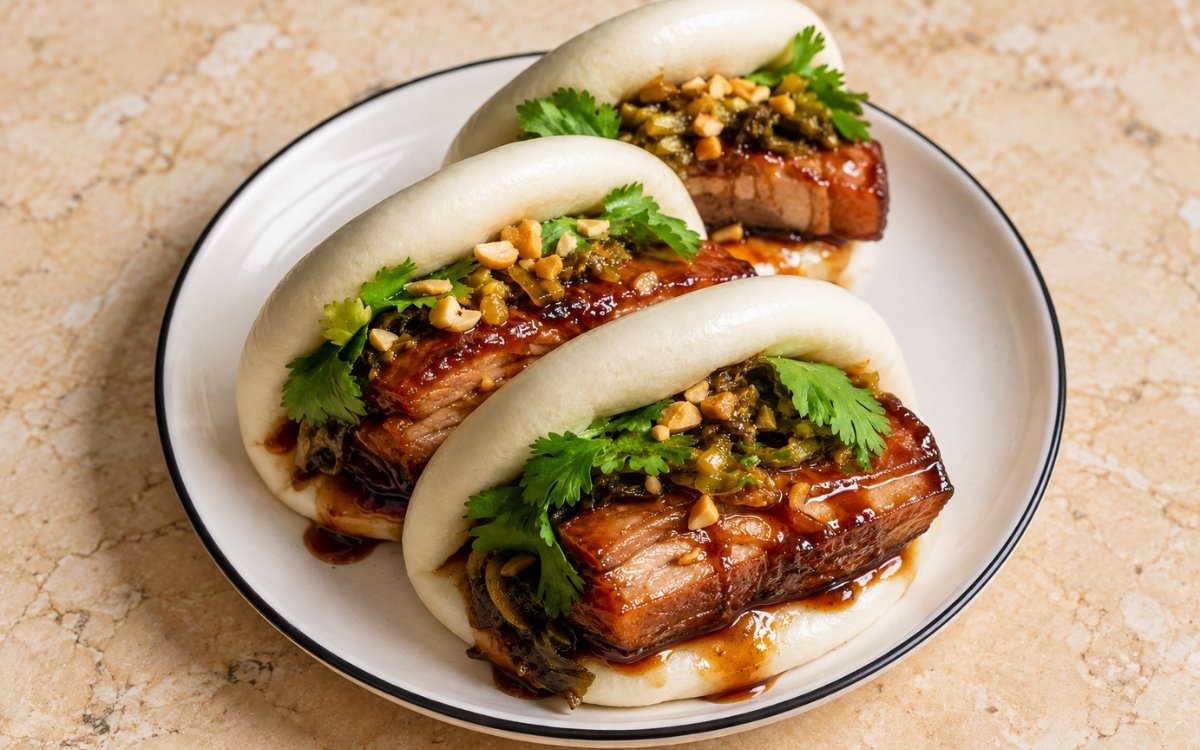
- Open each warm bao bun gently. Fill each bun with 1 glazed pork belly piece, a spoonful of pickled mustard greens, crushed sweet-salty peanuts, fresh cilantro leaves, a small drizzle of reduced braising glaze, and sliced scallions if using. Serve immediately. Assembling only at this final, immediate stage protects every carefully built component — the bun's own softness, the pork's glossy glaze, the greens' sharp bite — from compromising each other before the bao ever reaches the table.
Notes
Blanching the pork belly before it ever goes into the long braise deserves genuine recognition as the technique responsible for whether the finished glaze stays clean or turns murky. That brief simmer removes real, measurable impurities the pork would otherwise release directly into the braising liquid, protecting the flavour of every stage that follows.
Caramelizing the sugar only to a genuine amber, watched carefully to avoid dark brown, deserves the same respect this technique receives throughout this collection's other braises built on a caramel base. The recipe's own explicit warning that "burnt sugar makes the braise bitter" reflects real, narrow margins this early stage depends on getting right — sugar pushed even slightly further crosses quickly into a bitterness that carries straight through into the finished glaze.
Squeezing the pickled mustard greens genuinely dry before cooking deserves attention as a real, functional safeguard rather than a minor step. The recipe's own explicit warning that "wet greens dilute the pork glaze inside the bao" reflects a real, immediate risk — any residual moisture left in the greens transfers directly onto the pork's carefully reduced glaze the moment the bun is assembled.
The recipe's own explicit distinction between properly braised pork — tender, glossy and sliceable — and pork that's fallen apart into shreds deserves genuine attention as a real, checkable doneness target specific to this dish's own presentation. Gua bao depends on the pork holding a distinct, thick slab shape inside the bun, and pushing the braise even slightly past this point compromises that whole classic look.