Ingredients
Method
Choose a Good-Quality Balsamic
- Use a balanced, moderately priced balsamic vinegar with natural sweetness and some thickness. Ultra-cheap versions taste harsh and thin, while very old artisanal balsamic is better reserved for finishing dishes rather than blending into dressings.
Build the Flavor Base
- In a small bowl or jar, combine balsamic vinegar, Dijon mustard, honey, grated garlic, and salt. Whisk or shake until the honey dissolves and the mixture looks smooth. At this stage the flavor will seem sharply acidic — this is normal before adding oil.
Start the Emulsion
- If working in a bowl, begin whisking steadily to prepare for oil incorporation. Consistent motion helps create a unified texture rather than separation.
Add Olive Oil Gradually
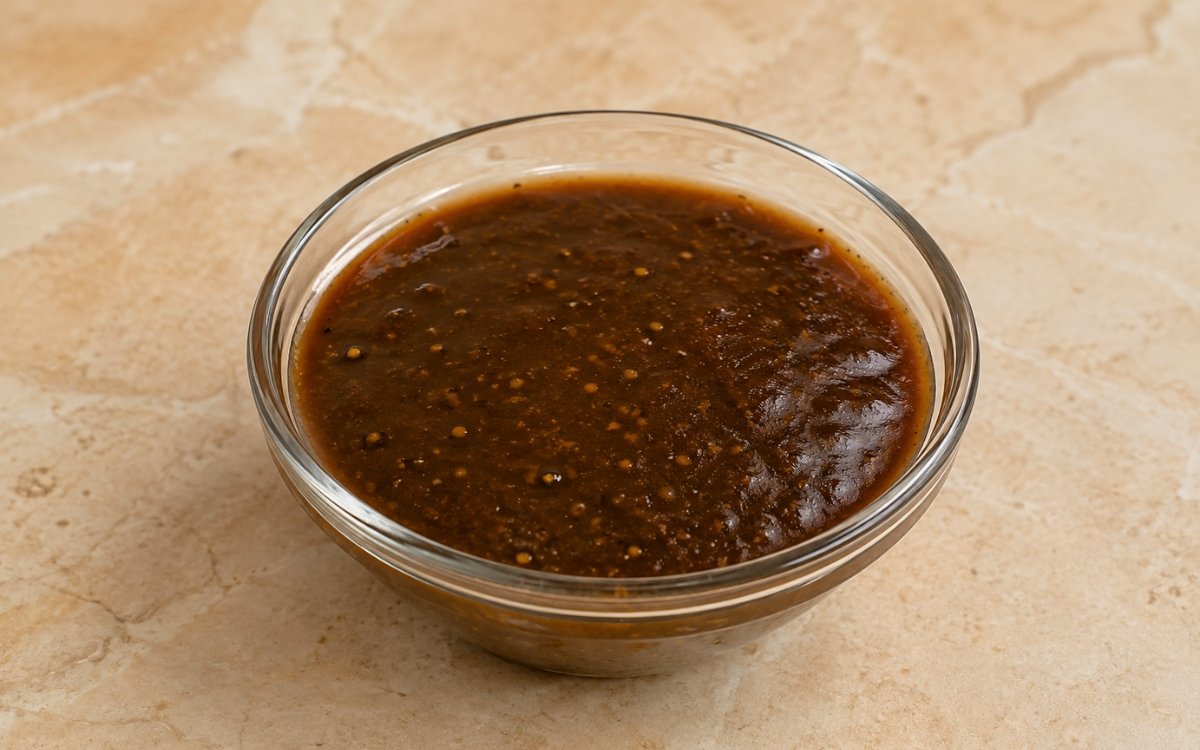
- Drizzle in the olive oil in a steady stream while whisking, or seal the jar and shake vigorously for about 30 seconds. The dressing should turn glossy, slightly thickened, and dark amber.
Adjust and Finish
- Taste and refine the balance — add more honey if too sharp or a splash more vinegar if too sweet. Stir in optional dried oregano for earthy depth and finish with freshly ground black pepper before serving.
Notes
Balsamic vinegar's sweetness comes from the long reduction and aging process that concentrates the grape's natural sugars. Good balsamic should be sweet and acidic simultaneously — not simply sour like wine vinegar, and not simply sweet like syrup. This dual character is what makes it uniquely valuable and different from all other vinegars.
The Dijon-to-balsamic relationship in this recipe is particularly interesting: both are fermented products with complex acidic profiles, and they complement rather than duplicate each other. Balsamic's sweet complexity contrasts with Dijon's savory sharpness, creating a richer, more layered flavor base than either could provide alone.
Garlic in this dressing should be grated rather than minced. Grated garlic almost completely dissolves into the dressing, providing even garlic flavor distribution without any pungent pieces. Minced garlic in a dressing produces occasional intense garlic bites that interrupt the smooth experience.