Ingredients
Method
Season the Rice
- In a large bowl, combine the 400g cooled cooked rice with the 30ml soy sauce, 15ml rice vinegar, 10ml sesame oil, 5g sugar, and 2g white pepper. Mix gently but thoroughly so grains are coated without mashing into paste; break up any clumps with your fingers. Let sit 5 minutes so seasoning absorbs and the rice firms slightly.
Heat Pan and Add Oil
- Heat a large non-stick skillet or well-seasoned cast iron pan (28–30cm) over medium-high heat. Add 30ml of the vegetable oil and swirl to coat; the oil should shimmer before the rice goes in. If the pan isn't hot enough, the rice sticks and steams instead of crisping.
Create Rice Cake
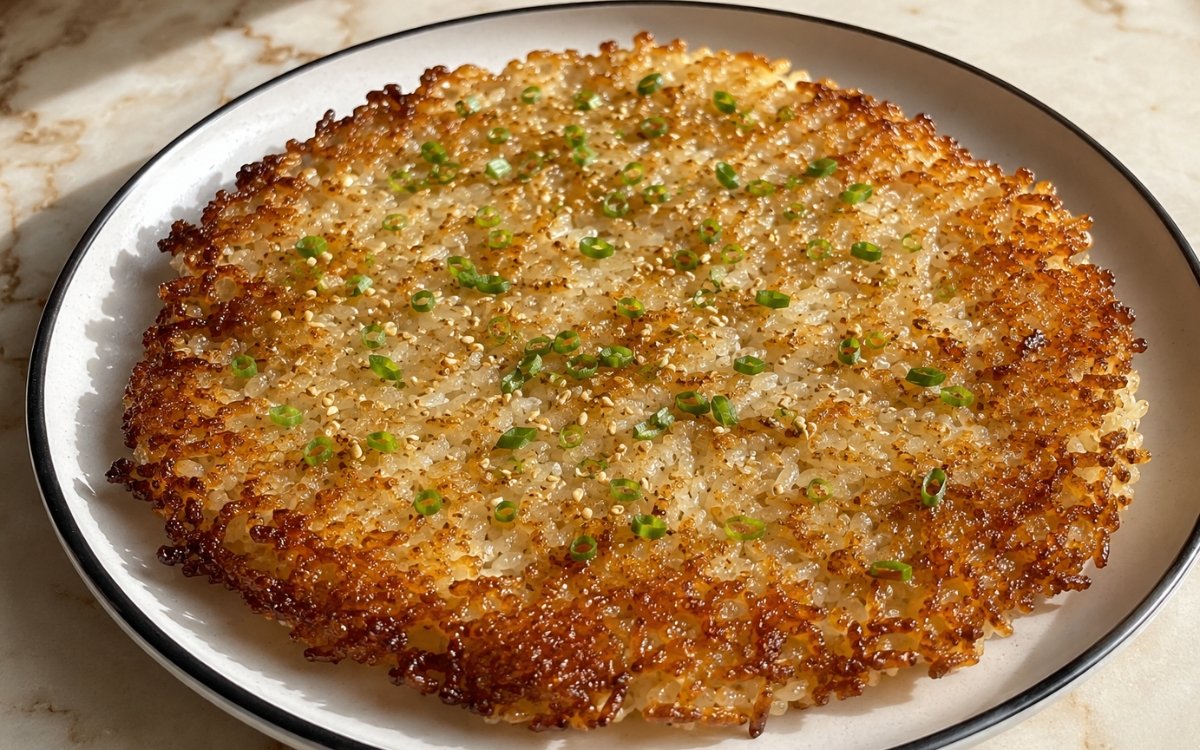
- Add the minced garlic and ginger and stir 15 seconds until fragrant. Spread the rice evenly in the pan and press down firmly with a spatula into a compact layer about 1.5cm thick — pressing improves contact and crust formation. Cook undisturbed 8–10 minutes until the bottom is deeply golden and the edges look crisp; resist the urge to move it.
Flip and Finish
- Flip the rice cake in sections or as one cake (slide onto a plate, invert, and return, if needed). Drizzle the remaining 15ml vegetable oil around the edges and cook 6–8 minutes until the second side is crisp. Break into pieces and garnish with the 15g green onions and 5g sesame seeds. Serve immediately for maximum crunch.
Notes
Using fully cooled rice rather than freshly cooked rice is genuinely non-negotiable for this recipe. Warm rice grains are still soft and prone to breaking down under handling, and tossing them with seasoning would produce a sticky, mashed texture rather than distinct, seasoned grains ready to crisp cleanly in the pan.
Pressing the rice into a firm, compact layer is what allows a connected crust to form across the entire surface rather than individually browned grains scattered throughout a looser pile. That firm pressing maximizes the amount of rice actually touching the hot pan surface at any given moment, which directly translates into a more complete, even crust.
The garlic and ginger get only a brief 15-second sauté before the rice goes in, which is enough to release their aroma into the oil without risking the bitterness that longer cooking at this heat level would introduce, especially given the extended cooking time the rice itself needs afterward.